Management of Avulsed Teeth
Department of Conservative & Endodontics DJ College of Dental Sciences and Research, Modinagar, UP, India
Abstract
Clinicians often face challenges related to the replantation of the avulsed teeth. Though the risk of progressive replacement resorption and subsequent tooth loss is high after a long dry storage, replantation brings a hope of retaining the natural tooth. This article presents a case of replantation of teeth that were presented to the clinician after a long period of dry storage.
INTRODUCTION
Traumatic dental injuries (TDIs) occur with great frequency in preschool, school age children and young adults comprising 5% of all injuries for which people seek treatment.1 Avulsion is probably the most severe form of dento-alveolar injuries; the tooth is completely displaced out of its socket, affecting not only the pulp but also the periodontal apparatus including the periodontal ligament (PDL), the alveolar bone, and gingival tissues.2 The most common complications after avulsion are necrosis of the pulp and root resorption. Treatment is often complex, time consuming, and expensive and requires multidisciplinary approaches such as endodontic and periodontal treatments, surgery, orthodontic movements, as well as esthetic coronal restoration.3
CASE REPORT
A 13 year old girl accompanied by her mother presented to the emergency department in midnight with a history of fall on stairs.

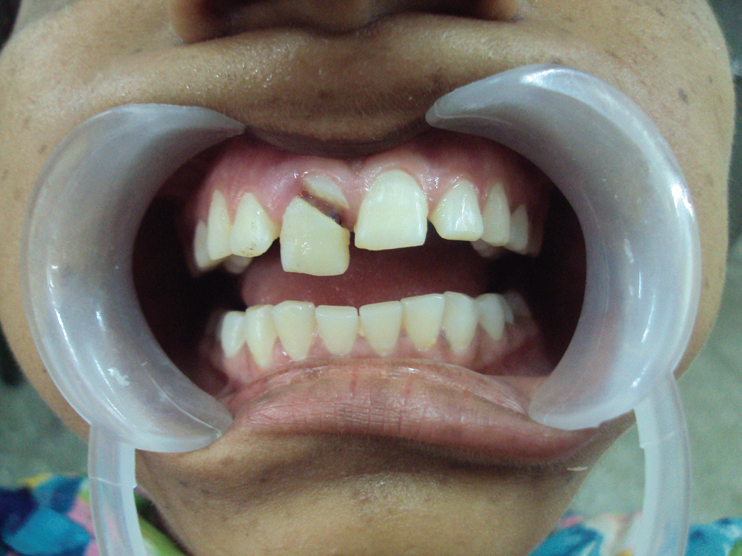
Fig. 1- Avulsed central incisor and canine. Lateral incisor shows extrusive luxation with the laceration of gingiva.
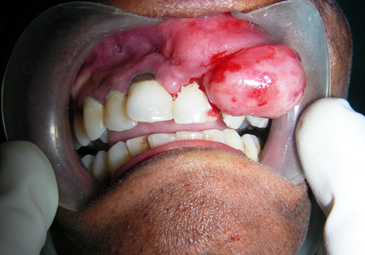
The extra-oral findings revealed swelling and contusion on the upper lip. There was no relevant medical history but patient was due for anti-tetanus booster. The intraoral findings of the patient revealed avulsed left maxillary central incisor and left maxillary canine. Left lateral incisor underwent lateral luxation with the fracture of buccal cortical plate. Gingiva was lacerated (figure-1). The doctor was informed that no attempt was made by her to locate the avulsed teeth.
The sockets were irrigated with saline and the patient’s lateral incisor was repositioned using digital pressure and splinted and the gingiva was sutured using 5-0 vicryl sutures. Patient was prescribed penicillin (Amoxicillin 500 mg) for 1 week every 6 hourly. Patient was placed on a soft diet for one week and instructed to use chlorhexidine mouthwash twice daily.
After 3 days (72hours), the patient and her mother presented again with the avulsed teeth wrapped in a paper. She was explained about the poor prognosis of these teeth if were replanted. The consent was obtained from the parent and the teeth were prepared for replantation. A No. 15 blade was used to reopen the sockets. The sockets were irrigated with normal saline to remove then coagulum. The avulsed teeth were cleaned using sterile gauze for any remnants of PDL. The teeth were rinsed with normal saline and were kept in 2% fluoride solution for 20 minutes. Access openings were done and the canals were filled with calcium hydroxide. The teeth were then inserted into their sockets with gentle finger and thumb pressure and were splinted for 4 weeks (figure-2).
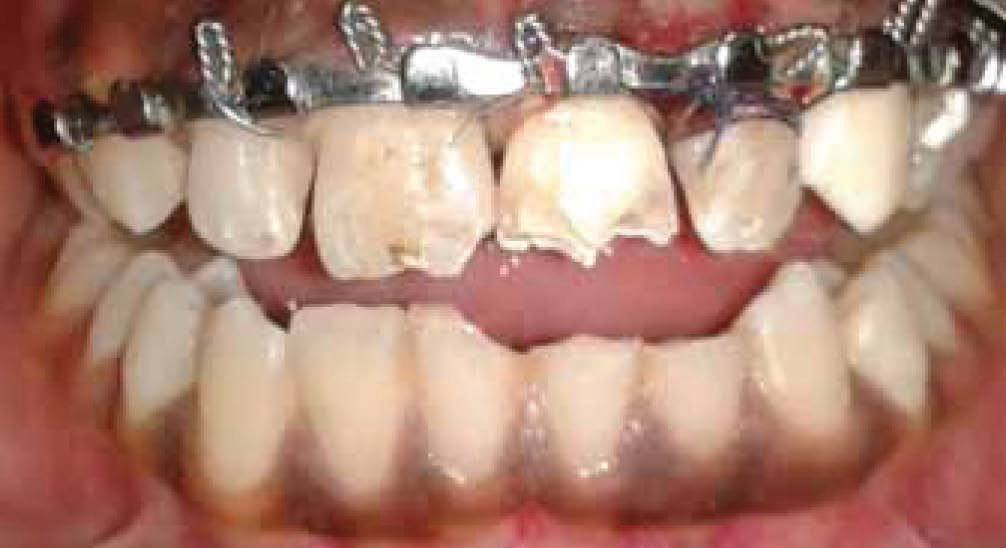
Fig 2: Rigid splint using arch bar
Sutures were removed after 1 week. After a period of 4 weeks, the splint was removed. The teeth were immobile with no pain or swelling on examination. The gingiva showed complete healing.
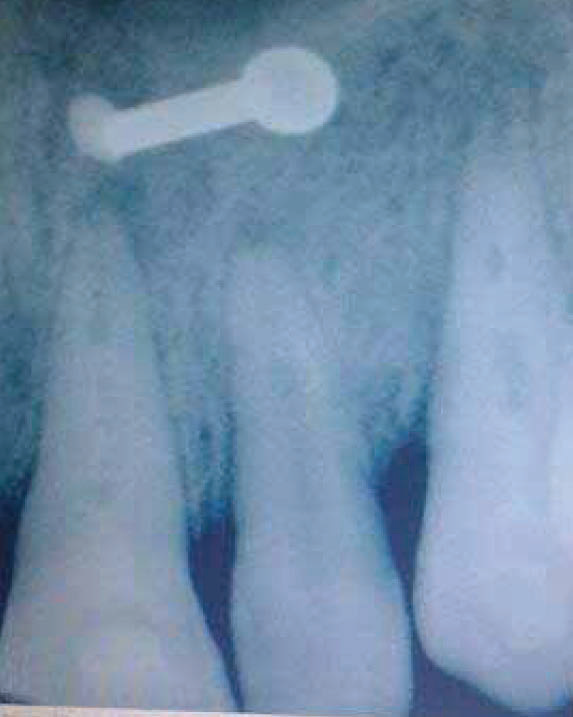
Fig 3 Radiograph of incisors after removal of splint
Radiographic examination after 4 weeks revealed teeth in proper position in their sockets with elongation of the PDL space (figure-3). Due to financial problems, the patient refused to undergo endodontic or any kind of restorative treatment. However, the patient was asymptomatic with no mobility of teeth on a one year recall (figure-4).
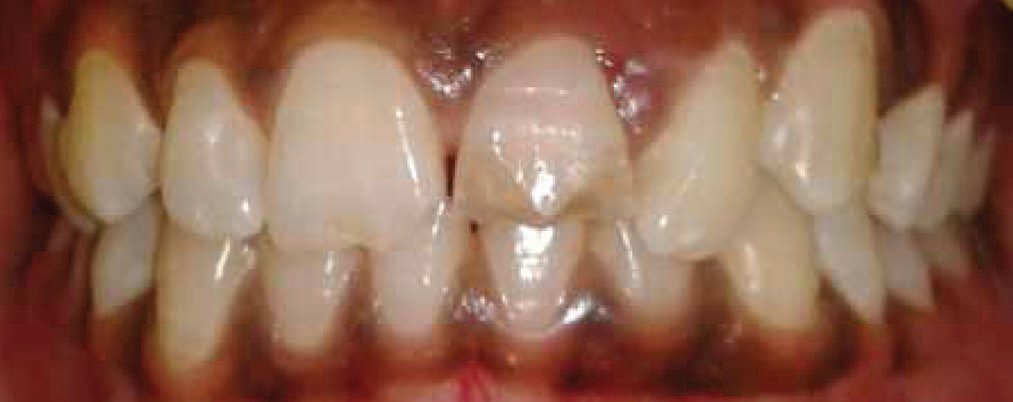
Fig 4: One year follow-up showing no signs of infraocclusion
DISCUSSION
Tooth avulsion is a serious assault on the gingiva, periodontal ligament and pulp. Young permanent tooth loss leads to severe arrest of alveolar bone formation in a growing child. Alveolar ridge would be narrow and difficult to restore in future with either a bridge or implant. Most conservative approach for managing the avulsed incisors is to replant them as soon as possible.6 Andreasen et al. have suggested that the loosely structured periodontal ligament surrounding the erupting teeth and the elasticity of alveolar bone favor complete avulsion.
The management of avulsion injury may differ from the accepted protocol according to the case. When the teeth are kept in a long dry storage, the chances of survival of PDL cells are very low. In a case report by Shiu-yin Cho and Ansgar C. Cheng5, avulsed incisor was splinted to the adjacent teeth with rigid wire for 6 weeks to facilitate rapid and solid ankylosis. Systemic antibiotics are often recommended after replantation, but their effectiveness in preventing root resorption is questionable.7 To date, the value of antibiotic therapy in replantation has been demonstrated only in the experimental setting.11,12 Andreasen and others, in their prospective study, showed that systemic antibiotics had no effect on periodontal healing clinically.
Two important reasons have been cited for delayed replantation, namely, lack of knowledge of the people at the site of injury for the management of an avulsed tooth, and also as the soft tissue lacerations and bleeding mask the loss of teeth.13 The age of the patient, the limitations of using implants and the financial limitations justified the choice of treatment in this case. However, the treatment may differ according to every clinician’s own understanding and judgement. In children who have not achieved skeletal maturity, replacement resorption leads to progressive infraocclusion during the adolescent growth spurt.7 Decoronation is a surgical method for treating ankylosed incisors in children and adolescents. The crown and the root filling are removed, leaving the root in situ to be resorbed and covered with a mucoperiosteal flap. Early loss of a permanent tooth leads to loss of alveolar bone, especially in buccopalatal width. Decoronation preserves not only the width of the ridge but also the vertical height.8, 9
The prognosis of avulsed and replanted teeth is dependent on the periodontal healing which is influenced by the condition of the PDL tissues. Damage of the PDL of avulsed teeth may derive from direct mechanical trauma (contusion between tooth and bone), from the storage conditions (dry, non-physiologic media), from the non-optimal situation after replantation due to supply and disposal exclusively by diffusion, from attached microorganisms or other contaminations and from toxic substances released from autolysed cells.10
Emdogain is a porcine enamel matrix, predominantly consisting of amelogenins, and other growth factors which have been shown in vitro to promote PDL cell proliferation and collagen production, and also enhance mineralization.14 Emdogain can delay, but not stop the development of replacement resorption, one of the worst complications of dental trauma. Emdogain on its own is not efficient in the regeneration of injured periodontal tissues of the avulsed tooth.
Trope15 suggested storage media in order of preference are; milk, saliva, either in the vestibule of the mouth or in a container into which the patient spits, physiologic saline or water. Water is the least desirable storage because the hypotonic environment causes rapid cell lysis and increased inflammation on replantation. Cell culture media in specialized transport containers, such as Hank’s Balanced Salt Solution (HBSS) or ViaSpan, have shown superior ability in maintaining the viability of the periodontal ligament fibers for extended periods.16
REFERENCES
- Andreasen JO, Andreasen FM, Andersson L. Textbook and Color Atlas of Traumatic Injuries to the Teeth. 4th ed. Oxford, England, Wiley-Blackwell: (2007), Dental Trauma Guidelines.
- Wang Y. et al. The Effect of Cultured Autologous Periodontal Ligament Cells on the Healing of Delayed Autotransplanted Dog’s Teeth. American Association of Endodontists. doi:10.1016/j.joen.2009.09.014.
- Ram D, Cohenca O. N. Treatment for avulsed permanent teeth. Pediatric Dentistry – 2004:26:3.
- International association of Dental Traumatology (Revision 2011) Dental Trauma Guidelines.
- Cho S. Y, Cheng A. C. Replantation of an Avulsed Incisor After Prolonged Dry Storage: A Case Report. Journal-Canadian Dental Association 2002, Vol. 68.
- Singla A, Garg S, Dhindsa A, Jindal S. Reimplantation: Clinical Implications And OutcomeOf Dry Storage Of Avulsed Teeth. J Clin Exp Dent.; 2(1),2010:e38-42.
- Kenny D. J, Barrett E. J, Casas M. J. Avulsions and Intrusions: The Controversial Displacement Injuries. Journal of the Canadian Dental Association, May 2003, Vol. 69, No. 5.
- Malmgren B, Cvek M, et al. Surgical treatment of ankylosed and infrapositioned reimplanted incisors in adolescents. Scand J Dent Res 92(5):391-9, 1984.
- Lam RV, Contour changes of the alveolar processes following extractions. J Prosthet Dent 10(1):25-32, 1960.
- Pohl Y, Filippi A, Kirschner H. Results after replantation of avulsed permanent teeth. II. Periodontal healing and the role of physiologic storage and antiresorptive-regenerative therapy. Dental Traumatology 2005; 21: 93–101
- Hammarstorm L, Blomlof L, Feiglin B, Andersson L, Lindskog S. Replantation of teeth and antibiotic treatment. Endod Dent Traumatol 1986; 2(2):51-7.
- Sae-Lim V, Wang CY, Choi GW, Trope M. The effect of systemic tetracycline on resorption of dried replanted dogs’ teeth. Endod Dent Traumatol 1998; 14(3):127-32.
- Andreasen JO, Borum MK, Jacobsen HL, Andreasen FM. Replantation of 400 avulsed permanent incisors. 4. Factors related to periodontal ligament healing. Endod Dent Traumatol 1995; 11(2):76-89.
- Ashkenazi MZ. In vitro clonogenic capacity of periodontal ligament fibroblasts cultured with emdogain. Dent Traumatol 2006;22:25-9.
- Trope M. Clinical Management Of The Avulsed Tooth: Present Strategies And Future Directions. Dental Traumatology 2002: 18: 1–11.
- Trope M, Friedman S. Periodontal healing of replanted dog teeth stored in Viaspan, milk and Hanks Balanced Salt Solution. Endod Dent Traumatol 1992;8:183–188.
Disclaimer from Guident
The views and opinions expressed in articles published in Guident are solely those of the authors and do not necessarily reflect the views of the editors, the editorial board or the publisher, Ivory India. Guident does not endorse any product, technique or treatment described. Clinical content is intended for qualified dental and medical professionals and is not a substitute for individual clinical judgement. Guident, its editors and the publisher accept no liability for any consequence arising from the use of information published in the journal.
How to cite this article
Dr. Gaurav Bhardwaj, Dr. Anil Dhingra. Management of Avulsed Teeth. Guident. 2014 Jan;7(2). Available from: https://guident.net/articles/endodontics/management-of-avulsed-teeth.html