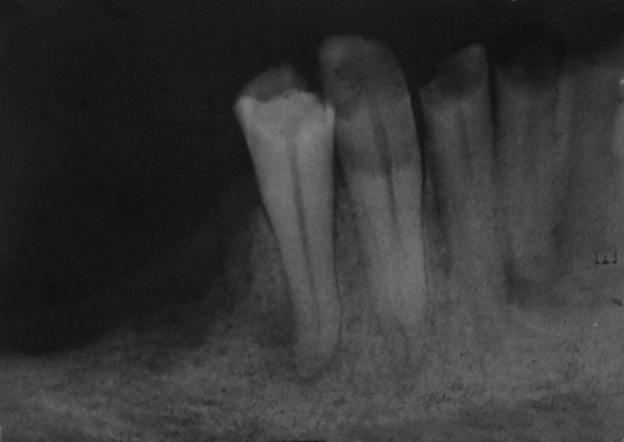
Management of Endodontically Treated Teeth
Harsarn Das Dental College Ghagiabad UP, India, K.D Dental College, Mathura, UP, India, Department of Prosthodontics
Abstract
The clinical decision as to whether an endodontically treated tooth requires a post and a crown poses a challenge to dental practitioners. The longevity of endodontically involved teeth has been greatly enhanced by continuing developments made in endodontic therapy and restorative procedures. It has been reported that a large number of endodontically treated teeth are restored to their original function with the use of intraradicular devices. These devices vary from a conventional custom cast post and core to one visit techniques, using commercially available prefabricated post systems. In the last few decades, various prefabricated posts systems have been developed. The selection of post design is important, because it may have an influence on the longevity of the tooth.
This article reviews the major pertinent literature on this topic, with an emphasis on major decisionmaking elements in post placement and restoration of endodontically treated teeth.
TYPES OF POSTS
Posts are categorized a number of different ways.
- active or passive,
- parallel or tapered, and
- by material composition.
ACTIVE VERSUS PASSIVE POSTS
Active posts are threaded and are intended to engage the walls of the canal, whereas passive posts are retained strictly by the luting agent.
Active posts are more retentive than passive posts, but introduce more stress into the root than passive posts .
Active post can be used safely, however, in substantial roots with maximum remaining dentin. Their use should be limited to short roots in which maximum retention is needed
PARALLEL VERSUS TAPERED POSTS
Parallel metal posts are more retentive than tapered posts and this also is reported to be true for fiber posts.
Parallel posts induce less stress into the root, because there is less of a wedging effect, and are reported to be less likely to cause root fractures than tapered posts .
In a retrospective study, Sorensen and Martinoff reported a higher success rate with parallel posts than tapered posts.
Tapered posts, on the other hand, require less dentin removal because most roots are tapered. They are primarily indicated in teeth with thin roots and delicate morphology
Passive, tapered posts offer the least retention of the prefabricated posts, but allow minimal removal of radicular dentin because their tapered shape resembles the overall canal morphology. If adequate canal length is available, they are a good choice, particularly in thin roots such as maxillary premolars .
Adequate length is considered to be greater than 8 mm . Additional retention can be gained with a parallel post , by the use of resin cement , or by the use of an active post .
PREFABRICATED POST AND CORES
Prefabricated posts are typically made of stainless steel, nickel chromium alloy, or titanium alloy.
They are very rigid, and with the exception of the titanium alloys. Because they are round, they offer little resistance to rotational forces. This is not a problem if adequate tooth structure remains, but if minimal tooth structure remains, antirotation features must be incorporated into the post preparation with slots or pins. A bonded material should be used for the core.

Fig 10: A titanium alloy post (left) and a stainless-steel post
Many of the prefabricated posts are made of titanium alloys and some are made of brass. Titanium posts were introduced because of concerns about corrosion. Most of the titanium alloys used in posts have a radiodensity similar to gutta-percha and sealer and are sometimes hard to detect on radiographs.
Titanium posts have low fracture strength, which means they are not strong enough to be used in thin post channels. Removal of titanium posts can be a problem because they sometimes break when force is applied with a post removal instrument. Extended use of ultrasonic energy may be necessary to remove titanium posts, which can be damaging to the tooth or surrounding tissues . For these reasons, titanium and brass posts should be avoided, because they offer no real advantages over the stronger metal posts
CUSTOM CAST POST AND CORES
Cast post and cores were the standard for many years and are still used by some clinicians. They have fallen from favor because they require two appointments, temporization, and a laboratory fee. Nonetheless, there are studies that report a high rate of success with cast post and cores and they offer advantages in certain clinical situations. A 6-year retrospective study of 96 endodontically treated teeth with extensive loss of tooth structure and restored with cast dowel cores indicated a 90.6% success rate, and are best applied to single rooted teeth, especially incisors and canines. However when it is compared to parallel prefabricated posts, both in vitro and in vivo its superiority is questionable; although this can be attributed to the severe damage of teeth restored with the cast post. There are circumstances in which the custom-cast post is the restoration of choice including the following:
(1) When multiple cores are being placed in the same arch. It is most cost effective to prepare multiple post spaces, make an impression and fabricate the posts in the laboratory.
(2) When post and cores are being placed in small teeth such as mandibular incisors. In these circumstances it is often difficult to retain the core material on the head of the post.
(3) When the angle of the core must be changed in relation to the post. Prefabricated posts should not be bent; therefore the custom cast post best fulfills this requirement.
(4) When an all ceramic crown restoration is placed it is necessary to have a core that approximates the color of the natural tooth structure. If a large core is being placed in a high-stress situation, resin composite may not be the material of choice due to the fact that it tends to deform under a load. In this circumstance the post and core can be cast in metal, and porcelain can be fired to the core to stimulate
the color of natural tooth structure.
(5) Cast posts and cores are the restorative method of choice for endodontically treated anterior teeth with moderate to severe destruction.
The customized cast post and core posses’ superior adaptation to the root canal, associated with little or no stress with installation, and high strength in comparison to the prefabricated post. On the other hand custom cast posts is considered time consuming complex procedure, less retentive than parallel-sided posts, and acts as a wedge during occlusual load transfer. Its recommended use is with elliptical or flared canals. Molars often perform satisfactory with direct cores retained by engaging the pulpal chamber and a portion of the root canals, and retention of the core can be augmented by placement of one or more prefabricated intraradicular posts. Premolars may be restored with both custom cast posts and cores or prefabricated post(s) with direct cores.
Cast post and cores are generally easy to retrieve when endodontic retreatment is necessary.
Perhaps the biggest disadvantage for cast post and cores is in areas that require an esthetic temporary restoration. Temporary post/crowns are not effective in preventing contamination of the root-canal system. When a temporary post and crown is needed, a barrier material should be placed over the obturating material, and the cast post and core should be fabricated and cemented as quickly as possible.
When post was removed and endodontic treatment was performed. The apical segment was packed with gutta-percha and a self-curing, glass-ionomer material was placed adjacent to the gutta-percha to protect it from contamination during the period of temporization and while clinical procedures are performed by the restorative dentist. A self-curing material should be used in most cases because of the difficulty of obtaining effective light curing deep in the canal. Other materials may be used for this purpose such as zinc oxide and eugenol materials or self-curing dentin adhesives and composites.
CERAMIC AND ZIRCONIUM POSTS
One factor that has reduced the use of metal posts is esthetics.
These concerns have led to the development of posts that are white and/or translucent. Among the materials used for “esthetic” posts are zirconium and other ceramic materials.
They tend to be weaker than metal posts, so a thicker post is necessary, which may require removal of additional radicular tooth structure.
The all-zirconium posts are quite rigid, with a modulus of elasticity higher than stainless steel , it possess high flexural strength, fracture toughness, radiopaque, biocompatible and with physical properties similar to steel. The disadvantages include lower fracture resistance than metal posts, difficult retrieval of the fractured post within the root canal, and poor resin-bonding capabilities of the post to radicular dentin. Because of the inability to bond to this post, a technique has been described whereby a leucite-reinforced ceramic core material (Empress, Ivoclar) is pressed to the all-zirconium post this provides an adequate bond between the post and the core. These posts are designed for use with a composite core material.
FIBER POSTS
Carbon fiber posts gained popularity in the 1990s. It was developed in France by Duret and Renaud, and became commercially available in Sweden in 1992 (Duret B et al; 1990). It was composed of unidirectional carbon fibers that are 8 μm in diameter embedded in a resin matrix. Carbon fiber has certain properties that make it potentially useful in dentistry. The post is radiolucent and appears to be biocompatible , non-corrosive, and its placement technique is less invasive due to short post length of 7 to 8 mm with less chance of perforation . They possess inferior strength compared to metal posts, and were less likely than metal posts to cause fracture of the root at failure.
Their main proposed advantage was that they were more flexible than metal posts and had approximately the same modulus of elasticity (stiffness) as dentin. When bonded in place with resin cement, it was thought that forces would be distributed more evenly in the root, resulting in fewer root fractures.
The original carbon fiber posts were dark, which was a potential problem when considering post-restorative esthetics. More recent versions are white. They are relatively easy to remove by boring through the middle of the post with an ultrasonic or rotary instrument. The orientation of the fibers helps keep the removal instrument in the proper alignment.
Other types of fiber posts also are available, including quartz fiber, glass fiber, and silicon fiber posts. They are claimed to offer the same advantages as the carbon fiber posts, but with better esthetics. Most fiber posts are relatively radiolucent and have different radiographic appearance than traditional postsExamples of nonmetal posts. From left: two zirconium posts, two glass fiber posts, two quartz fiber posts, and a carbon fiber post.

Fig 11: Examples of nonmetal posts. From left: two zirconium posts, two glass fiber posts, two quartz fiber posts, and a carbon fiber post.
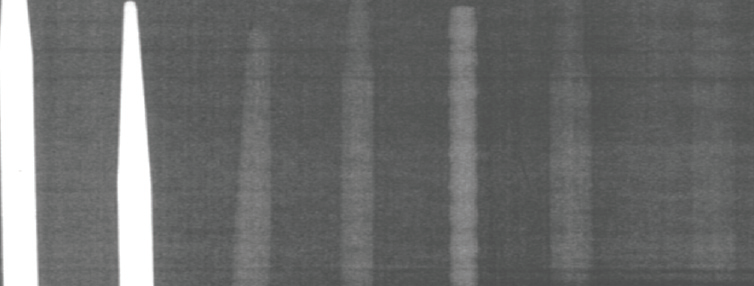
Fig 12: Radiographic images of the posts
PREPARING THE POST SPACE
Preservation of radicular dentin is important, so there should be minimal enlargement of the canal beyond the shape that was developed during root-canal instrumentation.
Gutta-percha can be removed with the aid of heat or chemicals, but most often the easiest and most efficient method is with rotary instruments
A number of authors make recommendations about post length. Goodacre and Spolnik recommend post length equal to 3⁄4 of root canal length, if possible, or at least equal to the length of the crown. They caution that 4 to 5 mm of gutta-percha should remain apically to maintain an adequate seal.
According to Neagley, 8 mm is the minimum length required for a post. It has been shown that forces concentrate at the crest of bone during masticatory function. In teeth with metal posts, forces also concentrate at the end of the post. Therefore, a post should always extend apically beyond the crest of bone.
Four to 5 mm of gutta percha should he retained apically to ensure an adcquatc apical seal. When only 3 mm or less is present, there is a greater incidence of leakage. Although studies indicate that 4 mm products an adequate scal, it is difficult to stop at precisely 4 mm, and additional removal can cause leakage. A cansenrative, safe approach is to maintain 5 mm of gutta pcrchawhencvcr possible.
LUTING CEMENTS
Any of the current luting cements can be used successfully with a post if the proper principles are followed. The most common luting agents are zinc phosphate, resin, glass ionomer, and resinmodified glass-ionomer cements.
The recent trend has been toward resin cements, because they increase retention , tend to leak less than other cements , and provide at least short-term strengthening of the root . Resin-modified glass ionomer cement, as originally formulated had significant setting expansion. The current generation of resin ionomer cement has overcome this problem and is widely used for post cementation A study by Bachicha et al. reported less leakage when resin cement was used with stainless-steel and carbon fiber posts compared with zinc phosphate or glass-ionomer cements.
Unfortunately, resin cements have some disadvantages. Resin cements are more “technique sensitive” than most of the other luting cements. They require extra steps such as preparing the canal walls with acid or EDTA and placing a dentin-bonding agent. Contamination of the dentin or post can be a problem. Predictable delivery of etchants and adhesive materials deep into the canal space also can be problematic. The post should be cemented with an auto-cure or dual-cure resin cement that is mixed and placed with the post. These steps must be performed quickly and carefully to assure that the post is completely seated. Self-cure or dual-cure cements should be used because of limited light penetration into the root, even with translucent posts.
There are several luting agents currently available to the dentist and they include;
Zinc phosphate cement
1. Extremely successful standard cement.
2. High solubility in the oral cavity.
3. Lack of true adhesion.
4. Adequate physical properties.
5. Ease of application.
6. Inexpensive.
• Polycarboxylate
1. Provides a weak chemical bond to dentin.
2. Undergoes plastic deformation after cyclic loading.
3. Less retentive in comparison to zinc phosphate; (low compressive strength).
• Glass ionomer cement
1. Provides a weak chemical bond to dentin.
2. Fluoride release and anticariogenic effect.
3. Requires several days or even several weeks to reach it maximum strength so it’s unsuitable as a luting agent for posts (Matsuya S et al; 1996).
• Resin-modified glass ionomer cement
1. Fluoride release and anticariogenic effect.
2. Insoluble.
3. Provide good retention of prosthesis.
4. Imbibes water and expands with time and there is anecdotal evidence that volumetric expansion of the cement will fracture all ceramic crowns and should be avoided for cementation of posts because it will likely cause vertical root fracture.
• Adhesive resin cement
1. There is greater retention for posts cemented with adhesive resins.
2. Mendosa and Eakle (1994) reported that some posts did not seat completely in post channels because of premature setting of the resin.
3. Resin cements have also been suggested as a method to reinforce pulpless teeth.
4. Lowest solubility among all cements.
5. Highest compressive strength.
CORE MATERIALS
The three basic direct core materials are amalgam, composite and glass ionomer. Properties that are important predictors of the clinical behavior of a core material include compressive shear and tensile strengths, along with rigidity .Wagnild et al (2002) summarized the ideal physical properties of a core to include: (1) high comprerresive strength, (2) dimensional stability, (3) ease of manipulation, (4) short setting time,and (5) an ability to bond to both tooth and dowel.
The purpose of the post is to retain the core, which in turn helps retain the crown. With cast post and cores, the core is formed on the post directly on the tooth or indirectly on a cast. The general shape and orientation of the core is developed during fabrication. Prefabricated posts are used in combination with a restorative build-up material which is formed after cementation of the post. The choices are amalgam, composite resin, or glass-ionomer materials.
The glass-ionomer materials, including resin-modified glass ionomer, lack adequate strength as a buildup material and should not be used in teeth with extensive loss of tooth structure.
Amalgam has been used as a buildup material, with well recognized strengths and limitations. It has good physical and mechanical properties and works well in high-stress areas. In many cases, it requires the addition of pins or other methods to provide retention and resistance to rotation. Amalgam can cause esthetic problems with ceramic crowns and sometimes makes the gingiva look dark. There also is a risk of tattooing the cervical gingiva with amalgam particles during the crown preparation. For these reasons, and potential concern about mercury, it is no longer widely used as a buildup material.
Composite resin is the most popular core material and has some characteristics of an ideal buildup material. It can be bonded to many of the current posts and to the remaining tooth structure to increase retention. It has high tensile strength and the tooth can be prepared for a crown immediately after polymerization.
It is tooth colored and can be used under translucent restorations without affecting the esthetic result.
Disadvantage is composite shrinks during polymerization, causing gap formation in the areas in which adhesion is weakest. It absorbs water after polymerization, causing it to swell, and undergoes plastic deformation under repeated loads . Adhesion to dentin on the pulpal floor is generally not as strong or reliable as to coronal dentin. Strict isolation is an absolute requirement. If the dentin surface is contaminated with blood or saliva during bonding procedures, the adhesion is greatly reduced. Composite is not a good choice, however, with minimal remaining coronal tooth structure, particularly if isolation is a problem.
CONCLUSIONS
If certain basic principles are followed in the restoration of endodontically treated teeth, it is possible to achieve high levels of clinical success with most of the current restorative systems. These principles include:
- Avoid bacterial contamination of the root-canal system.
- Provide cuspal coverage for posterior teeth.
- Preserve radicular and coronal tooth structure.
- Use posts with adequate strength in thin diameters.
- Provide adequate post length for retention
- Maximize resistance form including an adequate ferrule .
- The post should ensure material compatibility, bonding ability, adequate rigidity, and esthetic compatibility with permanent restoration.
- Retrievability in the event of failure should be considered.
- An antirotation device is required in all posts, such as keyway(s), or pin(s) especially with circular canals.
- Custom-cast post and cores are recommended for noncircular root canals and when coronal tooth structure loss is moderate to severe. Parallel-sided, passive, serrated, self-vented prefabricated posts are recommended for small circular canals. Passive parallel posts are advocated for adequate retention but when the apical thicknes of dentin is minimal, a parallel tapered combination post design may be preferred.
Titanium alloys are relatively weak and may be subject to fracture in thin diameters. They also are more difficult to retrieve than other metal posts. Any benefits they offer are more than offset by their disadvantages.
Active, threaded posts should only be used when maximum retention is required. They impart stress into the root structure and are difficult to retrieve.
Ceramic and zirconium posts are not retrievable in most cases and should be avoided.
The trend in clinical practice is toward fiber posts.
Their performance in vitro approximates that of metal posts and most studies agree that their failure mode is more favorable than with metal posts.
The use of fiber posts will probably continue to grow, assuming that future long-term clinical research studies report similar levels of success as seen in the relatively short-term studies already published. Further modifications of their physical and mechanical properties will probably also improve their clinical performance.
REFERENCES
- Charles J. Goodame and Kenneth J. Spolnik .The Prosthodontic Management of Endodontically Treated Teeth: A Literature Review. Part I. Success and Failure Data, Treatment Concepts. JProsthod 1994;3:243-250.
- Charles J. Goodame, and Kenneth J. Spolnik. The Prosthodontic Management of Endodontically Treated Teeth: A Literature Review. Part II. Maintaining the Apical Seal. J Prosthod 1995;4:57-53
- Charles J. Goodame and Kenneth J. Spolnik. The Prosthodontic Management of Endodontically Treated Teeth: A Literature Review. Part III. Tooth Preparation Considerations. J Prosthod 1995;4: 122- 128.
- Richard S. Schwartz, James W. Robbins .Post Placement and Restoration of Endodontically Treated Teeth: A Literature Review. Journal Of Endodontics vol. 30, no. 5, may 2004.
- Ingrid Peroz. Restoring endodontically treated teeth with post and core- a review. Quientessence international. Vol 36, no 9.oct 2005.
- N. R. Stankiewicz , P. R.Wilson. The ferrule effect: a literature review. International Endodontic Journal, 35, 575-581, 2002.
Disclaimer from Guident
The views and opinions expressed in articles published in Guident are solely those of the authors and do not necessarily reflect the views of the editors, the editorial board or the publisher, Ivory India. Guident does not endorse any product, technique or treatment described. Clinical content is intended for qualified dental and medical professionals and is not a substitute for individual clinical judgement. Guident, its editors and the publisher accept no liability for any consequence arising from the use of information published in the journal.
How to cite this article
Dr. Ajai Gupta, Dr. Kamna Nagrani. Management of Endodontically Treated Teeth. Guident. 2013 Jul;6(9). Available from: https://guident.net/articles/endodontics/management-of-endodontically-treated-teeth.html