New Bioactive Cement Biodentine as an Indirect Pulp Capping Agent
Department of Conservative Dentistry & Endodontics, K.D Dental College and Hospital, Mathura, India
ABSTRACT
Biodentine™ is new bioactive cement with dentin-like mechanical properties, which can be used as a dentin substitute on crowns and roots. It has a positive effect on vital pulp cells and stimulates tertiary dentin formation. In indirect contact with vital pulp tissue it also promotes the formation of reparative dentin. This prompted its use for indirect pulp capping in presented case report. A periapical radiograph confirmed that the caries was in close proximity to the pulp. The caries was excavated until the preparation was excavated to a depth estimated at less than 1.0 mm from the dental pulp. Biodentine (Septodont) was used as the therapeutic interim restoration. The tooth was allowed to heal for about 6 months. During this time, the tooth remained asymptomatic. A cold test was used to verify pulpal vitality, and a periapical x-ray was taken. It was decided to restore the tooth with composite as a definitive restoration. Due to its improved material properties, Biodentine™ is an interesting alternative to conventional calcium hydroxide-based materials. It offers advantages for direct and indirect pulp capping and, in properly selected cases, may contribute to the long-term maintenance of tooth vitality.
Keywords: Biodentine, indirect pulp capping, maintenance of tooth vitality, pulp, reparative dentin, tertiary dentin
INTRODUCTION
Vital pulp therapy is a critical aspect of all restorative treatment. There is no reliable objective method of evaluating clinically the extent of pulp inflammation and/or its pathological condition. The goal during the placement of any restoration, whether it be a direct placement composite resin or amalgam restoration or a full coverage crown, is to best maintain a vital and healthy pulp. This is accomplished with good clinical practices of caries removal, treatment of a traumatic injury to a tooth, and judicious use of air-water spray when preparing a tooth with a high speed hand-piece, among others. There are times when vital pulp therapy includes those clinical situations where the pulp is at risk due to trauma, caries, or the placement and replacement of restorations over the restorative cycle of the life of a restoration identifying reversible/irreversible pulpitis relies on patients’ subjective descriptions of symptoms, pulp sensibility testing, and radiographic examination.1 In addition, treating deep carious lesions can prove to be challenging especially when approaching the pulp as an increased risk of pulp exposure reduces the predictability of the treatment outcome.2 Indirect pulp capping (IPC) is one treatment modality that maintains pulp vitality by facilitating healing/repair.3 A new bioactive cement, Biodentine™ (Septodont, St. Maur-des-Fossés, France), was recently launched in the dental market as a dentin substitute. It shares both its indications and mode of action with calcium hydroxide, but does not have its disadvantages. Biodentine™ consists of a powder in a capsule and liquid in a pipette. The powder mainly contains tricalcium and dicalcium silicate - the principal component of Portland cement - as well as calcium carbonate. Zirconium dioxide serves as contrast medium. The liquid consists of calcium chloride in aqueous solution with an admixture of polycarboxylate. The powder is mixed with the liquid in a capsule in the triturator for 30 seconds. Once mixed, Biodentine™ sets in approximately 12 minutes. Calcium hydroxide is formed during the setting of the cement. The consistency of BiodentineTM is similar to that of phosphate cement. Biodentine™ can be used on both crowns and roots. Its crown applications include pulp protection, temporary closure, deep caries management, cervical filling, direct and indirect pulp capping and pulpotomy. Its use in roots includes managing perforations of root canals or the pulp floor, internal and external resorption, apexification and retrograde root canal obturation. Biodentine encourages dentine bridge formation with no inflammatory pulp response through secretion of transforming growth factor (TGF)–b1 4. This case report uses biodentine as dentine substitute used for indirect pulp capping.
CASE REPORT
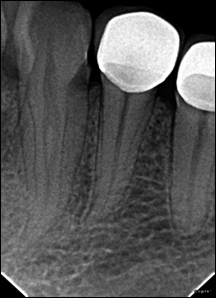
A 30-year-old patient came to the department of conservative dentistry and endodontics presented with chief complaint of large carious lesion in the lower first molar. The patient reported that the tooth was sensitive to cold, but otherwise asymptomatic. A cold test did verify the transient sensitivity to cold, which dissipated at approximately 30 seconds. A periapical radiograph confirmed that the caries was in close proximity to the pulp but no peri-apical changes (Fig 1). The caries was excavated and Biodentine (Septodont) was used as the therapeutic interim restoration (Fig 2). The tooth was allowed to heal for about 6 months. During this time, the tooth remained asymptomatic. A cold test was used to verify pulpal vitality, and a periapical x-ray was taken (Fig 3). It was decided to restore the tooth with composite as a definitive restoration.

Figure 1: PREOPERATIVE

Figure 2: BIODENTINE PLACEMENT
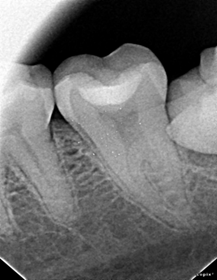
Figure 3: POST OPERATIVE AFTER 6 MONTH FOLLOWS UP
DISCUSSION
Biodentine is a relatively more user-friendly material for the restorative dentist as compared to traditional MTA preparations. Biodentine is an active biosilicate material useful in direct and indirect pulp capping, and it also has endodontic applications. In addition, it is different from the usual MTA formulations. The manufacturing process of the active biosilicate technology eliminates the metal impurities. The setting reaction is a hydration of tricalcium silicate, which produces a calcium-silicate gel and calcium hydroxide. In contact with phosphate ions, it precipitates that resemble hydroxyapatite. An evaluation of the dentin-Biodentine interface demonstrated an increase in the carbonate content of interfacial dentin, which suggested intertubular diffusion and mineral tags of Biodentine hydration products creating a hybrid zone.5 Biodentine resists microleakage similar to RMGI cements6 and also has an antibacterial effect.7 Biodentine reaches a final set in about 10 to 12 minutes. This is much faster than the time required for MTA and also demonstrates higher compressive strength. Therefore, it can serve as an excellent interim restoration. As of yet, the manufacturer recommends the material be used in a 2-step procedure. At a subsequent appointment leaving the Biodentine as a liner or a dentin substitute base under the definitive restorative material.8
CONCLUSION
For caries exposed vital pulps where there is already inflammation of the pulp, it is difficult to get a consensus on decision-making for direct pulp capping. An indirect pulp cap is preferable for a tooth with the criteria of a vital pulp (no history of spontaneous pain, no periapical radiolucencies and normal responses to percussion and palpation) and tricalcium silicate cement (Biodentine) is a treatment choice for mechanical pulp exposures or for carious exposures.
REFERENCES
- Bjørndal L. Dentin and pulp reactions to caries and operative treatment: biological variables affecting treatment outcome. Endod Top. 2002; 2(1):10–23.
- Dammaschke T, Leidinger J, Schäfer E. Long-term evaluation of direct pulp capping—treatment outcomes over an average period of 6.1 years. Clin Oral Investig. 2010; 14(5):559–567.
- Tziafas D, Smith A, Lesot H.. Designing new treatment strategies in vital pulp therapy. J Dent. 2000; 28(2):77–92.
- Nowicka A, Lipski M, Parafiniuk M, Sporniak-Tutak K, Lichota D, Kosierkiewicz A, Kaczmarek W, Buczkowska-RadliÅ„ska J. Response of human dental pulp capped with biodentine and mineral trioxide aggregate. J Endod. 2013; 39(6):743–747.
- Strassler HE, Levin R. Biodentine tricalcium-silicate cement. Inside Dentistry. 2011; 7:98-100.
- Raskin A, Eschrich G, About I, et al. Biodentin microleakage in class II open sandwich restorations. J Dent Res. 2010; 89. Abstract 630.
- Valyi E, Plasse-Pradelle N, Decoret D, et al. Antibacterial activity of new Ca-based cement compared to other cements. J Dent Res. 2010; 89(special issue A). Abstract 312.
- Biodentine active Biosilicate Technology. Scientific File. ndd.no/images/Marketing/Infosenter/Biodentine%20Scientific%20File_web_dokumentasjon.pdf. Last accessed on October 19, 2012.
Disclaimer from Guident
The views and opinions expressed in articles published in Guident are solely those of the authors and do not necessarily reflect the views of the editors, the editorial board or the publisher, Ivory India. Guident does not endorse any product, technique or treatment described. Clinical content is intended for qualified dental and medical professionals and is not a substitute for individual clinical judgement. Guident, its editors and the publisher accept no liability for any consequence arising from the use of information published in the journal.
How to cite this article
Dr. Sonal Bansal, Dr. Rohit Paul, Dr. Ajay Nagpal. New Bioactive Cement Biodentine as an Indirect Pulp Capping Agent. Guident. 2016 Jul;9(8). Available from: https://guident.net/articles/endodontics/new-bioactive-cement-biodentine-as-an-indirect-pulp-capping-agent.html