
Rubber Dam-Clamp Designs for Variations in Tooth Shape and Positions in Endodontics
Director, Upskill Dental Academy Mumbai, India
Rubber dam was introduced as an effective method of isolation in the year 1864 by Dr Sanford Christie Barnum. Isolation of molars for endodontic treatment although the simplest and least time consuming of all isolations, could easily challenge the operator skills with difficult clinical conditions.
Most of the challenging isolations are given up either due to lack of sufficient practice or inadequate armamentarium. In the year 1882 Dr. Delous Palmer and later Dr. Stokes and Dr. Elliot, introduced a set of metal clamps which could be used for different teeth.1 Since years various modifications and clamp designs are available to isolate molars under different clinical conditions.
Isolating badly broken down teeth and teeth with unusual shapes and position has long been challenge to the dentists world wide. Rubber dam provides a dry, clean and disinfected operative field. Since many of the teeth which need endodontic treatment present deep carious lesion and extensive loss of the hard tissues of the tooth, placing rubber dam is sometimes difficult or may even be impossible. In such cases first step before starting routine endodontic therapy is to eliminate all the carious tissue and to reconstruct the lost hard tissue of the tooth in order to achieve proper isolation and a good access cavity with four surrounding walls.(pre endodontic build up)2
CLAMP DESIGNS FOR MOLARS FOR SINGLE TOOTH ISOLATION IN ENDODONTICS
- Passive clamps with flat jaws
- Active clamps with festooned jaws
- Molar clamps - large and small
- Winged and wingless clamps
- Symmetrical and asymmetrical clamps
THE CLAMP JAWS
- Flat jaws, passive clamps
- Angular jaws, festooned jaws, active clamps
- Off set jaws
- Uneven jaws
- Staggered jaws
Flat jaws-The clamps with the jaws facing each other passively are called passive clamps. They engage the tooth at the cervical margin of the tooth.

Indicated for use on lower molars and pre molars, teeth with sound tooth structure.
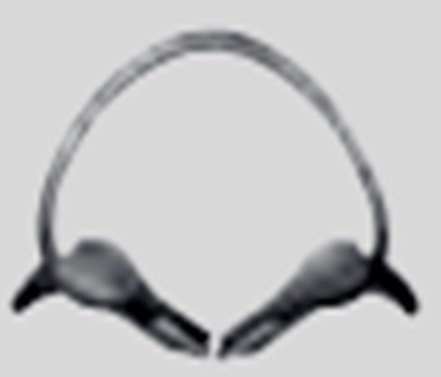
Active clamp with deep festooning
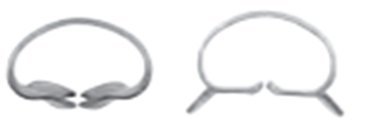
Mild festooning Reverse festooning
Offset jaws-The clamps with offset jaws are very useful for isolation when the level of cervical margin is at different levels on buccal and lingual sides. The clamp grips the tooth firmly and provides a stable isolation.
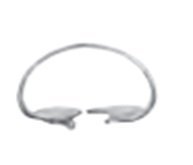
Clamp with offset jaws
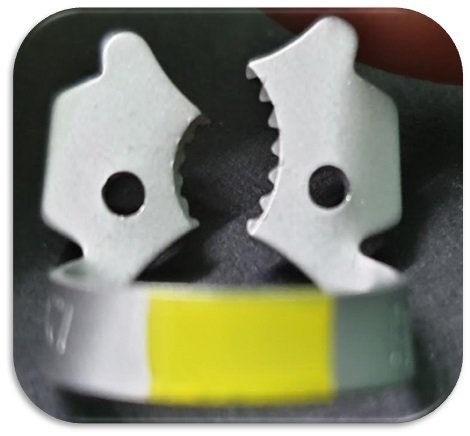
Clamp with serrated jaws
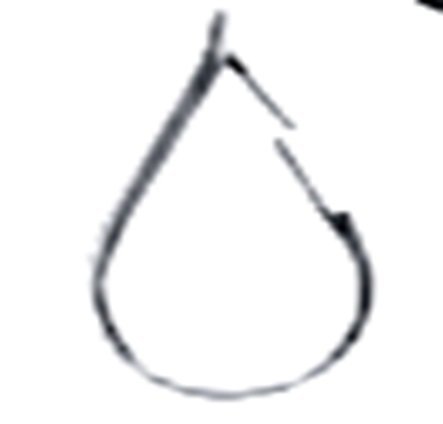
Clamp with staggered jaws
THE BOW
The design of the bow prevents its interference with the cheek and ensures a stable isolation.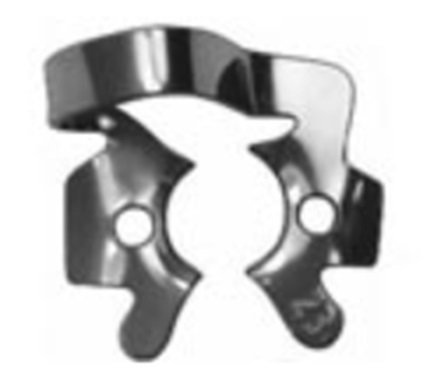

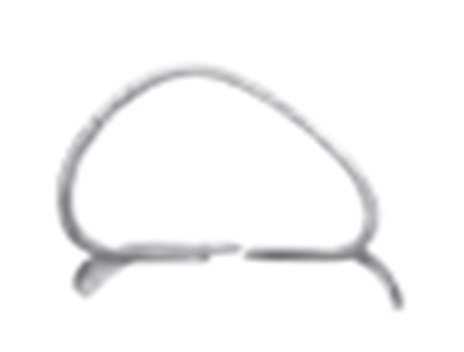
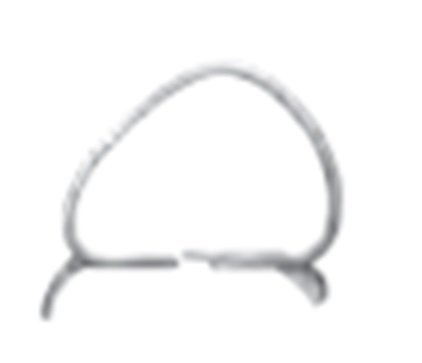
Clamp for right and left side pre molars
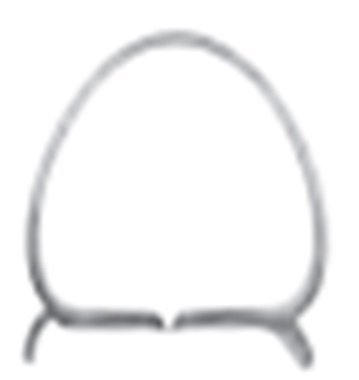
High bows in clamps accommodate teeth which are longer, sometimes seen in pre molar.

The clamps with stiff bows and flat jaws are preferred for lower pre molars
Decision making with regards to isolation has been simplified by Dr Arnaldo Castellucci when he opined, if it is not possible to isolate the tooth with rubber dam, the clinician has two options: one is to make it possible and the other is to extract the tooth!6
REFERENCES
- ANDRIEU, E.: Traité de Dentisterie Operatorie. Octave Doin, Editeur, Paris, 1889
- Rubber Dam Isolation for Endodontic Treatment in Difficult Clinical Situations.Mithra N Hegde, Priyadarshini Hegde, and Ashwith Hegde* Research & Reviews: Journal of Dental Sciences
- https://www.hu-friedy.com/sites/default/files/276_Rubber_Dam_Clamp_Broch_HF-460_MC.pdf
- Rubber dam application to crownless and cone shaped teeth Roderic R Greene et al NZ Dent J,2002,PMID :12017902
- Access-the key to success Hunter A. Brinker, D.D.S. Orlando, Fla. The Journal of Prosthetic Dentistry, Volume 28, Issue 4, October 1972, Pages 391-401
- Endodontics, Volume 1,2 By Arnaldo Castellucci Chapter 10,Tooth Isolation: the Rubber Dam, ARNALDO CASTELLUCCI, M.D., D.D.S.
Disclaimer from Guident
The views and opinions expressed in articles published in Guident are solely those of the authors and do not necessarily reflect the views of the editors, the editorial board or the publisher, Ivory India. Guident does not endorse any product, technique or treatment described. Clinical content is intended for qualified dental and medical professionals and is not a substitute for individual clinical judgement. Guident, its editors and the publisher accept no liability for any consequence arising from the use of information published in the journal.
How to cite this article
Dr. Pavana Kamath. Rubber Dam-Clamp Designs for Variations in Tooth Shape and Positions in Endodontics. Guident. 2020 Nov;13(12). Available from: https://guident.net/articles/endodontics/rubber-dam-clamp-designs-for-variations-in-tooth-shape-and-positions-in-endodontics.html


