Honey Bee: The Healer!!! Bee Pollen and Royal Jelly
Department of Conservative and Endodontics Rajiv Gandhi Dental College & Hospital Bangalore, India
ABSTRACT
The last part of this article deals with the other two products extracted from the honey bee namely, the Bee Pollen and Royal Jelly. Despite having some wonderful properties, royal jelly and bee pollen, have not found a definitive clinical use in dentistry. There is very limited literature on the uses of these products in dentistry, therefore this article primarily aims at high lighting the potential benefits that these products can have, hence, forming the basis of future research. In order to reach a concrete conclusion about the clinical uses of these bee products we need to bank upon in-vitro research and clinical trials for enhancement of patient care.
INTRODUCTION
Bee Pollens are gathered from plants by honey bees, and brought back to their hives. In the process of bees flying from one flower to the other collecting nectar and pollen, it gets collected on their legs. Bee-keepers collect tiny balls of pollen from the legs of bees using their “Pollen Traps” placed at the hive’s entrance which is then further used for various purposes described below.1
COMPOSITION OF BEE POLLEN: 2
Bee pollen contains:
- Carbohydrates: 55%, Protein: 35%, Minerals: 3% and Fatty Acids: 2% (depending on the plant source.)
- Amino-acids: Eight essential amino acids in amounts that vary between five to seven times the levels found in equal weights of traditional high protein foods.
- Vitamins: It also contains vitamins A, D, E, K, C and bioflavonoids, as well as the complete B complex, especially Pantothenic Acid (B5), Niacin, quercetins (Natural Anti-Histamin), Myrecetin (helps white blood cells to remove LDL from the blood). The high levels of vitamin B5 are particularly beneficial for the adrenal glands which are adversely affected during stress.3
GENERAL USES
- It is used as an Energy food: one explanation for this could be that bee pollen helps to increase red blood cells, and the hemoglobin component of red blood cells. Since it is the hemoglobin in red blood cells that carry oxygen for energy metabolism, this may explain the relationship between bee pollen and energy. As a matter of fact, it has been used by a number of Olympic athletes to improve their performance and stamina.4
- It is rich in Anti-Oxidants. Bee pollen supplements have been used traditionally as an anti-aging food. It was demonstrated that bee pollen was able to markedly decrease lipo-peroxide levels in animals who fed a limited diet containing bee pollen, compared to animals not receiving bee pollen at all.3 It is also known to improve the skin condition when used in the form of a cream. Another animal study demonstrated that bee pollen (as well as betacarotene oil), was able to abolish the effects of harmful ionizing radiation on the brain. This was a function of bee pollen’s antioxidant properties.5
- Free radicals present in Bee Pollen- contribute towards lipofuscin, also known as age pigments and liver spots. These are commonly seen as small brownish spots on the back of hands on elderly people. Liver spots are actually an outward sign of internal toxic accumulation of lipofuscin; including, but not limited to vital nerve centers such as the brain. Such toxic accumulation of lipofuscin can block nutrient absorption in the cells which is appropriately blocked by the Bee Pollen.4
- It reduces the incidence of Varicose Veins in adult patients.
- It boosts up the Immune System, increases resistance to the any infection.
USES IN DENTISTRY
The uses are as follows:
- Reduction of Plaque: If mixed with Propolis in an equal propotion, royal jelly helps reduce plaque. The unique component of Royal jelly, 10-Hydroxy -2-Decenoic acid, an unsaturated fatty acid is the most active and consists of anti-microbial properties. The Hydroxyl Decenoic Acid, present as the unique component of Royal jelly down regulates gtfB and gtfC and prevent Streptococcus mutans adherence to the cell surface, hence preventing plaque accumulation.6
- Protection against Radiation: radiations can activate lipid peroxidation (i.e., free radical activity) in the liver, and adversely affect liver glutathione (i.e., antioxidant) systems. Animal research has shown that bee pollen is able to normalize the activity of important glutathione system enzymes in the liver.2
- Healing of Extraction Site: A concentration of 40% bee pollen can effectively speed up the process of osteoblast cells by increasing the number of osteoblast cells which can further accelerate the process of wound healing in rats.5,9
ROYAL JELLY:
Royal jelly is a substance produced by worker honey bees. If fed to an ordinary female bee in the larval stage, royal jelly will transform her into the queen bee. As a queen, she will grow 1½ times normal size and lay over a thousand eggs each day.8 Incredibly, she may live over five years while all the other bees live only a few weeks. The only difference is that she receives royal jelly while the other bees don’t.
COMPOSITION:
The chemistry of royal jelly Royal jelly is a complex mixture of about 15% of royal jelly is 10-hydroxy-trans-(2)-decanoic acid (HDA), which is probably the substance that causes the queen bee to grow large.
Proteins (12%), Sugar (12%), Fats (6%) and variable amounts of Minerals, Vitamins and Pheromones.
Royal jelly is particularly rich in B vitamins, with Pantothenic Acid (Vitamin B5) dominating.9,10
ROYAL JELLY: TRADITIONAL USE
Royal jelly has a history of folk use as a skin tonic and hair growth stimulant.The skin benefits are supposed to include a nourishing process that reduces wrinkles, although there is no actual scientific research that supports these claims (or the hair growth claims). Royal jelly has also been considered to be a general tonic that has a general systemic action. Its most significant use has been as an aid for increasing energy.9
GENERAL USES OF ROYAL JELLY
The use of Royal jelly and Bee pollen in dentistry so far has been purely experimental and is as follows:
- Anti-tumour Activity: Scientific research on royal jelly has revealed that it possesses antitumor activity in experimental mouse leukemias.11
- Anti-bacterial Activity: Additional research has demonstrated that royal jelly has antibacterial activity against Gram-positive bacteria, but not against Gram-negative bacteria. Furthermore, research with chronically diabetic rats demonstrated that royal jelly possesses an anti-inflammatory action and is able to augment wound healing.12
- Royal jelly has also been shown to prevent the cholesterol-elevating effect.12 Some research has also demonstrated that royal jelly can lower cholesterol levels in humans. Cholesterol-lowering research has shown that the typical dose used for this purpose is 50-100 mg daily.13
RISKS OF USING BEE POLLEN/ ROYAL JELLY PRODUCTS:
Anaphylactic reactions have been very commonly reported in the literature, in people consuming products extracted from the honey bee, especially in those already allergic to pollens in general.
A case of anaphylaxis has been very recently been reported (on 22nd March 2013) by the Canadian Medical Association Journal. A 30-year-old woman who was treated in an allergy clinic after having an anaphylactic reaction from bee pollen supplements.
SUMMARY
The products of honey bee and its products (as compiled from the previous parts of the same article) are enumerated below:
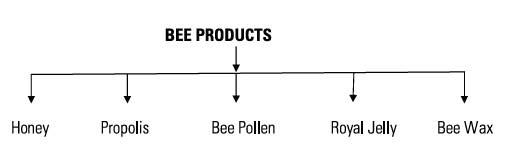
- Honey: Manuka Honey (and not the regular supermarket honey) is the ideal honey to be used for medicinal purposes. Due to its High Osmolarity, Hydrogen Peroxide activity, Phytochemical Component and Acidic pH is known to reduce Plaque Formation, inhibit the progress of Periodontitis, Post Extraction Socket Healing and Radiation Mucositis.
- Propolis: so far the most widely researched product of the Honey Bee. An extract from the Bee Hive primarily for the defence of the hive, has antibacterial, anti-inflammatory and anti-tumorogenic properties. Available as tooth paste, gum paints, mouthwash, it is used to reduce the incidence of Dental Caries, Treatment of Aphthous Ulcer, Protection from Radiation, reduction in Dentin Sensitivity, Direct and Indirect Pulp Capping, Root Canal Irrigants, Treatment Of Deep Periodontal Pockets etc. Propolis containing products should not be consumed by Pregnant and Asthmatic Patients as it is likely to cause reactions ranging from skin eruptions to Disulfiram like reactions.
- Bee Pollen: collected from the pollens of the plants that the bees visit during their flight. Used to accelerate the wound healing Post- Extraction, it is a good Energy Source, Boosts Up the immune system. In-Vivo studies have shown a reduction in Plaque Accumulation, and gives protection from the Radiation Exposure. Further research is required to bring out uses in dentistry.
- Royal Jelly: it is produced by the worker bee and if consumed by any one bee helps her to become queen bee. It has Anti Bacterial and Anti- Tumour Activity and is high in Energy Content. The further use in dentistry still needs to be explored and these properties can form a basis of further research.
- Bee Wax: is another product extracted from the Honey Bee. Originally white in colour it takes its colour from pollen and propolis becoming yellowish later. Was used historically by the Neolithic man (stone-age man) to fill cavities. It has a relatively insignificant use in dentistry. It is a component of some dental materials like, bone wax used in dental surgeries and base plate wax used to make temporary denture base
CONCLUSION
Treatment of diseases using both natural and chemical agents is in vogue now-a-days. The main advantage of using the honey bee products is that they have excellent anti-bacterial, anti-viral, anti-oxidant properties that benefit the individual completely, and also have lesser chances of toxicity, side-effects and better patient acceptance. The need currently is to utilize and exploit the inherit properties of this nature’s boon and expedite the research work on these products thereby bringing out their utilization in dentistry.
Disclaimer from Guident
The views and opinions expressed in articles published in Guident are solely those of the authors and do not necessarily reflect the views of the editors, the editorial board or the publisher, Ivory India. Guident does not endorse any product, technique or treatment described. Clinical content is intended for qualified dental and medical professionals and is not a substitute for individual clinical judgement. Guident, its editors and the publisher accept no liability for any consequence arising from the use of information published in the journal.
How to cite this article
Dr. Puneeta Duggal. Honey Bee: The Healer!!! Bee Pollen and Royal Jelly. Guident. 2013 Apr;6(6). Available from: https://guident.net/articles/general/honey-bee-the-healer-bee-pollen-and-royal-jelly.html