Clear Aligner Therapy for Adult Patient: A Case Report
Wisdom Dental Clinics ®, Jaipur, India
ABSTRACT
This case report highlights the successful treatment of a midline diastema using tac aligners (made in india) in a 45 year-old female patient. The treatment spanned four months, involving 12 stages of upper aligners and 14 stages of lower aligners, worn for 22 hours daily. A non-extraction approach with interproximal reduction and arch expansion was used to resolve spacing and alignment issues. The treatment achieved proper tooth alignment, closure of the diastema, and maintained periodontal health without complications. The case demonstrates the effectiveness of clear aligners for spacing correction and emphasizes the importance of patient compliance in achieving favorable outcomes.
KEYWORD: tac Aligners, Midline Diastema, Adult Orthodontics
INTRODUCTION
Midline diastema, characterized by a noticeable gap between the central incisors, is a prevalent orthodontic issue that not only affects the aesthetics of a smile but can also have functional implications on a patient's oral health. This condition can occur at any age and is influenced by various factors such as genetic predisposition, abnormal frenal attachments, habits like thumb sucking, or discrepancies in tooth size. While midline diastemas may sometimes resolve naturally in younger patients, particularly during the eruption of permanent teeth, persistent cases in adults typically require orthodontic intervention for correction.1,2
The clear overlay orthodontic appliances was introduced in 1946, when Kesling devised the concept of using a series of thermoplastic tooth positioners to progressively move malaligned teeth.3
In the recent years, increasing number of adult patients have sought orthodontic treatment and expressed a desire for esthetic and comfortable alternatives to conventional fixed appliances.4 Orthodontic treatment with clear aligners is a quickly growing sector in the field of Orthodontics.5
Experienced clinicians have found that the tac aligner therapy for complex malocclusion often fails to yield the same degree of precision anticipated with fixed appliances. This necessitates careful case selection and counselling when offering this treatment to patients. A suitable case has been selected, illustrating the ease and simplicity with which the clear aligners can be used for treating certain malocclusions where the patient was reluctant to undergo fixed orthodontic therapy.6 In present case mandibular diastema was corrected using clear aligners.
CASE REPORT
A 45 year-old healthy woman sought dental treatment due to concerns about the spacing between her front teeth. Her medical history was unremarkable, with no known familial or dental issues. Extra oral examination showed a mesocephalic head shape, mesoprosopic facial form, symmetrical frontal appearance, orthognathic profile, medium-sized nose, and competent lips. There were no signs indicating any temporomandibular joint issues.[Figure 1]
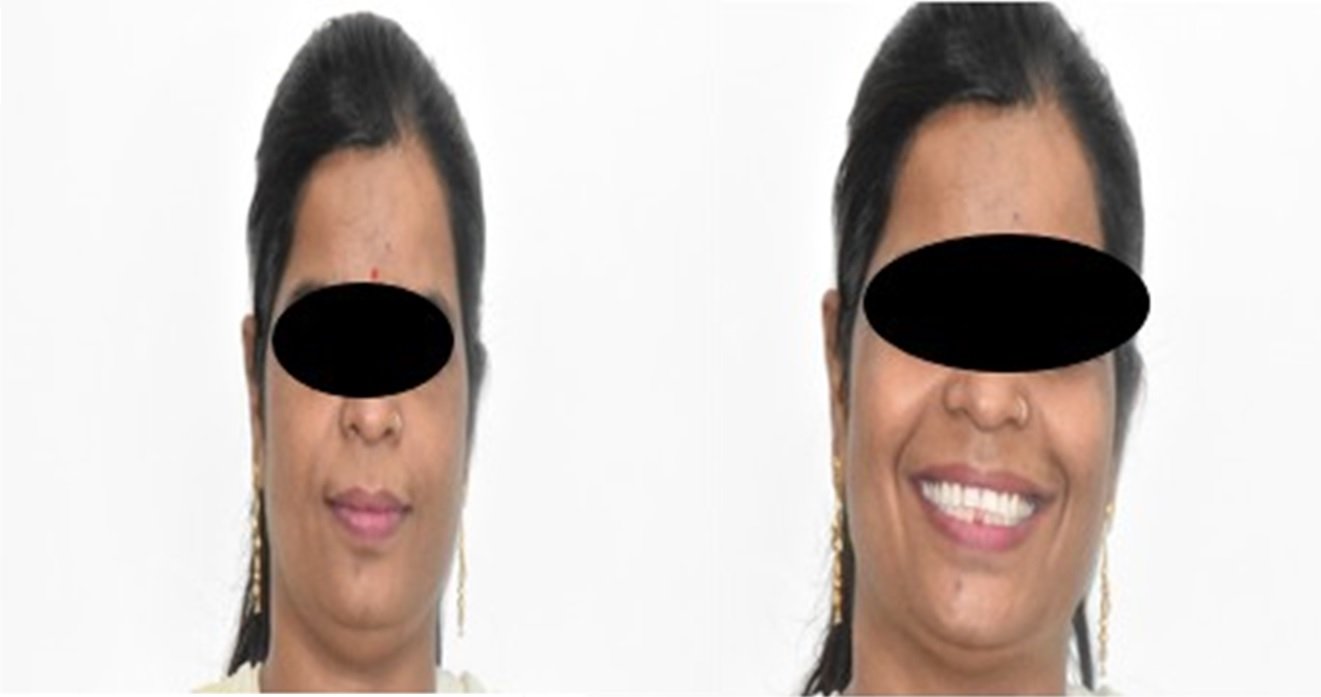
Figure 1:Extraoral photos
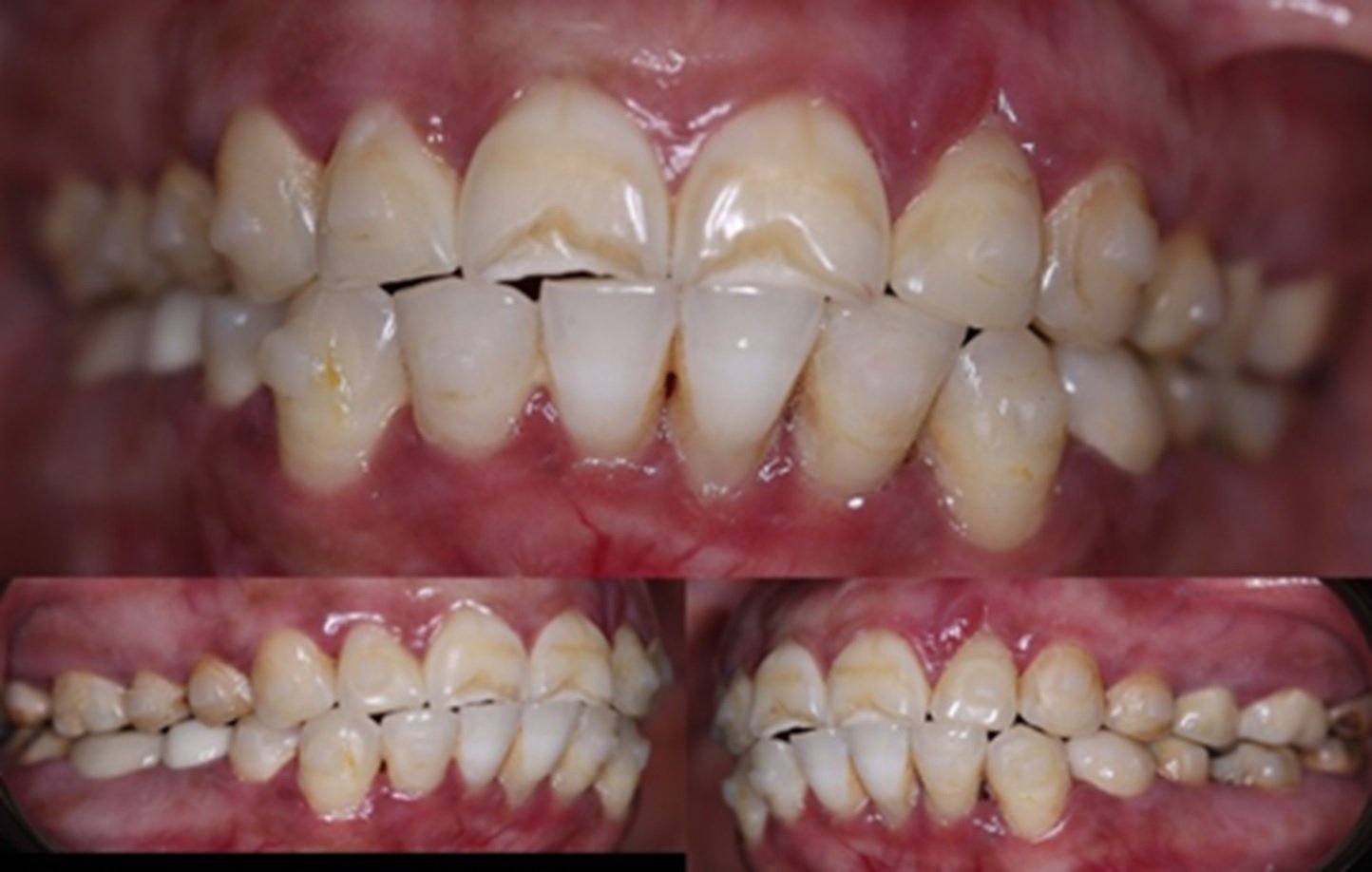
Intraoral examination revealed fair oral hygiene and a normal periodontal condition. A panoramic radiograph confirmed healthy periodontal status, with no signs of caries, root resorption, or other dental abnormalities. [Figure 2]


Figure 2: Pre-operative intraoral images and OPG
TREATMENT OBJECTIVES
The primary objective of the orthodontic treatment was to address the patient's main concerns through the use of tac aligners. Furthermore, the treatment aimed to achieve a stable, functional, and healthy bite, while also improving the overall dental aesthetics.
We explored different treatment options with the patient, taking the following into account:
The first option considered was traditional braces for orthodontic correction; however, the patient opted against this approach, seeking a more aesthetically pleasing alternative.
The second option proposed using clear aligners, aligning well with the patient's preference for a more discreet treatment choice. Following into account:
The first option considered was traditional braces for orthodontic correction; however, the patient opted against this approach, seeking a more aesthetically pleasing alternative.
The second option proposed using clear aligners, aligning well with the patient's preference for a more discreet treatment choice.
For both treatment options, the plan included a non-extraction approach with arch expansion and IPR, to address the concerns of the patient.
TREATMENT PROCEDURE
After reviewing the patient's history and conducting an examination, intraoral and extraoral photographs were taken, along with optical impressions obtained via intraoral scanning. These records were sent to the ClearPath facility to create a customized treatment plan. The panoramic X-ray confirmed sufficient bone support and indicated average oral hygiene, meeting the criteria for orthodontic treatment without any additional dental procedures, making the case appropriate for clear aligner therapy.
Based on the submitted records, a 3D treatment plan was developed, comprising 12 stages for the upper arch and 14 stages for the lower arch. The treatment followed a non-extraction approach, incorporating IPR and arch expansion to address the patient's dental concerns. A treatment simulation was presented to the patient, who reviewed and approved the plan after expressing her satisfaction.
The proposed treatment plan was discussed with the patient within seven days of submitting the records. She was pleased with the suggested approach, and no modifications were necessary. The total treatment duration was estimated at 7 months, which the patient accepted, allowing for treatment to begin shortly thereafter.
TREATMENT PROGRESS
Once the treatment simulation was approved, we received the instruction forms from the aligner provider, along with 12 sets of upper aligners and 14 sets of lower aligners.
The prescribed wear time for each set was 22 hours per day for a period of ten days. The patient received detailed instructions on maintaining proper oral hygiene and periodontal health before starting treatment. The first set of aligners was provided, and an appointment for interproximal reduction (IPR) was scheduled before moving on to the second set.
The patient continued with the subsequent sets of aligners and was evaluated every three months for periodontal health and aligner tracking, which showed satisfactory progress.
The patient demonstrated consistent compliance, contributing to the successful completion of the treatment. The patient was instructed to wear them full time
TREATMENT RESULT
The treatment spanned a total of 7 months, with each worn for 22 hours per day and changed every 15 days. By the end of this period, the midline diastema had been successfully addressed. The results included optimal tooth alignment and functional bite.
Furthermore, the treatment resulted in a well-aligned and centered positioning of both the maxillary and mandibular arches, which significantly enhanced the aesthetic and functional aspects of the patient's smile. Throughout the treatment process, periodontal health was closely monitored and maintained with no significance of gum recession or the development of periodontal pockets, thus preserving the patient overall oral health. [Figure 3]


Figure 3:Post-operative photographs
DISCUSSION
The present case study evaluates the effectiveness of clear aligners in closing a midline diastema using a non-extraction approach, and the results highlight several important aspects of clear aligner therapy in orthodontic treatment. Clear aligners have gained popularity due to their aesthetic appeal, comfort, and removability, offering an alternative to traditional braces for patients who prioritize appearance during treatment. In this case, clear aligners successfully corrected the midline diastema and mild crowding, while also maintaining periodontal health and achieving a stable occlusal relationship.
Clear aligners have been widely recognized for their ability to correct various orthodontic problems, including spacing issues, crowding, and even some complex cases involving bite misalignment.9
The ability of aligners to apply precise and gradual forces to the teeth makes them effective for treating spacing problems like midline diastema.10,11 In this case, the systematic use of 12 stages of upper aligners and 14 stages of lower aligners allowed for gradual closure of the diastema while maintaining proper tooth alignment. The regular intervals of aligner changes and continuous monitoring helped ensure satisfactory progress and compliance.
Maintaining periodontal health is a crucial aspect of orthodontic treatment, and in this case, careful monitoring ensured that there were no adverse effects such as gum recession or periodontal pocket formation. The success of the treatment can be attributed to both the patient’s compliance with the aligner wear schedule and the meticulous planning of the treatment stages. This reinforces the importance of patient cooperation in clear aligner therapy, as adherence to the prescribed wear time and dental visits directly impacts treatment outcomes.11,12
CONCULSION
Clear Aligners are an effective and esthetic mode of orthodontic tooth movement in adults provided the case has been accordingly selected as complex tooth movements and very precise occlusal finishing is difficult to achieve with aligners. Simple tooth movements like proclination and spacing can be corrected along with an overall improvement in the facial esthetics as seen in the above mentioned case report.
REFERENCES
- Rossini, G., Parrini, S., Castroflorio, T., Deregibus, A., & Debernardi, C. L. (20controlling orthodontic tooth movement: a systematic review. The Angle Orthodontist, 85(5), 881-889.
- Phan, X., & Ling, P. H. (2007). Clinical limitations of Invisalign. Journal of the Canadian Dental Association, 73(3).
- Kesling HD. Coordinating the predetermined pattern and tooth positioner with conventional treatment. Am J Orthod Oral Surg. 1946;32:285-93.
- Rossinia G, Parrini S. Efficacy of clear aligners in controlling orthodontic tooth movement: A systematic review. Angle Orthod. 2015;85(5):881-9.
- Orthodontic clear aligner treatment, Seminar in orthodontics. Semin Orthod. 2017;23(1):83-9.
- Singh I, Aziz SB, Singh G. Predictable results using clear aligners: Case report. Srilankan J Orthod. 2018;1(1):1-11.
- Li J, Zhang F, Lai W. (2020). Interproximal reduction in aligner treatment: A systematic review. Prog Orthod, 21(1), 1-8.
- Almyroudi A, Zinelis S, Lambrianidis T, Margelos J. (2014). Invisalign and clear aligners in general orthodontics: An evidence-based approach. J Dent Educ, 78(1), 35-40.
- Kuncio, D., Maganzini, A., Shelton, C., & Freeman, K. (2007). Invisalign and traditional orthodontic treatment postretention outcomes compared using the American Board of Orthodontics objective grading system. The Angle Orthodontist, 77(5), 864-869.
- Robertson, L., Kaur, H., Fagundes, N. C. F., Romanyk, D., Major, P., & Flores Mir, C. (2020). Effectiveness of clear aligner therapy for orthodontic treatment: A systematic review. Orthodontics & craniofacial research, 23(2), 133
- Li J, Zhang F, Lai W. (2020). Interproximal reduction in aligner treatment: A systematic review. Prog Orthod, 21(1),1-8.
- Almyroudi A, Zinelis S, Lambrianidis T, Margelos J. (2014). Invisalign and clear aligners in general orthodontics: An evidence-based approach. J Dent Educ, 78(1), 35-40.
Disclaimer from Guident
The views and opinions expressed in articles published in Guident are solely those of the authors and do not necessarily reflect the views of the editors, the editorial board or the publisher, Ivory India. Guident does not endorse any product, technique or treatment described. Clinical content is intended for qualified dental and medical professionals and is not a substitute for individual clinical judgement. Guident, its editors and the publisher accept no liability for any consequence arising from the use of information published in the journal.
How to cite this article
Dr. Gaurav Gupta, Dr. D.K. Gupta, Dr. Neelja Gupta. Clear Aligner Therapy for Adult Patient: A Case Report. Guident. 2026 Jan;19(2). Available from: https://guident.net/articles/orthodontics/clear-aligner-therapy-for-adult-patient-a-case-report.html