Treatment of "White Spot Lesions" After Removal of Fixed Orthodontic Appliances
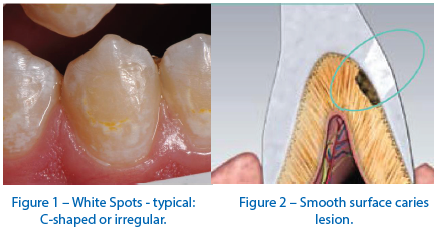
Demineralised white spot lesions occur frequently, after orthodontic treatment. Some teeth are more prone to demineralization (typically the maxillary lateral incisors and the mandibular canine teeth). The disto-gingival area of the labial enamel surface is the area most commonly affected. (Fig. 1) In the first few weeks after removal of the fixed appliances, there is a reduction in white spot lesion size, and appearance, possibly due to the action of saliva. (Fig. 2)
Various treatments have been proposed to assist remineralization. It is important to note that fluoride should not be used, in high concentration, as it tends to prevent remineralization and can lead to further unsightly staining. Low concentrations of fluoride may assist remineralisation, such as those amounts found in casein calcium phosphate materials. Stimulation of salivary flow, by chewing sugar- free gum, is also helpful.
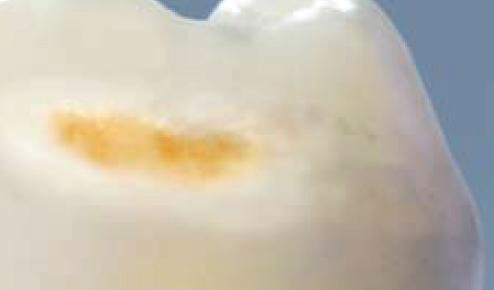
Figure 3 – Clinical image of an incipient caries lesion.
This article will describe a revolutionary new approach to the cosmetic treatment of white spot lesions (Fig.3). Icon resin represents a rapid approach to the treatment of these carious lesions. The break through, micro invasive technology, fills and reinforces demineralised enamel, without drilling or anesthesia. (Fig. 4 & 5)

The reason previous approaches have fallen short, is because fluoride therapy is not always effective in the advanced stages of decay, and the use of restorative fillings almost always sacrifices significant amounts of healthy tooth structure.
Instead of adopting a “wait and see” approach, Icon resin can arrest the progress of early enamel lesions, up to the first third of dentine (Fig.6). This is done in one simple procedure, without the unnecessary loss of healthy tooth structure.

The procedure, when using Icon, is as follows: the surface area of the white spot lesion is eroded with a 15% HCl gel. This opens the pore system of the lesion. The pore system is then dried with ethanol. Icon resin is then applied to the lesion, with the application aid. The extremely high penetration coefficient of the Icon resin enables it to penetrate into the pores of the carious lesion. Excess material is then removed, and the material is light cured. The total treatment time is about 15 minutes. (Fig.7)

Figure 7 - Smooth surface procedure.
The cosmetic treatment of cariogenic white spots, in one patient visit, is very appealing to patients, and their parents (Fig.8a, b). There is no drilling or anesthesia is required, so there is greater patient comfort. Furthermore, patients that have already demonstrated poor compliance with their brushing, can be treated earlier. This is not just minimally invasive Dentistry; it is micro-invasive Dentistry.

I would recommend that all clinicians try the Icon product when attempting to remineralize white spot lesions, post orthodontic treatment.
Disclaimer: This article is reprinted in this journal with the permission of the author.
Disclaimer from Guident
The views and opinions expressed in articles published in Guident are solely those of the authors and do not necessarily reflect the views of the editors, the editorial board or the publisher, Ivory India. Guident does not endorse any product, technique or treatment described. Clinical content is intended for qualified dental and medical professionals and is not a substitute for individual clinical judgement. Guident, its editors and the publisher accept no liability for any consequence arising from the use of information published in the journal.
How to cite this article
DR. Derek Mahony. Treatment of "White Spot Lesions" After Removal of Fixed Orthodontic Appliances. Guident. 2014 Oct;7(11). Available from: https://guident.net/articles/orthodontics/treatment-of-white-spot-lesions-after-removal-of-fixed-orthodontic-appliances.html