Autism: The Aetiology, Management and Implications for Treatment Modalities from the Dental Perspective: A Review of Literature
Department of Pediatric Dentistry, K.D Dental College & Hospital, Mathura, UP
ABSTRACT
Autism is defined as a rare and severe psychiatric disorder of childhood. It is marked by severe difficulties in communicating and forming relationships with other people, in developing language, repetitive and limited patterns of behaviour and obsessive resistance to small changes in familiar surroundings. This article reviews the present literature on the issues encountered while coping with children with autistic spectrum disorder from the dental perspective. The autistic patient profile and external factors affecting the oral health status of this patient population are discussed upon the existing body of evidence. Dental management of an autistic child requires in-depth understanding of the background of the autism and available behavioural guidance theories. The dental professional should be flexible to modify the treatment approach according to the individual patient needs. Hence, affected children offer a special challenge to the practising dentist. To meet this challenge, it is necessary to understand the condition and how to manage its varying presentation in different individuals. The purpose of this article is to review the literature on the topic of autism with an emphasis on the dental perspective.
KEY WORDS: Autism spectrum disorder, childhood schizophrenia, dental management, children
INTRODUCTION
Autism is a complex neurodevelopment disarray defined as a behavioral syndrome, consisting of impaired social interaction, impaired communication skills (verbal as well as nonverbal language), sensorimotor deficits (unpredictable reactions to environmental stimuli) combined with stereotyped and restricted behaviours. Autistic patients constitute small percentage of special child population and they require unique management because of their behavioral characteristics.1 Those people who have primary difficulty in understanding the literal meaning of words are consideration to have “traditional” speech and language disabilities. Those people who have difficulty in the non-verbal parts of communications (including their desire and ability to use language in social contexts) may be considered to have an autism spectrum disorder (ASD) or as alternatively known as Pervasive developmental disorder (PDD).2As currently defined by the American Psychiatric Association’s Diagnosis and Statistical Manual of mental Disorder-IV Edition (DSM-IV). [Table 1] Autism disorder sometimes referred to as early infantile autism, childhood autism or Kenner’s autism.3 Seventy-five percent of children with autism have some form of learning disability/ mental retardation, and 50% have an IQ less than 50%. Due to recent increase in number of patients diagnosed at higher and lower-functioning ends of autism spectrum, an accurate picture of IQ distribution is unknown. Children who are higher-functioning have a better medical prognosis and are better candidate for in-office behaviour guidance techniques (BGTs). Children with poor language skills or a low IQ may not be good candidates for strategies that require some level of understanding and interaction. 4 Autism spectrum disorder (ASD) refers to a group of neurodevelopmental disabilities with a core set of defining criteria that comprise impaired social interaction, communication, and restricted or repetitive behavioural stereotypes. The spectrum consists of Autism, Asperger Disorder (AD), and Pervasive Developmental Disorder-Not Otherwise Specified (PDD-NOS), which differ in the number and severity of diagnostic features. 5
DEFINITION
Autism is defined as a rare and severe psychiatric disorder of childhood. It is marked by severe difficulties in communicating and forming relationships with other people, in developing language, repetitive and limited patterns of behaviour and obsessive resistance to small changes in familiar surroundings.13

Fig 1. The Three broad categories of autism according to Wing and Co-workers, 1996
CATEGORIES OF AUTISM

Fig 2. The Three broad categories of autism behaviour according to Otrnitz, 198529
HISTORY
The concept of autism was coined in 1911 by the German psychiatrist Eugen Bleuler to describe a symptom of the most severe cases of schizophrenia, a concept he had also created. According to Bleuler, autistic thinking was characterized by infantile wishes to avoid unsatisfying realities and replace them with fantasies and hallucinations. ‘Autism’ defined the subject’s symbolic ‘inner life’ and was not readily accessible to observers (Bleuler, 1950[1911]: 63). Psychologists, psychoanalysts and psychiatrists in Britain used the word autism with this meaning throughout the 1920s and up until to the 1950s (e.g. Piaget, 1923). However, in the 1960s, many British child psychologists challenged the contentions about infantile thought assumed by Bleuler and created new methods to validate child psychology as a science, in particular epidemiological studies. ‘Autism’ was then completely reformulated as a new descriptive category to serve the needs of this new model of child development. From the mid-1960s onwards, child psychologists used the word ‘autism’ to describe the exact opposite of what it had meant up until that time. Whereas ‘autism’ in the 1950s referred to excessive hallucinations and fantasy in infants, ‘autism’ in the 1970s referred to a complete lack of an unconscious symbolic life. For example, Michael Rutter, a leading child-psychiatric researcher from the UK’s Maudsley Hospital who conducted the first-ever genetic study of autism, claimed in 1972 that ‘the autistic child has a deficiency of fantasy rather than an excess’ (Rutter, 1972: 327). The meaning of the word autism was then radically reformulated from a description of someone who fantasized excessively to one who did not fantasize at all.12
Many researchers realized that autism and childhood schizophrenia were important concepts within the theory of children’s psychological development which offered much potential for the development of statistical methodologies. In 1961, Mildred Creak set up a working party to identify the key features of childhood schizophrenia and to establish a firm basis for research in childhood psychopathology (Creak, 1964; Lotter, 1966). Creak’s working party consisted of 13 members including Kenneth Cameron; Sylvia Ini from Great Ormond Street Hospital; Dr Guy Mitchell from the Tavistock Clinic; Dr Ronald MacKeith from Guy’s Hospital; and Frank Orford, a clinical psychologist who had previously worked at the Fountain Hospital for mentally defective children. The committee argued that there were 9 key features of ‘schizophrenic syndrome in childhood’ which were:
- Gross and sustained impairment of emotional relationships with people
- Apparent unawareness of his own personal identity
- Pathological preoccupation with particular objects
- Sustained resistance to change in the environment
- Abnormal perceptual experience
- Acute, excessive and seemingly illogical anxiety
- Speech may have been lost or never acquired
- Distortion in motility patterns
- A background of serious retardation in which islets of normal, near normal, or exceptional intellectual function or skill may appear (creak, 1961: 889–90)
ETIOLOGY
The etiologic background of ASD, though not yet completely understood, is considered to implicate both genetic and environmental factors. Recent research work has elucidated that parameter such as CNTNAP2 gene, de novo mutations, mitochondrial defects, cytosine dysregulation, high maternally derived intrauterine androgen concentrations, and advancing maternal age may be involved in the pathophysiology of autism. Based on lately published data, ASD prevalence underwent a substantial increase within a decade of surveillance, estimated at 11.3 per 1,000, i.e. one in 88, children aged 8 years. In addition, a male: female ratio of 4.6: 1 has been reported on the gender-specific epidemiology of the autistic disorder.13
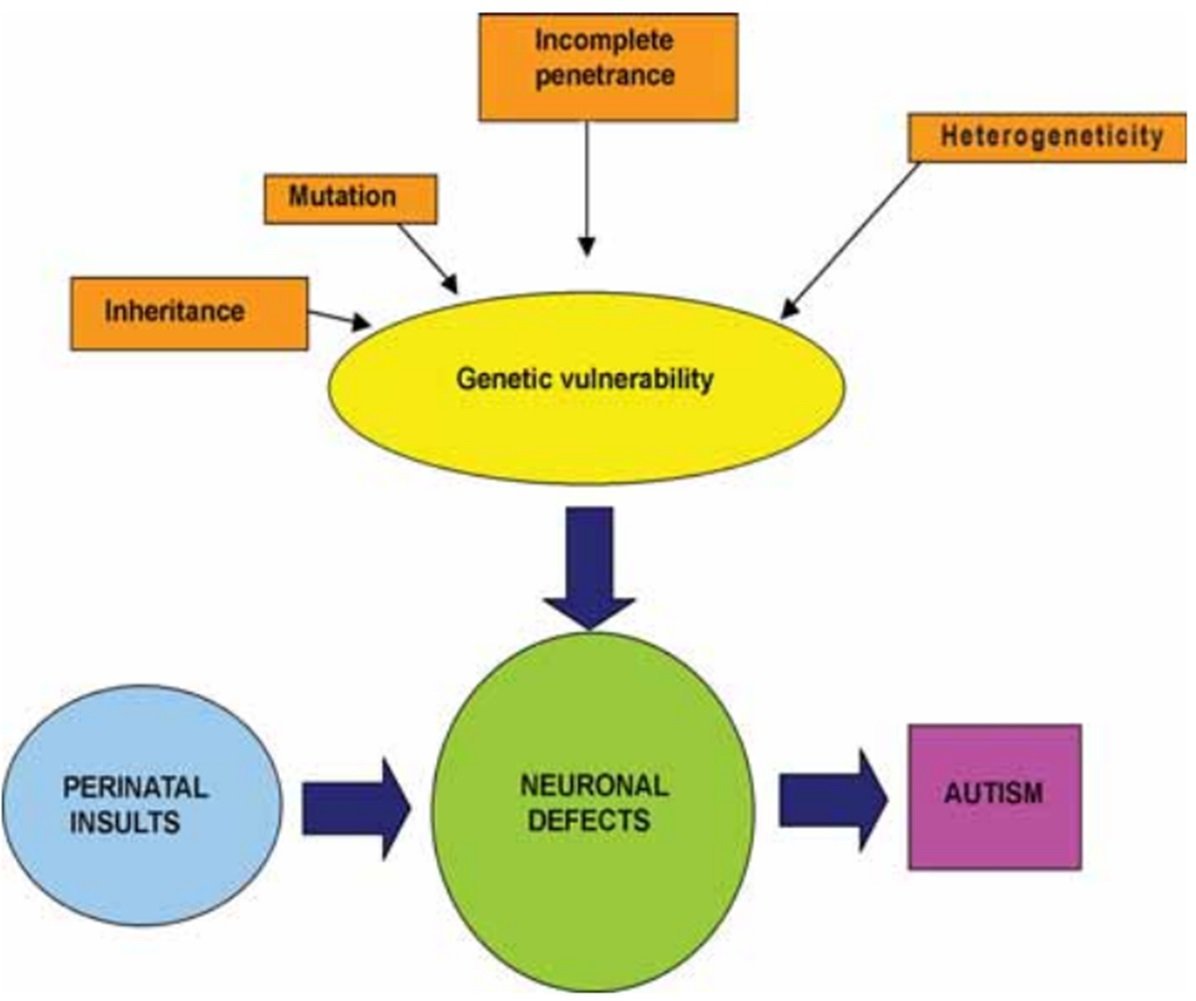
Fig 3. Flowchart that illustrates the etiology of autism
DIAGNOSIS
- Early signs of autism spectrum disorders (ASDs) include infrequent social orienting, infrequent initiation of social engagement, poorly sustained and coordinated engagement with others, a limited variety of gestures and other forms of communication, and repetitive motor behaviours
- Development of siblings of children with ASDs and other groups at high risk of ASDs should be followed closely from 6 months of age onwards
- Diagnosis of ASDs becomes possible at 14 months of age, but the diagnosis might be unstable in up to a third of children diagnosed before 30 months of age
- Young children with ASDs show improved social, communication, language, play and cognitive functioning when they are enrolled in a developmentally appropriate intensive intervention [Table 1]

Table1: DSV-IV diagnostic criteria of autism according to stone and co-worker
DENTAL TREATMENT

CONCLUSION
The dental management of a child with ASD requires in-depth understanding of the autistic behavioural profile. Based on well-established behavioural guidance techniques, the therapeutic approach should be individualized for each patient. The role of continuous education of dental professionals and parents is essential in overcoming the difficulties encountered by the autistic child in the dental chair.
REFERENCES
- Chandrashekhar S, Bommangoudar JS. Management of autistic patients in dental office: a clinical update. International journal of clinical pediatric dentistry. 2018 May;11(3):219.
- Xiao Z, Qiu T, Ke X, Xiao X, Xiao T, Liang F, Zou B, Huang H, Fang H, Chu K, Zhang J. Autism spectrum disorder as early neurodevelopmental disorder: Evidence from the brain imaging abnormalities in 2–3 years old toddlers. Journal of autism and developmental disorders. 2014 Jul;44(7):1633-40.
- Edition F. Diagnostic and statistical manual of mental disorders. Am Psychiatric Assoc. 2013;21:591-643.
- Marshall J, Sheller B, Williams BJ, Mancl L, Cowan C. Cooperation predictors for dental patients with autism. Pediatric dentistry. 2007 Sep 1;29(5):369-76.
- Delli K, Reichart PA, Bornstein MM, Livas C. Management of children with autism spectrum disorder in the dental setting: concerns, behavioural approaches and recommendations. Medicina oral, patologia oral y cirugia bucal. 2013 Nov;18(6):e862.
- Jaber MA. Dental caries experience, oral health status and treatment needs of dental patients with autism. J Appl Oral Sci. 2011;19:212–7. [PMC free article] [PubMed] [Google Scholar]
- Barbaresi WJ, Katusic SK, Voigt RG. Autism: a review of the state of the science for pediatric primary health care clinicians. Arch Pediatr Adolesc Med. 2006;160:1167–75. [PubMed] [Google Scholar]
- Totsika V, Hastings RP, Emerson E, Lancaster GA, Berridge DM. A population-based investigation of behavioural and emotional problems and maternal mental health: associations with autism spectrum disorder and intellectual disability. J Child Psychol Psychiatry. 2011;52:91–9. [PubMed] [Google Scholar]
- Twoy R, Connolly PM, Novak JM. Coping strategies used by parents of children with autism. J Am Acad Nurse Pract. 2007;19:251–60. [PubMed] [Google Scholar]
- Subramaniam P, Gupta M. Oral health status of autistic children in India. J Clin Pediatr Dent. 2011;36:43–7. [PubMed] [Google Scholar]
- Vishnu Rekha C, Arangannal P, Shahed H. Oral health status of children with autistic disorder in Chennai. Eur Arch Paediatr Dent. 2012;13:126–31. [PubMed] [Google Scholar]
- Evans B. How autism became autism: The radical transformation of a central concept of child development in Britain. History of the human sciences. 2013 Jul;26(3):3-1.
- Chew LC, King NM, O'Donnell D. Autism: the aetiology, management and implications for treatment modalities from the dental perspective. Dental update. 2006 Mar 2;33(2):70-83.
- Anthony E. J. (1957) ‘The System Makers: Piaget and Freud’, British Journal of Medical Psychology 30: 255–69 [PubMed] [Google Scholar]
- Anthony E. J. (1958a) ‘An Experimental Approach to the Psychopathology of Childhood: Autism’, British Journal of Medical Psychology 31: 211–27 [PubMed] [Google Scholar]
- Anthony E. J. (1958b) ‘An Aetiological Approach to the Diagnosis of Psychosis in Childhood’, Acta Paedopsychiatrica 25: 89–96 [PubMed] [Google Scholar]
- Baird G., Simonoff E., Pickles A., Chandler S., Loucas T., Meldrum D., Charman T. (2006) ‘Prevalence of Disorders of the Autism Spectrum in a Population Cohort of Children in South Thames’, Lancet 368: 210–15 [PubMed] [Google Scholar]
- Baron-Cohen S., Leslie A. M., Frith U. (1985) ‘Does the Autistic Child have a “Theory of Mind”?’, Cognition 21: 37–46 [PubMed] [Google Scholar]
- Baron-Cohen S., Scott F. J., Allison C., Williams J., Bolton P., Matthews F. E., Brayne C. (2009) ‘Prevalence of Autism-Spectrum Conditions: UK School-Based Population Study’, British Journal of Psychiatry 194(6): 500–9 [PubMed] [Google Scholar]
- Bartak L., Rutter M., Cox A. (1977) ‘A Comparative Study of Infantile Autism and Specific Developmental Receptive Language Disorders III. Discriminant Function Analysis’, Journal of Autism and Developmental Disorders 7: 383–96 [PubMed] [Google Scholar]
- Bender L. (1947) ‘Clinical Study of One Hundred Schizophrenic Children’, American Journal of Orthopsychiatry 17: 40–56 [PubMed] [Google Scholar]
- Bender L. (1953) ‘Childhood Schizophrenia’, The Psychiatric Quarterly 27: 663–81 [PubMed] [Google Scholar]
- Bishop D. (2006) ‘Forty Years On: Uta Frith’s Contribution to Research on Autism and Dyslexia, 1966–2006’, The Quarterly Journal of Experimental Psychology 61: 16–26 [PMC free article] [PubMed] [Google Scholar]
- Bleuler E. (1950[1911]) Dementia Praecox or the Group of Schizophrenias. New York: International Universities [Google Scholar]
- Bowlby J. (1951) Maternal Care and Mental Health: A Report Prepared on Behalf of the World Health Organization as a Contribution to the United Nations Programme for the Welfare of Homeless Children. Geneva: World Health Organisation [Google Scholar]
- Burlingham D., Freud A. (1943) Infants without Families: The Case for and against Residential Nurseries. London: Allen & Unwin [Google Scholar]
- Burt C. (1941) ‘Is the Doctrine of Instincts Dead? A Symposium: 1 – The Case for Human Instincts’, British Journal of Educational Psychology 11: 155–72 [Google Scholar]
- Chapman M. (1988) Constructive Evolution. Cambridge: Cambridge University Press [Google Scholar]
- Claude H., Borel A., Robin G. (1924) ‘Démence Précoce, Schizomanie et Schizophrénie’ [Dementia Praecox, Schizomania and Schizophrenia], L'Encéphale 19: 147–8 [Google Scholar]
- Colvert E., Rutter M., et al. (2008) ‘Do Theory of Mind and Executive Function Deficits Underlie the Adverse Outcomes Associated with Profound Early Deprivation?: Findings from the English and Romanian Adoptees Study’, Journal of Abnormal Child Psychology 36: 1057–68 [PubMed] [Google Scholar]
- Creak M. (1961) ‘Schizophrenic Syndrome in Childhood’, British Medical Journal 2: 889–90 [Google Scholar]
- Creak M. E. A. (1964) ‘Schizophrenic Syndrome in Childhood: Further Progress Report of a Working Party (April 1961)’, Developmental Medicine and Child Neurology 6: 530–5 [Google Scholar]
- Derksen M. (2001) ‘Science in the Clinic: Clinical Psychology at the Maudsley’, in Bunn G. D., Lovie A. D., Richards G. D. (eds) Psychology in Britain: Historical Essays and Personal Reflections. Leicester: BPS Books [British Psychological Society], pp. 267–89 [Google Scholar]
Disclaimer from Guident
The views and opinions expressed in articles published in Guident are solely those of the authors and do not necessarily reflect the views of the editors, the editorial board or the publisher, Ivory India. Guident does not endorse any product, technique or treatment described. Clinical content is intended for qualified dental and medical professionals and is not a substitute for individual clinical judgement. Guident, its editors and the publisher accept no liability for any consequence arising from the use of information published in the journal.
How to cite this article
Dr. Sonal Gupta, Dr. Abhinandan Patra. Autism: The Aetiology, Management and Implications for Treatment Modalities from the Dental Perspective: A Review of Literature. Guident. 2022 Dec;16(1). Available from: https://guident.net/articles/pedodontics/autism-the-aetiology-management-and-implications-for-treatment-modalities-from-the-dental-perspective-a.html