Oral Complications for Children with Diabetes Mellitus and Their Periodontal Management: Part-2
Department of Periodontology and Oral Implantology, Department of Pediatric and Preventive Dentistry, K. D Dental College & Hospital Mathura
ABSTRACT
Our goal in writing this article was to increase awareness of oral complications in children with diabetes mellitus and the way in which they should be managed. A google review was conducted, looking specifically at articles pertaining to diabetes, its oral manifestations, and their management. Hyperglycemia is a hallmark of diabetes mellitus, one of the more common chronic disorders. Many body regions are susceptible to complications from this disease, including the oral cavity.
Children living with diabetes should have their dental care focused on preventing oral manifestations, alleviating any symptoms, and seeking immediate primary care. We should keep appointments as short, stress-free, and non-traumatic as possible. It is best to schedule appointments early in the morning, and patients should eat breakfast before their appointments to prevent hypoglycemia. An alternative to deep sedation is conscious sedation. Diabetologists must adjust insulin regimens. Pediatric patients with uncontrolled diabetes should be aware that pulp capping and pulpotomy procedures may be unnecessary for primary teeth, however vital pulptherapy may be safer than a stressful extraction. In a non-vital tooth with evidence of infection, extraction is the only treatment of choice.
Depending on the periodontal health of the patient, a fixed or removable orthodontic appliance may be most appropriate. An antibiotic prophylaxis might be recommended before a surgical procedure. In addition to vasoconstrictor drugs with local anesthesia, excessive doses of adrenaline are contracted to prevent an increase in blood glucose levels and therefore glucocorticosteroids should be avoided. In this article, we discuss oral health considerations for children with diabetes as well as an overview of the pathophysiology, signs, symptoms, diagnosis, and treatment of diabetes.
CLINICAL IMPLICATIONS: Patients with signs and symptoms of oral complications that are suggestive of diabetes can be referred to physicians for further evaluation by their dentists. This can reduce the morbidity and mortality associated with diabetes.
KEYWORDS: Children, Diabetes mellitus, Oral health, Periodontal Management, Dental considerations
INTRODUCTION
A group of metabolic diseases called diabetes mellitus (DM) causes high blood sugar due to defective insulin secretion or insulin action. Type 1 diabetes is also on the rise, but type 2 diabetes rises to account for more than 90 percent of all diabetic cases. World Health Organization (WHO) reported, India had 32 million diabetic people in the year 2001.1 The International Diabetes Federation (IDF) estimates the total number of diabetic subjects to be around 40.9 million in India and this is further set to rise to 69.9 million by the year 2025.2 The majority of cases of diabetes fall into two broad etiopathogenic categories now called type 1 and T2 DM.
It is important to note that the terms “juvenile-onset diabetes”, “adult-onset diabetes”, “insulin-dependent diabetes”, “noninsulin- dependent diabetes”, and acronyms IDDM and NIDDM no longer are used. The terms “type1 DM” and “type 2 DM” are retained and should be written with Arabic rather than Roman numerals.3
MEDICAL MANAGEMENT
Diabetes patients should receive medical management aimed at preserving a normal blood glucose level. glycated haemoglobin (HbA 1c) is used to determine whether the patient’s controlled metabolic level remained within the normal target range and a measure of glycemic levels for the preceding 3/4 months. Intensive treatment programs and comprehensive education in self-management includes:
i. Diet control
ii. Exercise
iii. Frequent self-monitoring of blood glucose levels
INSULIN
Patients with type 1 or type 2 DM are prescribed this medication. Alternatively, subcutaneous insulin infusion by means of an external computerized pump may be used. It depends on the length of time it takes the insulin preparation to act (Table 4).
Table 4: Types of Insulin Preparations.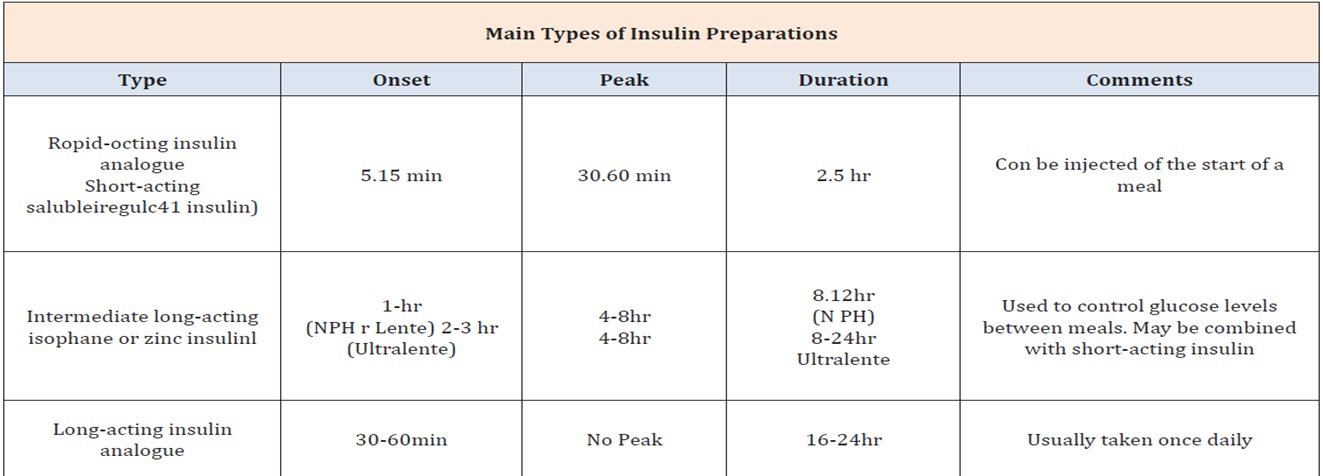
MANAGEMENT OF TYPE 1 DIABETES MELLITUS
For people with type 1 diabetes, insulin is the only available therapy. There has been a problem with insulin replacement in patients with type 1 diabetes because it has been impossible to reproduce the normal pattern of insulin secretion into the portal vein. Presently, there is no efficient method for delivering insulin to the body in the most effective way.
TYPE 1 DIABETES
In the past decade, two major advances have improved the care of patients with type 1 diabetes. First, we understand the unequivocal relationship between metabolic control and vascular complications.53-57 Even if control improves later, diabetics with suboptimal blood glucose levels continue to suffer. Secondly, glucose monitoring advances in time and duration of action (such as continuous pumps, aerosol sprays, etc.) and new forms of insulin delivery (including analogues) have resulted in greater options for the diabetic population.
DIABETES MANAGEMENT THROUGH INTENSIVE CARE
Since suboptimal glucose control is related to vascular complications, patients with hyperglycaemia should receive intensive hyperglycaemia management as a matter of course. It could also include different types of insulin (e.g., fast- and long-acting insulin analogs) or more frequent administration of insulin than usual (four or more times daily), as well as frequent measurements and adjustments of insulin dose. Patients’ ages and lifestyles must be taken into account when planning intensive schedules. Adults and adolescents usually need intermediate-acting insulin before bed for control of their blood sugar levels during the night. Many school-aged children are best managed using a low-dose intermediate-acting insulin in the morning and a low-dose rapid-acting insulin analogue later in the day to prevent afternoon hyperglycemia. These schedules are about to change substantially with the introduction of long-acting insulin analogues. A insulin pump may be beneficial for patients with frequent hypoglycemia or hypoglycaemia unawareness. Therapy that is intensive obviously requires more time and effort from the patient and his or her family, and adherence is obviously crucial for its success. To make management decisions, it is vital to consider the views of patients. If an adolescent can’t manage two injections a day, it’s unlikely he or she will manage four. In adolescents, good control improves quality of life and reduces the burden perceived by their parents.57 A continuous glucose monitoring device reveals that nocturnal hypoglycemia occurs frequently and conventional blood glucose monitoring is inadequate. Continually subcutaneous insulin therapy and the new insulin analogues both show promise for improving blood glucose control but without causing hypoglycemia. Initial studies indicate that the long-acting analogues reduce the risk of nocturnal hypoglycaemia and produce a modest reduction in fasting blood glucose levels compared with intermediate-acting preparations.58
METHODS OF DELIVERING INSULIN
Syringes and needles for injecting insulin are available in single-unit syringes (which include a needle fixed to the syringe to minimize air space). Injections with 27-gauge and 28-gauge attached needles, as well as some 30-gauge needles have greatly reduced pain. It is permitted to reuse disposable syringes up to the point when the needle becomes blunt (usually after three to five injections).
PEN DEVICES
Retractable needles come with pen devices. Regular human insulin in cartridges is U 100. Cartridges containing insulin lispro; regular insulin, NPH insulin and pre-mixed insulin are available for use with these pens.59
SITES FOR INJECTION
It is possible to inject into any part of the body covered by loose skin, including the abdomen, thighs, upper arms, flanks, and upper outer quadrants of the buttocks. The use of a single injection site leads to fibrosis and lipo hypertrophy due to the absorption of insulin. Patients are usually recommended to receive their injections into the abdomen because a considerable amount of rotation space is available, and the absorption rate may be less variable than if injections were administered into the thigh or deltoid area.
Introducing New Insulin Delivery Methods
Since the 1980’s, technological advances in diabetes management have improved T1DM outcomes significantly.
INTRANASAL
Intranasal administration of soluble insulin that is given with a detergent facilitates rapid absorption. There has been preliminary evidence showing this medication reduces post-prandial hyperglycemia in type 1 diabetics. As a result, less than 10% of the nasal dose is absorbed. Therefore, it is less cost-effective, and most manufacturers have discontinued clinical trials until it can improve its bioavailability. Currently, phase III trials are being conducted on inhaled insulin, which can provide more precise drug delivery.
INSULIN PUMPS AND CONTINUOUS SUBCUTANEOUS INSULIN INFUSION
Despite their growing sophistication, insulin pump devices are becoming smaller and more compact. Subcutaneous insulin is delivered through a cannula placed under the skin, and the dose is changed every 72 hours. It can administer additional boluses of insulin ‘at the push of a button’, based on a continuously programmed basal rate. Insulin pumps that are smart have a sophisticated computer built into them. The delivery of CSII through insulin pumps has been extensively investigated in the paediatric and young adult population.60
CONTINUOUS GLUCOSE MONITORING (CGM) SYSTEMS
An innovative system to estimate plasma glucose concentrations by measuring interstitial quid glucose concentrations with a subcutaneous, glucose oxidase coated sensor could lead to improved control of type 1 diabetes in the future. In the form of a plot showing plasma glucose concentrations over a 24-hour period, insulin can be adjusted to detect episodes of hyperglycaemia or hypoglycaemia not detected by simple capillary glucose monitoring. More recently, real-time CGM and CSII technologies have been combined in a single device and this exciting technology may represent a step towards an artificial pancreas.61 Currently, insulin is sold in the USA in only 100 units/ml concentration (U 100), while in India it is available in both U 100 and U 40 concentrations and dispensed by 10 mL containers. It is unclear how this technology can assist in the management of type 1 diabetes, however, despite advances.
OTHER MODES OF THERAPY IN T1DM
Analogs of Amylin: Pramlintide is a synthetic version of Amylin, a polypeptide hormone produced from pancreatic beta cells together with insulin. It is injected pre prandially in addition to insulin and has shown modest improvements in post prandial hyperglycaemia with 20-30% decrease of insulin dose.62 Pramlintide appears to reduce hypoglycaemic episodes and weight gain in patients with type 1 diabetes. In addition to insulin, there is an additional prick required in addition to nausea.
PANCREATIC AND ISLET TRANSPLANTATION
Type-1 diabetes is generally treated with pancreatic transplants after renal transplantation to treat diabetic nephropathy in the end stages. While normalization of glycaemic control is achieved following successful transplantation, but this therapy carries the risk of pancreatic graft rejection and side effects of immunosuppression.63 Diabetes type 1 patients may benefit from islet cell transplantation. Upon injection into the portal venous system, *-cells are lodged within liver sinusoids where they provide rejuvenation. These b cells remain glucose sensitive and secrete insulin into the portal system, in the same way as occurs in the physiological situation.64 In order to provide sufficient tissue for a successful transplant with this isolation technique, multiple pancreas must be harvested. It is possible, however, that this technique of cell delivery/transplantation may provide a successful long-term treatment of glycaemia in type 1 diabetes once engineered b cells are differentiated using stem cells.
IMMUNOTHERAPY
Pancreatic®-cell preservation using immune suppression or immune tolerance has been disappointing. When used as secondary prevention of type 1 diabetes, cyclosporine and antiCD3 antibodies reduce the required insulin dose and prolong b-cell survival, as assessed by fasting and stimulated serum C-peptide concentrations.65 However, both of these treatment modalities have unacceptable side effect problems, particularly given the age of the target population. GAD-alum immunization in an attempt to promote immune tolerance in subjects with diagnosed type 1 diabetes did not significantly reduce the requirement for insulin or improve fasting serum Cpeptide concentrations66, the use of these therapies requires more research before their introduction as main stream approaches to prevention of type 1 diabetes mellitus.
OTHER ADVANCES
Education and psychological support
Counseling and education are becoming even more crucial for achieving compliance in adolescents as intensive therapy increases the demands on patients and their families. However, as long-term risk of vascular complications can be predicted more accurately from HbA1c level, it is easier for doctors to counsel and encourage intensive management.1,2,3,5 Furthermore, as doctors have become more certain about the need for intensive management, it is our impression that patients and their families have accepted and coped better with it. Indeed, mean HbA1c levels in Australian children have improved from 10% in the 1980s to around 8% in 2003.67 Adolescents with type 1 diabetes have been shown to benefit from coping-skills training in terms of metabolic control and quality of life.68 This intervention must be intensive and sustained to be effective. It has long been universally accepted that diabetes educators and dietitians play an essential role in multidisciplinary teams.
Dietary management and education is now more comprehensive and includes the concept of the glycaemic indices of food.16 Educators’ roles are becoming more specialized, both in terms of workload and varying age groups, as well as different monitoring and delivery systems as technology advances.
RECENT ADVANCES IN THERAPY OF DIABETES
Management of Type 2 Diabetes Mellitus
Non-pharmacological Therapy: Certain non-pharmacological interventions are equally important in the management of diabetic patients.Medical Nutrition Therapy (MNT): A proper diet is important component of therapy in all patients with diabetes. Caloric distribution in T2 DM patients should consist of 55-60% carbohydrate, 10-15% protein, and 25-25% fat. Diets higher in carbohydrate content are less likely to achieve near normal blood sugar levels in patients with type 1 diabetes on intensive insulin regimens.
Dietary Fiber: Fibers such as cellulose or hemicelluloses, as found in bran, termed as insoluble fibers increases intestinal transit time and may have beneficial effects on colonic function. Beans, oatmeal, and apple skin contain gums and pectins that ease gastric and intestinal transit, slowing glucose absorption, resulting in a reduction of hyperglycemia.
Artificial Sweeteners: The non-nutritive sweetener saccharin is widely used as a sugar substitute. Since it is 180 times sweeter than sucrose, aspartame may prove to be the safest sweetener for diabetics. This makes it not suitable for baking or cooking, since it has a low heat capability. Moderation is recommended when using these.
Fruits: Fruits (whole) should be taken in moderation .However, very sweet fruits and fruit juices can be avoided.
Alcohol: Alcohol intake is best avoided and if used must be in moderation as it may worsen the dyslipidemia, neuropathy and glycemic control.
Common Salt: Pickles, papad, chatni and salty processed foods should be restricted as they contain more amount of salt. Permissible quantity of salt is 6 grams per day.
Tobacco: Smoking and the use of tobacco in any form should be prohibited.
Physical activity: In T2 DM exercise programme to achieve weight reduction and calorie counting is central to the management. Aerobic exercises should be progressively increased. Before starting any exercise program, diabetics should be evaluated for contraindications such as CAD, proliferative diabetic retinopathy, autonomic neuropathy, etc. The goal should be to walk 30-60 minutes a day or equivalent. There has been evidence that yoga, an ancient Indian system, is beneficial in treating diabetes. Some aspects of Yoga like, Asanas (involving postures), Pranayama (involving breath), Dhayana (meditation) and Bhavana (visualization) are beneficial but need to be learnt under expert guidance.69
Table 3 shows characteristics of oral antidiabetic drugs. DM type 2 is treated with them when the condition is mild to moderate. Different drugs reduce blood sugar in different ways, which is why they are often combined.
INCRETINS
There is growing evidence that the introduction of incretins, a class of intestinal peptides that promote insulin secretion after consuming food, as novel antihyperglycaemic oral therapies, may have significant benefits in older adults.
Treatment for type 2 diabetes using oral agents targeting incretin pathways is the newest strategy. DPP IV inhibitors belong to this group. Two hormones secreted by the intestine (glucagon-like peptide-1 and gastric-inhibitory peptide) are inhibited by these agents. These hormones increase insulin secretion, decrease glucagon secretion and delay gastric emptying.70-72 The incretin pathway is attenuated in patients with type 2 DM73, and oral agents that specifically target the enzyme dipeptidyl peptidase IV increase their half-lives in the bloodstream. Naturally occurring incretins in humans have a short half-life and are not useful therapeutically. Exenatide is a synthetic analog of Gila monster incretin (exendin-4), and it targets the glucagon-like peptide-1 receptor. It is an injectable drug, however, and leads to weight loss, unlike insulin, which causes weight gain.74-77 Among all the approved DM medications, only two (metformin and exenatide) reduce weight while simultaneously improving glycemic control. Weight gain is the result of all other agents.
You can take these OHAs alone or in combination with insulin. If you combine a sulfonylurea with an insulin releaser like meglitinide, you may not achieve the same outcome because both agents activate sulfonylurea receptors. On the other hand, either of these can be combined with any of the insulin sensitizers or the incretin therapies. Use of combination therapies is common place for the control of DM5.
COUNTER REGULATORY HORMONES
In addition to increasing blood glucose, these hormones also stimulate hepatic glycogenolysis and gluconeogenesis. Agents that interfere with the secretion or action of counter regulatory hormones could potentially be therapeutically useful.78
a) Glucocorticoids: Increased glucocorticoid levels are associated with truncal obesity, insulin resistance, and hyperglycemia. How ever you reduce or eliminate glucocorticoids, these undesirable effects will be reduced. Selective inhibitors of 11 β - HSD1 have been shown to improve insulin sensitivity, glycemic control and plasma lipids in obese diabetic rodents.79
b) Insulin: Insulin is required in patients with T2 DM who have developed sulfonylurea failure or those who are undergoing an acute infective or operative event. Treatments previously available for T2 DM improved glycaemic control, but were also associated with weight gain and a higher risk of hypoglycemia. â Cell function decreases with the progression of T2DM, so more conventional treatments are unable to support â cell function. Adding these new treatments to the range of T2 DM treatment options is welcome, particularly given some of the concerns raised recently about certain modern agents.
DENTAL MANAGEMENT CONSIDERATIONS
Acquiring a patient’s health history is a critical first step toward managing the patient’s medical problems. To establish whether the patient’s endorsement of the disease is valid, the clinician has to fully comprehend its significance. In order to provide dental treatment to a medically compromised patient, a clinician must understand the potential complications that may result and when pre- or posttreatment medication is needed.
A comprehensive health history questionnaire should include questions about the patients cardiovascular, hematologic, neural and sensory, gastrointestinal, respiratory, dermal, mucocutaneous, and musculoskeletal, endocrine, and urinary systems as well as questions related to sexually transmitted diseases, drug use (eg, alcohol, tobacco), allergies, x-ray exposure or treatment, medications, and hospitalizations.
As part of the review of systems (ROS), it is preferable to obtain an oral history as well. The oral ROS provides valuable information not included in the questionnaire. Dental histories should also cover questions related to current oral conditions like periodontal disease, oral ulceration, previous dental treatment, and potential complications from prior intervention like treatment failures and anesthesia use.
Scheduling of Visits
In general morning appointments are advisable since endogenous cortisol levels are generally higher at this time. It’s recommended to avoid scheduling appointments during the peaks of insulin activity for patients who receive insulin therapy since that’s when the risk of hypoglycemia is greatest.
Diet
Clinical staff should make sure the patient ate normally and took medications as usual. As a result of the dental appointment, the patient might skip breakfast, but the insulin dose remains the same. Hypoglycemia is thus more likely to occur. In certain cases (e.g. conscious sedation) the dentist may ask that the patient alter their diet prior to the procedure. Patients’ physicians may have to adjust medication doses in these cases.
Blood Glucose Monitoring
Before beginning a procedure, dentists may need to take the blood glucose level of the patient depending on his/her medical history, medication regimen, and procedure. You can do this with the help of commercially available blood glucose monitoring devices which are highly accurate. Patients with low plasma glucose levels (<70 mg/dl) should be given an oral carbohydrate before treatment to minimize the risk of a hypoglycemic event.80
DURING TREATMENT
Most of the complications in dentistry are caused by hypoglycemia, a condition in which the body’s blood sugar drops too low. A patient’s blood sugar level may greatly decline if insulin levels exceed physiological requirements. These initial signs include mood changes, weakness, and hunger. These may be followed by seating, incoherence, and tachycardia. If untreated, possible consequences may include unconsciousness, hypotension, hypothermia, seizures, coma and death.
Controlling blood sugar (glucose) levels is the major goal of diabetes treatment, in order to prevent complications of the disease.
Type 1 diabetes is managed with insulin as well as dietary changes and exercise.Type 2 diabetes may be managed with non-insulin medications, insulin, weight reduction, or dietary changes.
The choice of medications for type 2 diabetes is individualized, taking into account:
i. The effectiveness and side effect profile of each medication.
ii. The patient’s underlying health status.
iii. Any medication compliance issues.
iv. Cost to the patient or health-care system.
A diabetes care plan must include proper nutrition. Individuals with diabetes do not benefit from the same type of diabetes diet. Diabetic patients may benefit from a pancreas transplant. It is recommended that the clinician measures blood glucose levels immediately after treatment. The post-operative considerations for clinicians should be kept in mind. Uncontrolled diabetes patients are at greater risk of developing infections and have a slower wound healing rate. Having an acute infection can adversely affect insulin resistance and glycemic control, subsequently affecting the body’s healing capabilities. As a result, patients with overt oral infections can benefit from proper antibiotic coverage.
AFTER TREATMENT
In consultation with the patient’s physician, oral antidiabetic medication or insulin may need to be adjusted accordingly after treatment. Sulfonylureas can increase sodium sensitivity and insulin secretion, resulting in hypoglycemia when salicylate is taken. It is advisable to avoid it.ANTIBIOTIC COVERAGE
Diabetes patients are at risk of developing oral complications due to their susceptibility to infection and sequelae. They may need to take antibiotics in addition to their regular treatment. Adenoalveolar surgery (involving bone and mucosa) with antibiotic coverage may help prevent wounds that heal slowly and poorly. Close monitoring of oral infections is necessary. The treatment of acute infections of the mouth should include cultures, antibiotics, and any necessary surgical therapy (for example, extraction, pulpectomy, incision and drainage). In cases of poor response to the first antibiotic administered, dentists can select a more effective antibiotic based on the patient’s sensitivity test results.81
IDENTIFICATION AND TREATMENT OF HYPOGLYCEMIA
IdentificationSymptoms:
- Shakiness
- Anxiety
- Increased sweating
- Hunger
Signs
- Tremors
- Tachycardia
- Altered consciousness (lethargy and obtundation or personality change)
- Blood glucose level: < 60 mg/dl
TREATMENT CONSCIOUS PATIENT
- Administer 15 mg of simple carbohydrates
- Repeat finger- stick glucose test in 15 minutes:
- Blood glucose level > 60 mg/dl: patient should be asked to eat or drink (for example, a sugar-sweetend beverage)
- Blood glucose level < 60 mg/dl: repeat treatment of15 g of simple carbohydrates and check blood glucose in 15 minutes. Continue until achieving a blood glucose level > 60mg/ dl
- Ask the patient to report his/ her physician
UNCONSCIOUS PATIENT WITH INTRAVENOUS ACCESS
i. Administer 5 to 25 g of 50% dextrose immediatelyii. Notify the patient’s physician
WITHOUT INTRAVENOUS ACCESS
i. Apply glucose gel inside the mouth in a semi obtund patient or treat with 1 mg of glucagon intramuscularly or subcutaneously.ii. Repeat the blood glucose test in 15 minutes
iii. Establish intravenous access and notify the patient’s physician
MONITORING GLYCEMIC CONTROL
The first step in treating patients with diabetes is to diagnose their diabetes type (type 1 or type 2), and the second is to assess their level of disease control (well controlled vs poorly controlled). Usually, the practitioner’s office can provide you with the HbA1c levels or glucose levels. To guide clinicians’ treatment decisions, medical updates must be recorded in each dental record. By using a fingertip glucometer, the dentist can measure blood glucose levels quickly. In the case of a diabetic-induced hypoglycemic event, the dental office should also have immediate glucose sources.COMMUNICATION WITH PHYSICIANS
Communicating regularly with doctors is crucial in treating diabetic patients safely. There must be bidirectional communication: doctors must be brought up to date on oral manifestations of diabetes, and dentists must be kept informed on the diabetic patient’s glycemic control. Treating patients with diabetes also represents an opportunity to expand a dentist’s referral base. Patients whose oral health needs are not adequately met by their doctors could be referred to physicians who treat children and adults with diabetes.
The oral complications of diabetes mellitus must be treated effectively by dentists with knowledge of the various methods. The treatment recommended for patients without diabetes is often the same as for those with diabetes. Management of diabetic patients, however, requires a greater level of follow-up, more aggressive interventional treatment rather than observation, regular communication with physicians, and greater attention to prevention. Patients with diabetes, particularly those with a history of poor glycemic control and oral infections, require more frequent recall visits and fastidious attention to acute oral infections.82
DENTAL TREATMENT
For diabetic children, dental care is focused on preventing any oral infections that may upset the balance of their sugar as well as maintaining healthy tissues.
An insulin shock following an insulin injection is the only crisis that may reasonably happen in dental surgery, which usually results from missing or postponing a meal following the injection. Tremors, weakness, pallor, and sweating are common early symptoms, as have been mentioned previously, along with a hot and cold feeling that makes the skin clammy. Adrenalin is released when apprehensive children begin to cry. It is imperative that the dentist adjust themselves to the possibility of hypoglycemic collapse in the diabetic child and ask the patient and his parents if sugar should be taken. Restlessness, yawning, slurred speech, etc., all of which progress to restless behavior, yawning, and slurred speech, all of which require immediate attention, because the next stage is coma. The quickest way to provide sugar and water is with two teaspoonfuls at a time, but if not available immediately, then concentrate orange squash or even biscuits should be given instead, although they absorb much more slowly. Repeat after five minutes if you do not see any improvement. In cases of severe hypoglycemia, the patient should be positioned on his side or prone, and fifty milliliters of 50% of glucose should be given intravenously using a wide-bore needle because of its viscosity. The surrounding tissue must be protected by great care so that none escape. For such emergencies, it is easy to procure ampoules of this preparation. Alternatively, an intramuscular injection of 1 mg of glucagon [adult dose] which is available ready packaged is probably a safer and more easily administered treatment than intravenous glucose for the dental practitioners who is unused to the latter technique. It has the great advantage of doing no harm if the diagnosis of insulin coma was wrong. Recovery of consciousness is usually rapid, within 15 minutes, and the patient should then be given carbohydrate by mouth to stabilize the recovery.83
CONSERVATION
There are no problems here. The 2 to 4 ml of solution given under local anesthesia usually contains no adrenaline and therefore won’t make any material difference to the balance overall, even with a normal adrenaline content of 1:80,000 or less. When treating patients for a long period of time, insulin injection timing is important to remember. Septic teeth which cannot easily be restored to a non-septic condition and non-vital teeth which cannot be properly supervised are better removed.84
PERIODONTAL TREATMENT
Gingival health should be monitored closely. There may be a need for frequent scaling, which must be thorough and non-traumatic. Efforts should be made to eliminate pockets. Prevention is essential, even in children who do not yet exhibit symptoms of periodontal disease. Instructions in correct tooth - brushing and gum massage whenever necessary, the grinding of points of traumatic occlusion will assist the postponement of gingival diseases.38
APPLIANCES
Orthodontic treatment is not contraindicated, though general principles suggest reducing wear time to a reasonable minimum. If a prosthetic appliance is necessary, it must be kept under regular supervision and the patient’s attention directed to the need for special care in brushing and massaging the gums.85
ORAL SURGERY
If the child is under good insulin control, local anesthesia for extraction does not create any special difficulties. Dry sockets and slow healing are far more common in diabetics with degenerative disease and severe periodontal disease than in young diabetic patients. As has been said already, normal local anesthetic solution with 1:80000 adrenaline is quite suitable in these children.84
General anesthesia should never be used on a diabetic child as an out-patient in a dental surgery. This would require fasting for at least 3 hours before operation and would almost certainly precipitate insulin shock. If general anesthesia is indicated then the patient should be referred to his hospital physician for this to be arranged on an in-patient basis.
In January 2013, the American Academy of Pediatrics (AAP)86 issued clinical practice guidelines on the management of type 2 diabetes in children and adolescents. Because it might be unclear at first whether some patients have type 1 or type 2 diabetes, insulin treatment is recommended for all patients who present with ketosis or extremely high blood glucose levels. When a diagnosis of type 2 diabetes is confirmed, treatment with metformin and lifestyle modification are recommended (Table 5).Table 5: Indications for use of continuous subcutaneous insulin infusion (CSII) in paediatrics.86

CONCLUSION
In conjunction with other members of the health team, the dentists can play an important role in helping a diabetic maintain glycemic control by treating oral infections, and by exercising rigorous oral hygiene and adhering to a healthy diet. The dental profession should be actively involved in maintaining the health of diabetic patients and have the responsibility and potential to identify, assess, and manage diabetic patients who are present or at risk. In order for kids to develop a sense of well-being, oral health and general health ought to be taught to DM1 patients and their parents.By preventing oral problems, we not only improve glycemic control and general health, but we also reduce the amount of oral problems in the first place.
REFERENCES
- Wild S, Roglic G, Green A, Sicree R, King H (2004) Global prevalence of diabetes: American Estimates for the year 2000 and projections for 2030. Diabetes Care 27(5): 1047-1053.
- International Diabetes Federation (2006) Diabetes Atlas. (3rd edn), International Diabetes Federation, Belgium, pp. 387.
- Lalla RV, D Ambrosio JA (2001) Dental management considerations for the patient with Diabetes Mellitus. J Am Dent Assoc 132(10): 1425- 1431.
- King H, Aubert RE, Herman WH (1998) Global burden of diabetes, 1995- 2025: prevalence, numerical estimates, and projections. Diabetes Care 21(9): 1414-1431.
- American Diabetes Association (2010) Diagnosis and classification of diabetes mellitus. Diabetes Care 33(Suppl 1): s62-s69.
- Karvonen M, Viik-Kajander M, Moltchanova E, Libman I, LaPorte R, et al. (2000) Incidence of childhood type 1 diabetes world-wide. Diabetes Mondiale (DiaMond) Project Group. Diabetes Care 23(10): 1516-1526.
- The Diabetes Control and Complications Trial Research Group. The effect of intensive treatment of diabetes on the development and progression of long-term complications in insulin-dependent diabetes mellitus. N Engl J Med 1993;329:977-86.
- UK Prospective Diabetes Study (UKPDS) Group. Intensive bloodglucose control with sulphonylureas or insulin compared with conventional treatment and risk of complications in patients with type 2 diabetes (UKPDS 33). Lancet 1998;352:837-53.
- Effect of intensive blood-glucose control with metformin on complications in overweight patients with type 2 diabetes (UKPDS 34). UK Prospective Diabetes Study (UKPDS) Group. Lancet 1998;352:854-65.
- Lawson ML, Gerstein HC, Tsui E, Zinman B. Effect of intensive therapy on early macrovascular disease in young individuals with type 1 diabetes: a systemic review and meta-analysis. Diabetes Care 1999;22(supplement 1):B35-9.
- Stratton IM, Adler AI, Neil HA, et al. Association of glycaemia with macrovascular and microvascular complications of type 2 diabetes (UKPDS 35): prospective observational study. BMJ 2000;321:405-12.
- Ceriello A. The emerging role of post-prandial hyperglycemic spikes in the pathogenesis of diabetic complications. Diabet Med 1998;15(3):188-93.
- Hanefeld M, Temelkova-Kurtschiev T. The postprandial state and the risk of atherosclerosis. Diabet Med 1997;14(supplement 3):6-11.
- Ohkubo Y, Kishikawa H, Araki E, et al. Intensive insulin therapy prevents the progression of diabetic microvascular complications in Japenese patients with non-insulin-dependent diabetes mellitus: a randomized prospective 6-year study. Diabetes Res Clin Pract 1995;28(2):103-17.
- Little JW, Falace DA, Miller CS, Rhodus NL. Dental management of the medically compromised patient. 6th ed. St. Louis: Mosby; 2002:154, 248-70, 548-632.
- Grossi SG, Skrepcinski FB, DeCaro T, Robertson DC, et al. (1997) Treatment of periodontal disease in diabetics reduces glycated hemoglobin. J Periodontol 68(8): 713-719.
- Diabetes diagnosis National Diabetes information clearinghouse (2001) National institute of Diabetes and digestive and kidney diseases. National Institute of Health 41: 31-35.
- Taylor GW, Burt BA, Becker MP, Genco RJ, Shlossman M (1998) Glycemic control and alveolar bone lo ss progression in type 2 diabetes. Ann Periodontol 3(1): 30-39.
- Oliver RC, Tervonen T (1994) Diabetes: a risk factor for periodontitis in adults? J Periodontol 65(5 suppl): 530-538.
- Moore PA, Weyant RJ, Mongelluzzo MB, Myers DE, Rossie K, et al. (1999) Type 1 diabetes mellitus and oral health: assessment of periodontal disease. J Periodontol 70(4): 409-417.
- Kao CH, Tsai SC, Sun SS (2001) Scintigraphic evidence of poor salivary function in type 2 diabetes. Diabetes Care 24(5): 952-953.
- Murrah V, Crosson JT, Sauk JJ (1985) Parotid gland basement membrane variation in diabetes mellitus. J Oral Pathol 14(3): 236-246.
- Todd AL, Ng WY, Lee YS, Loke KY, Thai AC (2002) Evidence of autoantibodies to glutamic acid decarboxylase in oral fluid of type 1 diabetic patients. Diabetes Res Clin Pract 57(3): 171-177.
- Robertson C, Drexler AJ, Vernillo AT (2003) Update on diabetes diagnosi and management. J Am Dent Assoc 134: 16S-23S.
- Stanley K (1998) Assessing the nutritional needs of the geriatric patient with diabetes. Diabetes Educ 24(1): 29-30, 35-37.
- (2000) Variation and trends in incidence of childhood diabetes in Europe. EURODIAB ACE Study Group. Lancet 355(9207): 873-876.
- (1993) The effect of intensive treatment of diabetes on the development and progression of long-term complications in insulin dependent diabetes mellitus. The Diabetes Control and Complications Trial Research Group. N Engl J Med 329(14): 977-986.
- White NH, Cleary PA, Dahms W, Goldstein D, Malone J, et al. (2001) Beneficial effects of intensive therapy of diabetes during adolescence: outcomes after conclusion of the Diabetes Control and Complications Trial (DCCT). Diabetes Control and Complications Trial (DCCT)/ Epidemiology of Diabetes Interventions and Complications. J Pediatr 139(6): 1923-1928.
- Siudikiene J, Machiulskiene V, Nyvad B, Tenovuo J, Nedzelskiene I (2008) Dental caries increments and related factors in children with type 1 diabetes mellitus. Caries research 42(5): 354-362.
- Iughetti L, Marino R, Bertolani MF, Bernasconi S (1999) Oral health in children and adolescents with IDDM--a review. J Pediatr Endocrinol Metab 12(5 Suppl 2): 603-610.
- Guggenheimer J, Moore PA, Rossie K, Myers D, Mongelluzzo MB, et al. (2000) Insulin-dependent diabetes mellitus and oral soft tissue pathologies, part I: prevalence and characteristics of non-candidal lesions. Oral Surg Oral Med Oral Pathol Oral RadiolEndod 89(5): 563- 569.
- Kadir T, Pisiriciler R, Akyüz S, Yarat A, Emekli N (2002) Mycological and cytological examination of oral candidal carriage in diabetic patients and non-diabetic control subjects: thorough analysis of local aetiologic and systemic factors. J Oral Rehabil 29(5): 452-457.
- Nirmala SV, Lalitha V, Sivakumar N, Kumar KK, Srikanth M (2011) Mucormycosis associated with juvenile periodontitis. Jol of Indian Soci of Pedo and Prev Dent 29(6 suppl): s87-s91.
- Skiada A, Lass-Floerl C, Klimko N, Ibrahim A, Roilides E, Petrikkos G. Challenges in the diagnosis and treatment of mucormycosis. Med Mycol. 2018;56(suppl 1):93–101.
- Dadwal SS, Kontoyiannis DP. Recent advances in the molecular diagnosis of mucormycosis. Expert Rev Mol Diagn. 2018;18(10):845–54.
- Setianingrum F, Rautemaa-Richardson R, Denning DW. Pulmonary cryptococcosis: a review of pathobiology and clinical aspects. Med Mycol. 2019;57(2):133–50.
- Settle RG (1991) The chemical senses in diabetes mellitus. In: Getchell TV (Ed.) Smell and taste in health and disease. Raven Press, USA, pp. 829-843.
- Grossi SG, Skrepcinski FB, DeCaro T, Robertson DC, et al. (1997) Treatment of periodontal disease in diabetics reduces glycated hemoglobin. J Periodontol 68(8): 713-719.
- Ship JA (2003) Diabetes and oral health: an overview. J Am Dent Assoc 134: 4S-10S.
- Taylor GW, Borgnakke WS (2008) Periodontal disease: associations with diabetes, glycemic control and complications. Oral Dis 14(3): 191-203.
- Van Dis ML, Parks ET (1995) Prevalence of oral lichen planus in a patients with diabetes mellitus. Oral Surg Oral Med Oral Pathol Oral RadiolEndod 79(6): 696-700.
- Diabetes diagnosis National Diabetes information clearinghouse (2001) National institute of Diabetes and digestive and kidney diseases. National Institute of Health 41: 31-35. .
- Tyler MT, Lozada-Nur F, Glick M, eds. Clinician’s guide to treatment of medically complex dental patients. 2nd ed. Baltimore: American Academy of Oral Medicine; 2001.
- The Dental Standards of Care Committee, New York State Department of Health. Oral health care for people with HIV infection: HIV clinical guidelines for the primary care practitioner. New York: New York State Department of Health, AIDS Institute; 2001:14-5.
- Ship JA. Diagnosing, managing, and preventing salivary gland disorders. Oral Dis 2002;8(2):77-89.
- Grushka M, Epstein JB, Gorsky M. Burning mouth syndrome. Am Fam Physician 2002;65:615-20.
- Neuromuscular Disease Center, Washington University, St. Louis. Diabetes: Neuropathies & neuromuscular disorders. Available at: “www.neuro.wustl.edu/neuromuscular/nother/diabetes.htm”. Accessed July 22, 2003.
- Grossi SG, Genco RJ. Periodontal disease and diabetes mellitus: a two-way relationship. Ann Periodontol 1998;3(1):51-61.
- Vernillo AT, Ramamurthy NS, Golub LM, Greenwald RA, Rifkin BR. Tetracyclines as inhibitors of bone loss in vivo. In: Baum BJ, Cohen MM Jr, eds. Studies in stomatology and craniofacial biology. Amsterdam: IOS Press; 1997:499-522.
- Rifkin BR, Vernillo AT, Golub LM, Ramamurthy NS. Modulation of bone resorption by tetracyclines. Ann N Y Acad Sci 1994;732:165-80.
- Vernillo AT, Ramamurthy NS, Golub LM, Rifkin BR. The nonantimicrobial properties of tetracycline for the treatment of periodontal disease. CurrOpinPeriodontol1994;2:111-8.
- Rifkin BR, Vernillo AT, Golub LM. Blocking periodontal disease progression by inhibiting tissue-destructive enzymes: a potential therapeutic role for tetracyclines and their chemically-modified analogs. J Periodontol1993;64:819-27.
- American Diabetes Association (2003) Implications of the Diabetes Control and Complications Trial. Diabetes Care 26: 25-27.
- (1993) The effect of intensive treatment of diabetes on the development and progression of long-term complications in insulin dependent diabetes mellitus. The Diabetes Control and Complications Trial Research Group. N Engl J Med 329(14): 977-986.
- White NH, Cleary PA, Dahms W, Goldstein D, Malone J, et al. (2001) Beneficial effects of intensive therapy of diabetes during adolescence: outcomes after conclusion of the Diabetes Control and Complications Trial (DCCT). Diabetes Control and Complications Trial (DCCT)/ Epidemiology of Diabetes Interventions and Complications. J Pediatr 139(6): 1923-1928.
- Nathan DM, Lachin J, Cleary P, Orchard T, Brillon DJ, et al. (2003) Intensive diabetes therapy and carotid intima–media thickness in type 1 diabetes mellitus. N Engl J Med 348(23): 2294-2303.
- Grey M, Boland EA, Davidson M, Li J, Tamborlane WV (2000) Coping skills training for youth with diabetes mellitus has long-lasting effects on metabolic control and quality of life. J Pediatr 137(1): 107-113
- Wang F, Carabino JM, Vergara CM (2003) Insulin glargine: a systematic review of long acting insulin analogue. Clin Ther 25(6): 1541-1577.
- Asakura T, Seino H, Nakano R, Muto T, Toraishi K, et al. (2009) A comparison of the handling and accuracy of syringe and vial versus preûlled insulin pen (FlexPen). Diabetes Technol Ther 11(10): 657- 661.
- Sulli N, Shashaj B (2006) Long-term beneûts of continuous subcutaneous insulin infusion in children with Type 1diabetes: a 4-year follow-up. Diabet Med 23(8): 900-906.
- Amiel SA, Caprio S, Sherwin RS, Plewe G, Haymond MW, et al. (1991) Insulin resistance of puberty: a defect restricted to Peripheral glucose metabolism. J Clin Endocrinol Metab 72(2): 277-282.
- Edelman S, Garg S, Frias J, Maggs D, Wang Y, et al. (2006) A double-blind, placebo-controlled trial assessing pramlintide treatment in the setting of intensive insulin therapy in type 1 diabetes. Diabetes Care 29(10): 2189-2195.
- Morath C, Schmied B, Mehrabi A, Weitz J, Schmidt J, et al. (2009) Simultaneous pancreas- kidney transplantation in type 1 diabetes. Clin Transplant 23(Suppl 21): 115-120.
- Robertson RP (2004) Islet transplantation as a treatment for diabetes-a work in progress. N Engl J Med 350(7): 694-705.
- Rewers M, Gottlieb P (2009) Immunotherapy for the prevention and treatment of type 1 diabetes: human trials and a look into the future. Diabetes Care 32(10): 1769-1782.
- Ludvigsson J, FaresjöM, Hjorth M, Axelsson S, Chéramy M, et al. (2008) GAD treatment and insulin secretion in recent-onset type 1 diabetes. N Engl J Med 359(18): 1909-1920.
- Craig ME, Handelsman P, Donaghue KC, Chan A, Blades B, et al. (2002) Predictors of glycaemic control and hypoglycaemia in children and adolescents with type 1 diabetes from NSW and the ACT. Med J Aust 177(5): 235-238.
- Grey M, Boland EA, Davidson M, Li J, Tamborlane WV (2000) Coping skills training for youth with diabetes mellitus has long-lasting effects on metabolic control and quality of life. J Pediatr 137(1): 107-113.
- Tuomilehto J, Lindström J, Eriksson JG, Valle TT, Hämäläinen H, et al. (2001) Prevention of T2 DM mellitus by changes in lifestyle among subjects with impaired glucose tolerance. N Engl J Med 344(18): 1343- 1350.
- Buchanan TA, Xiang A, Kjos SL, Watanabe R (2007) What is gestational diabetes? Diabetes Care 30(suppl 2): S105-S111.
- Drucker DJ, Nauck MA (2006) The incretin system: glucagon-like peptide-1 receptor agonists and dipeptidyl peptidase-4 inhibitors in type 2 diabetes. Lancet. 368(9548): 1696–1705.
- Hanefeld M, Schaper F (2008) Acarbose: oral anti-diabetes drug with additional cardiovascular benefits. Expert Rev Cardiovasc Ther 6(2): 153-163.
- Habener JF (2000) Insulinotropic glucagon-like peptides. In: D LeRoith, et al. (Eds.), Diabetes Mellitus: A Fundamental and Clinical Text. (2nd edn), Lippincott Williams & Wilkins, Philadelphia, USA, pp. 94-105.
- Heine RJ, Van Gaal LF, Johns D, Mihm MJ, Widel MH, et al. (2005) Exenatide versus insulin glargine in patients with suboptimally controlled type 2 diabetes: a randomized trial. Ann Intern Med 143(8): 559-569.
- Heine, RJ, Van Gaal, LF, Johns D, Mihm MJ, Widel MH, et al. (2005) Exenatide versus insulin glargine in patients with suboptimally controlled type 2 diabetes: a randomized trial. Ann Intern Med 143(8): 559–569.
- Buse JB, Henry RR, Han J, Kim DD, Fineman MS, et al. (2004) Effects of exenatide (exendin-4) on glycemic control over 30 weeks in sulfonylurea-treated patients with type 2 diabetes. Diabetes Care 27(11): 2628-2635.
- DeFronzo RA, Ratner RE, Han J, Kim DD, Fineman MS, et al. (2005) Effects of exenatide (exendin-4) on glycemic control and weight over 30 weeks in metformin-treated patients with type 2 diabetes. Diabetes Care 28(5): 1092-1100.
- Richard IGH, Clive S, Allan F, Barry JG (2010) Text book of diabetes. (4th edn), Wiley-Blackwell, USA.
- Coleman DL (1990) Hypoglycaemic action of the aetiocholanolones in mice. In: Bailey CJ & Flatt PR (Eds.), New Antidiabetic Drugs. Smith Gordon, London, UK, pp.191.
- Gutiérrez JL, Bagán JV, Bascones A, Llamas R, Llena J, et al. (2006) Consensus document on the use of antibiotic prophylaxis in dental surgery and procedures. Med Oral Patol Oral Cir Bucal 11(2): 188-205.
- Little JW, Falace DA, Miller CS, Rhodus NL (2002) Diabetes. In: Little JW (Ed.), Dental management of the medically compromised patient. (6th edn), St. Louis, Mosby, pp. 248-270.
- Murrah V, Crosson JT, Sauk JJ (1985) Parotid gland basement membrane variation in diabetes mellitus. J Oral Pathol 14(3): 236-246.
- Guggenheimer J, Moore PA, Rossie K, Myers D, Mongelluzzo MB, et al. (2000) Insulin-dependent diabetes mellitus and oral soft tissue pathologies, part I: prevalence and characteristics of non-candidal lesions. Oral Surg Oral Med Oral Pathol Oral RadiolEndod 89(5): 563- 569.
- Siudikiene J, Machiulskiene V, Nyvad B, Tenovuo J, Nedzelskiene I (2008) Dental caries increments and related factors in children with type 1 diabetes mellitus. Caries research 42(5): 354-362.
- Iughetti L, Marino R, Bertolani MF, Bernasconi S (1999) Oral health in children and adolescents with IDDM--a review. J Pediatr Endocrinol Metab 12(5 Suppl 2): 603-610.
- Phillip M, Battelino T, Rodriguez H, Danne T, Kaufman F, et al. (2007) Use of insulin pump therapy in the pediatric age-group: consensus statement from the European Society for Paediatric Endocrinology, the Lawson Wilkins Pediatric Endocrine Society, and the International Society for Pediatric and Adolescent Diabetes, endorsed by the American Diabetes Association and the European Association for the Study of Diabetes. Diabetes Care 30(6): 1653-1662.
Disclaimer from Guident
The views and opinions expressed in articles published in Guident are solely those of the authors and do not necessarily reflect the views of the editors, the editorial board or the publisher, Ivory India. Guident does not endorse any product, technique or treatment described. Clinical content is intended for qualified dental and medical professionals and is not a substitute for individual clinical judgement. Guident, its editors and the publisher accept no liability for any consequence arising from the use of information published in the journal.
How to cite this article
Dr. Gaurav Singh, Dr. Shailandra Chauhan, Dr. Menia Gumro. Oral Complications for Children with Diabetes Mellitus and Their Periodontal Management: Part-2. Guident. 2021 Aug;14(9). Available from: https://guident.net/articles/periodontics/oral-complications-for-children-with-diabetes-mellitus-and-their-periodontal-management-part-2.html