Oral Health Related Quality of Life in Patient with Generalized Aggressive Periodontitis
S.D.M College of Dental Science & Hospital, Sattur, Dharwad, India
ABSTRACT
Periodontal maintenance is an important aspect of periodontal treatment especially in patients with Aggressive Periodontitis. The treatment plan in Aggressive Periodontitis involves a multidisciplinary approach while dealing with the complex dental problems, along with a wide range of efforts to construct the psychological, emotional well-being, patient expectations with esthetic satisfaction. However, apart from re-establishing the function, esthetics and a healthy oral cavity along with a supportive periodontal care, it is very important to focus on the emotional as well as psychological well-being of the patient throughout the course of multidisciplinary treatment. This case report is an attempt for esthetics and functional rehabilitation of a young patient diagnosed with aggressive periodontitis, by an interdisciplinary approach involving adjunctive periodontics, orthodontics and prosthodontic treatments with an utmost focus on the importance of supportive periodontal care and the oral health related quality of life.
Key Words: Supportive Periodontal Care, Aggressive Periodontitis, Oral Health Related Quality of Life.
INTRODUCTION
Periodontal maintenance plays a vital part of periodontal treatment especially in patients with Aggressive Periodontitis. In other words, supportive periodontal care is a never ending phenomenon in patients with Aggressive Periodontitis.1
Aggressive periodontitis usually presents with the rapid destruction of the periodontium leading to malocclusion and tooth loss at a very young age.2,3The key for a successful treatment in Aggressive Periodontitis is the early diagnosis and a prompt treatment wherein the early diagnosis helps in prevention of progression of the disease, advanced periodontal destruction and bone loss, while the treatment plan usually involves a multidisciplinary approach while dealing with the complex dental problems, along with a wide range of efforts to construct the psychological, emotional well-being, patient expectations with esthetic satisfaction.4
Aggressive periodontitis usually presents with the rapid destruction of the periodontium leading to malocclusion and tooth loss at a very young age.2,3 The key for a successful treatment in Aggressive Periodontitis is the early diagnosis and a prompt treatment wherein the early diagnosis helps in prevention of progression of the disease, advanced periodontal destruction and bone loss, while the treatment plan usually involves a multidisciplinary approach while dealing with the complex dental problems, along with a wide range of efforts to construct the psychological, emotional well-being, patient expectations with esthetic satisfaction.4
However, apart from re-establishing the function, esthetics and a healthy oral cavity along with a supportive periodontal care, it is very important to focus on the emotional as well as psychological well-being of the patient throughout the course of multidisciplinary treatment.5 This case report is an attempt for esthetics and functional rehabilitation of a young patient diagnosed with aggressive periodontitis, by an interdisciplinary approach involving adjunctive periodontics, orthodontics and prosthodontic treatments with an utmost focus on the importance of supportive periodontal care and the oral health related quality of life.
CASE REPORT
A 17 year old male patient reported to the department of Periodontics with the chief complaint of loose teeth in the upper/ lower front and right/ left back tooth region of the jaw since 5 months which aggravated since the past 2 months. Past dental history revealed loss of two teeth in the maxillary anterior region (11 & 21) one month back due to severe mobility. The history of trauma was negative. The medical history was unremarkable with a negative family history. Comprehensive clinical examination of the oral cavity revealed a pale pink gingiva in the maxillary arch and a reddish pink gingiva with mandibular anteriors. The contours were irregular with the upper and lower anteriors and consistency was soft with the lower anteriors while firm in the other areas of the gingiva. (Fig.1) Generalized pockets were present along with pathologic migration and severe mobility with the lower anteriors,12,15&16. Dental examination revealed grossly decayed 26 & 46 and missing 11 & 21. Hence, considering Lang’s criteria (1999) a diagnosis of Generalized Aggressive Periodontitis was made and the treatment was initiated with an emergency phase which involved the extraction of hopeless teeth followed by phase I therapy which comprised of a thorough subgingival scaling. On evaluation of the response to phase I therapy, deep periodontal pockets measuring around 8mm did persist with 33,34,35 & 37 which were treated by periodontal flap surgery. (Fig. 2 & Fig. 3) After 3 months, the patient was referred to the department of prosthodontics for the replacement of missing teeth. The upper and lower anterior teeth were replaced with the fixed prosthesis, which satisfied the esthetics of the patient. (Fig 4) However, once the esthetics was satisfied, the patient failed to turn back neither for the replacement of the missing teeth in the maxillary and mandibular posterior teeth on the right side (15, 16 and 46) nor for the maintainance phase. After 1 long year, when the patient came back to replace the remaining missing teeth, it was noticed that there was a loss of space due to mesial drifting of the posterior teeth thus leading to loss of occlusion and function with the posteriors. In this case, although the patient’s esthetics was satisfied, but it did affect the function and chewing habits. Thus the patient was referred to the department of orthodontics to correct the occlusal discrepancy with the posterior teeth. Considering the periodontal status of the patient, 0.013 copper nickel-titanium (Ni-Ti) wire was used to deliver light forces so as to attain levelling, alignment and occlusion. During the course of orthodontic treatment for a period of one year, the posterior teeth were bought into occlusion thus satisfying the function. In the meanwhile, the patient was under supportive periodontal care by the periodontist and it was noticed that patient was co-operative, well motivated and maintained a good oral hygiene with regular check-up and recall visits throughout the course of the treatment. It was noticed that the patient had realized his negligence of missing appointment for the replacement of missing posterior teeth which led to loss of space with the posterior teeth. Eventually, patient had also realized the importance of a good oral health apart from the esthetic concern.
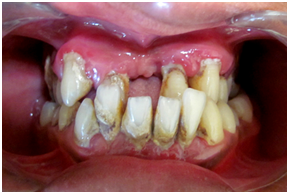
Fig. 1 Image depicting clinical features of the gingiva.

Fig. 2 Image depicting the presence of periodontal pocket mesial to 33.
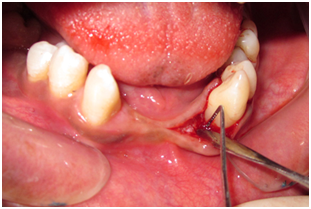
Fig. 3 Image depicting the presence of periodontal pocket

Fig. 4 Image depicting the replacement of the missing upper and lower anterior teeth.
Considering the emotional background, patient did reveal that due to his severe dental problems like missing anterior teeth that hampered his esthetics and tooth mobility that interfered with his speech and chewing habits at such a young age, the patient had lost his self-confidence. He discontinued his education due to the dental issues and failed to engage in social interactions, aloof from his peers as the dental problems did over-ride his self-confidence, mental health and affected his self-esteem at a broader perspective. This was confirmed by rendering a questionnaire to the patient, before and after the dental treatment.6 Thus patient had a ray of hope from his on-going dental treatment and himself was alert with the supportive periodontal care.
During the maintainance phase, patient was recalled every 3-months wherein complete dental, occlusal, mucosal, gingival and periodontal examination along with removal of supragingival deposits, behaviour modification and planning of future appointments were done.(Fig. 5) However, the patient complained that he did encounter some difficulty while brushing his teeth due to the presence of orthodontic bands and brackets. It was noted that in the maintanance phase, during orthodontic treatment, there was no clinical signs of gingival inflammation, reduced sulcus probing and a gain in the attachment levels. However, surprisingly after 6 months, just before the completion of orthodontic treatment, it was disappointing to see grade 3 (Miller’s index) mobility and loss of attachment with 14 with a poor prognosis which was indicated for extraction. Although this had mentally shattered the patient for some time, the tooth was extracted and replaced by a permanent crown. Though the treatment was completed, it was quite a mentally-disturbing experience for the patient.
PERIODONTAL CHARTING
Clinical Parameters at baseline (15/07/2011):
1. Plaque index (Silness & Loe):

2. Gingival Index (Loe & Silness):

3. O. H. I. S. (Green & Vermillion)
Debris Index:

4. Russell Periodontal Index
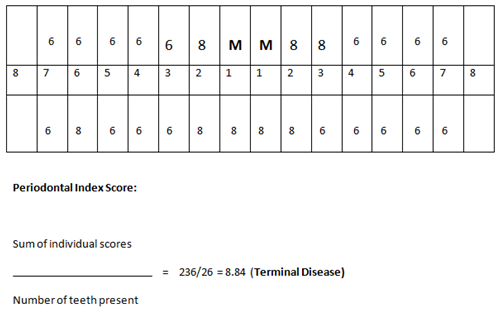
5. Periodontal Status:

Clinical Parameters after phase 1 therapy (28/07/2011):
1. Plaque index (Silness & Loe):
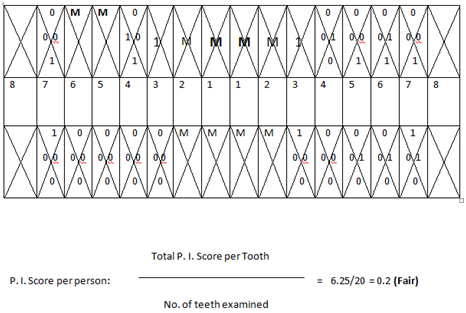
2. Gingival Index (Loe & Silness):

3. O. H. I. S. (Green & Vermillion)
Debris Index:

4. Russell Periodontal Index
div class="col-sm-12">
5. Periodontal Status:
div class="col-sm-12">
Clinical Parameters one month post surgery (27/09/2011) :
div class="col-sm-12">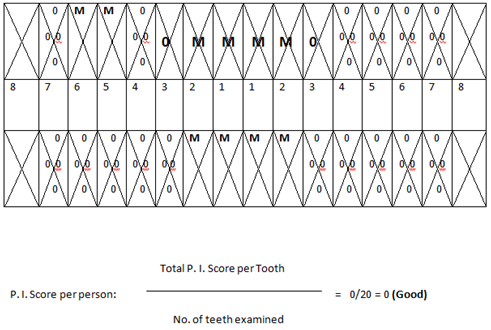
2. Gingival Index (Loe & Silness):
div class="col-sm-12">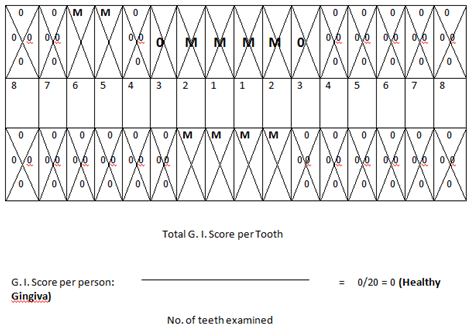
3.O.H.I.S (Green & Vermillion)
div class="col-sm-12">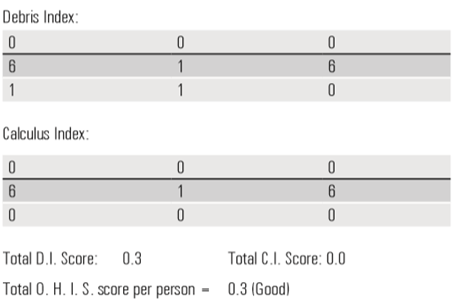
4. Russell Periodontal Index
div class="col-sm-12">
5. Periodontal Status:
div class="col-sm-12">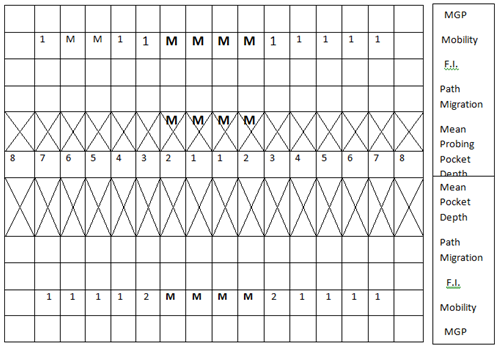
Clinical Parameters three months post surgery (22/12/2011) :
1. Plaque index (Silness & Loe):
div class="col-sm-12">
2. Gingival Index (Loe & Silness):
div class="col-sm-12">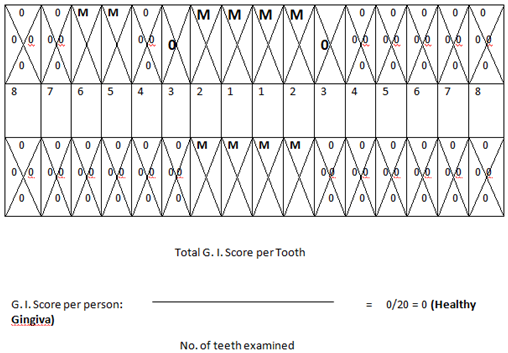
3. O.H.I.S (Green & Vermillion)
div class="col-sm-12">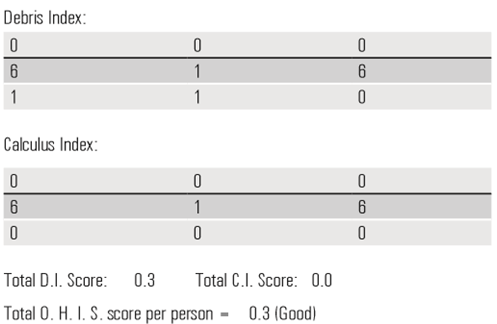
4. Russell Periodontal Index
div class="col-sm-12">
5. Periodontal Status:
div class="col-sm-12">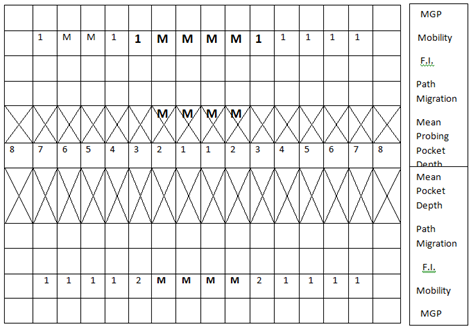
Clinical Parameters Eight months post surgery (03/02/2012):
1. Plaque index (Silness & Loe):
div class="col-sm-12">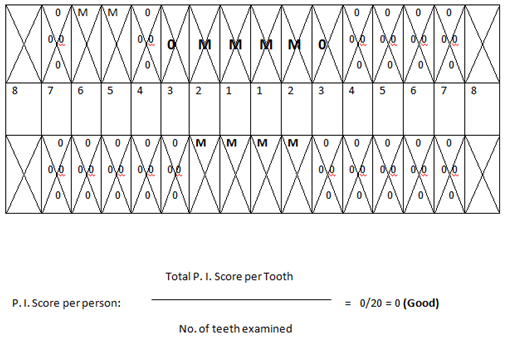
2. Gingival Index (Loe & Silness):
div class="col-sm-12">
3. O.H.I.S (Green & Vermillion)
div class="col-sm-12">
4. Russell Periodontal Index
div class="col-sm-12">
5. Periodontal Status:
div class="col-sm-12">
Clinical Parameters Four year follow-up (14/07/2016):
1. Plaque index (Silness & Loe):
div class="col-sm-12">
2. Gingival Index (Loe & Silness):
div class="col-sm-12">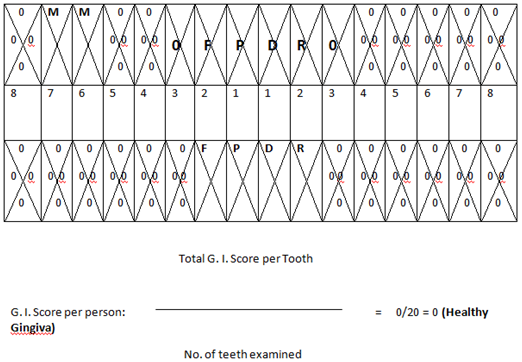
3. O.H.I.S (Green& Vermillion)
div class="col-sm-12">
4. Russell Periodontal Index
div class="col-sm-12">
5. Periodontal Status:
div class="col-sm-12">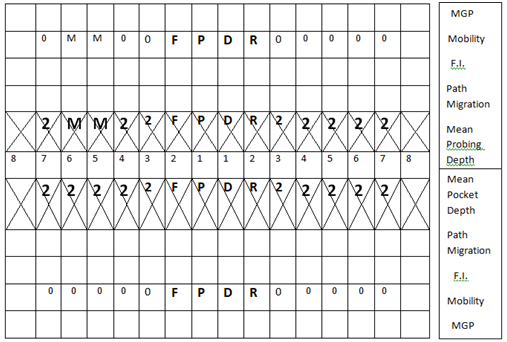
(Rendered to the patient).
Questionnaire before treatment:
1. Did you experience any pain, discomfort, bleeding gums, bad breath or food lodgment before dental treatment?
A = Yes, B= No
2. Was there any discomfort while eating hard food or did you restrict yourself to limited kind of food?
A=Yes, B=No
3. Were you embarrassed eating infront of people or in social functions?
A=Yes, B=No
4. Did your dental problem cause you any difficulty while sleeping?
A=Yes, B=No
5. Were you frustrated, irritated, upset and not feeling good about yourself due to your dental problem?
A=Yes, B=No
6. Did you miss your school or discontinue your education and felt like remaining aloof from your peers due to your dental problem?
A=Yes, B=No
7. Did you hide your teeth and hesitate to smile due to your dental problem?
A=Yes, B=No
8. Were you conscious to mingle with the individuals of opposite sex?
A=Yes, B=No
9. Were your social contacts inhibited?
A=Yes, B=No
QUESTIONNAIRE POST TREATMENT
1. Are you satisfied with your dental treatment and appearance post treatment?
A=Yes, B=No
2. Do you find your teeth position nice post treatment?
A=Yes, B=No
3. Has your confidence level increased while speaking and mingling with the society and individuals of opposite sex?
A=Yes, B=No
4. Have your social contacts improved post treatment?
A=Yes, B=No
5. Have you started continuing with your school/education?
A=Yes, B=No
6. Are you satisfied on a whole with your teeth in the last one month?
A=Yes, B=No
7. Has the overall dental treatment improved your conversation, social activities, performance in eating, speaking, sleeping, appearance and emotion?
A=Yes, B=No
DISCUSSION
The management of patients with generalized aggressive periodontitis involves a comprehensive treatment by the means of a multidisciplinary approach involving the prevention of disease progression by the periodontal intervention along with an emphasis on esthetics, function and psychological problems faced by the patient.7Thus, patients with advanced forms of the disease, need an orthodontic therapy with periodontal monitoring, prosthetic rehabilitation, psychological counselling along with a supportive periodontal care. Supportive periodontal care is based on the health status obtained following the successful active periodontal treatment, thus facilitating the maintenance of a stable clinical attachment for many years. Thus, supportive periodontal care is defined as procedures that are performed at selected intervals to assist the periodontal patients in maintaining the oral health.8
In the present case, initially when the esthetic concern of the patient was satisfied, the patient failed to turn back for the replacement of missing teeth which led to the space closure and malocclusion with the posterior teeth thus affecting the function. The patient then realized the importance of oral health and was well-motivated and himself stressed on the supportive periodontal care on commencement of orthodontic treatment after one year. Although the patient did reveal that he had some difficulty while brushing his teeth due to the presence of orthodontic bands and brackets. It was noticed that in the past, the patient’s dental problems had affected his mental status on a broader perspective thus affecting his chewing habits, social interaction and self-esteem. Patient had discontinued his education for 2 years and remained aloof from his peers suggesting that the dental disease had affected the patient’s lifestyle. Thus it is very important for a dentist to not only render dental care to the patient, but also focus on the mental care as well.
Oral health related quality of life (OHRQOL) is a multi-dimensional construct that includes a subjective evaluation of individual’s oral health, functional and emotional well-being, expectations and satisfaction with care and sense of self. It focuses on patient’s social and emotional experience, physical function, appropriate treatment goals and outcomes.5 According to Wilson and Cleary model for OHRQoL, there are various factors like speech, oral-facial appearance, psychological status, socio-cultural-factors, education and family structure that affect the oral health perception and related quality of life. It has been recognized that psychological assets like optimism and resilience correlate with an individual’s quality of life, particularly how well the patient is able to cope up with the disease, poor health and dental treatment. Similarly the model for OHRQoL by Lopez in 2003, focuses on the overall human strength ability to cope up with the dental treatment and its positive or negative treatment outcomes.5
In the present case, we noticed that once the patient realized the importance of oral health, and himself stressed on supportive periodontal care with an improvement in his oral health during the course of his orthodontic treatment, there was an overall improvement in his social connections, optimism, happiness and self-confidence. The patient started to continue with his education as well. There was an observed ray of hope in his quality of life with the improvement in his oral health. This was confirmed by rendering a questionnaire to the patient before and after the dental treatment.6 Thus it is crucial to understand the treatment effectiveness from the patients’ perspective and the interrelationship between specific oral issues and general quality of life. Besides, oral-related behaviour such as practising good oral hygiene, having regular check-ups and spending more money on aesthetic dental care are motivated by the OHRQoL concerns. Thus, the concept of OHRQoL, is an useful tool to educate individuals about their oral health as people are more likely to behave positively when they understand how oral diseases affect their general health and quality of life.9
However, it was very unfortunate that inspite of maintaining a good oral hygiene along with supportive periodontal care, there was grade 3 mobility observed with 14 with a hopeless prognosis which was indicated for extraction. This could be attributed to the fact that patient did encounter some difficulty while brushing his teeth due to the presence of orthodontic bands and brackets. Orthodontic bands and brackets favour the plaque retention and interfere with the maintainence of good oral hygiene further affecting the periodontal health.4 Moreover, the grade 3 mobility with 14 could also be attributed to increased forces exerted as a consequence of orthodontic therapy. Thus although the orthodontic therapy helps to regain the esthetics in young individuals, its consequences like difficulty in maintaining good oral hygiene inspite of supportive periodontal care, recession, dentinal hypersensitivity, mobility and tooth loss due to increased exertion of orthodontic forces should be kept in mind.10
Moreover, it was very depressing for the patient to digest the fact that his premolar (14) developed grade 3 mobility and was indicated for extraction inspite of maintaining a good oral hygiene. This suggests that impaired oral health may affect the psychological well-being of an individual leading to anxiety and depression.6
CONCLUSION
With various advances in the dental treatment modalities, sophisticated problems can be easily treated. However, it is equally important for we dentists to not only focus on the treatment but also the patients’ perception of dental diseases on their quality of life which is near to minimum in the present day dental practice. OHRQoL measures the treatment needs and focuses on the efficacy of overall patient care rather than simply treating the dental maladies. This case report is in interest of public as to how the oral health affects the quality of lifestyle of an individual.
REFERENCES
- J.J Kamma and P.C Baehni, “Five year maintenance follow-up of Early Onset Periodontitis patients”. Journal of Clinical Periodontology 2003; 30 (6): 562-572.
- G.C Armitage, “Development of a classification system for periodontal diseases and conditions”. Annals of Periodontology 1999; 4 (1): 1-6.
- American Academy of Periodontology, “Parameters on aggressive periodontitis”, Journal of Periodontology 2000; 71 (5): 867-869.
- Ramachandra C.S, Shetty P.C, Rege S and Shah C.“Orthodontic – Periodontic integrated approach in periodontally compromised patients”. J Indian Soc Periodontol 2011;15:414-417.
- Sischo L. and Broder H.L. “Oral Health - related quality of Life: What, Why, How and Future Implications”. Critical Reviews in Oral Biology and Medicine. J Dent Res 2011; 90 (11): 1264 – 70.
- Cunha – Cruz J, Hujoel P, Kressin N.R. “Oral health-related quality of life of periodontal patients”. J Periodontal Res 2007;42:169-76.
- Roshna T. and Nandakumar K. “Generalized Aggressive Periodontitis and its treatment options: A Review of Literature”. Case Reports in Medicine Volume 2012, Article ID 535321, 17 pages.
- Pandey V, Sinha A.K and Pandey S. “Supportive Periodontal Treatment and patient compliance – A Review”. Journal of Advanced Medical and Dental Sciences Research 2014; 2(3):133–36.
- M. Al Shamrany. “Oral health-related quality of life: a broader perspective”. Eastern Mediterranean Health Journal 2006; 12(6): 894-901.
- Closs L.Q, Gomes S.C, Oppermann R.V and Bertoglio V. “Combined Periodontal and Orthodontic treatment in patients with Aggressive Periodontitis – A 9-Year follow-up Report”. World J Orthod 2010;11:291-97.
Disclaimer from Guident
The views and opinions expressed in articles published in Guident are solely those of the authors and do not necessarily reflect the views of the editors, the editorial board or the publisher, Ivory India. Guident does not endorse any product, technique or treatment described. Clinical content is intended for qualified dental and medical professionals and is not a substitute for individual clinical judgement. Guident, its editors and the publisher accept no liability for any consequence arising from the use of information published in the journal.
How to cite this article
Dr. Pragati R. Bhat Dr.Anirudh B. Acharya Dr.Srinath L.Thakur Department of Periodontics. Oral Health Related Quality of Life in Patient with Generalized Aggressive Periodontitis. Guident. 2018 Jan;11(2). Available from: https://guident.net/articles/periodontics/oral-health-related-quality-of-life-in-patient-with-generalized-aggressive-periodontitis.html