Ergonomics in Prosthodontics
Department of Prosthodontics and Crown & Bridge, Thai Moogambigai Dental College and Hospital, Chennai, India
ABSTRACT
A healthy dentist is one of the most important component in a successful dental practice. Most dentists today work in the sitting position and treat the patient in the supine position. When operators sit, pain occurs not only in their back, but also in their neck, shoulders and arms. While the occasional backache or neck ache is not a cause for alarm, if regularly occurring pain or discomfort is ignored, the cumulative physiological damage can lead to an injury or a career ending disability. The musculoskeletal health of dental professionals has been the subject of numerous studies worldwide, and their focus has been on the pain experienced by the practitioner.
INTRODUCTION
Dentists with work-related Musculo skeletal diseases show a significant tendency to be more dissatisfied at work and to be more burdened by anxiety, experiencing poorer psychosomatic health and feeling less confident.
Ergonomics- “ergon” means work and “omics” means law. It is the science of fitting the job settings conducive to the worker. Thus, ergonomics is a science concerned with how to fit a job to man’s anatomical, physiological and psychological character in such a way that it enhances human efficiency and well -being.
Ergonomics (or human factors) is the scientific discipline concerned with the understanding of interactions among humans and other elements of a system, and the profession that applies theory, principles, data and methods to design in order to optimize human well-being and overall system performance. The term ergonomics is derived from the Greek words ergon (work) and nomos (natural laws), and first entered the modern lexicon when WOJCIECH JASTRZĘBOWSKI used the word in his 1857 article “The Outline of Ergonomics, i.e. Science of Work, Based on the Truths Taken from the Natural Science”.
The coining of the term Ergonomics, however, is now widely attributed to British psychologist HYWEL MURRELL, at the 1949 meeting at the United Kingdom’s Admiralty, which led to the foundation of The Ergonomics Society. In simple terminology, ERGONOMICS is a way to work smarter-not harder, by designing tools, equipment, work stations and tasks to fit the job to the worker-NOT the worker to the job. Proper ergonomic design is necessary to prevent repetitive strain injuries, which can develop over time and can lead to long-term disability.
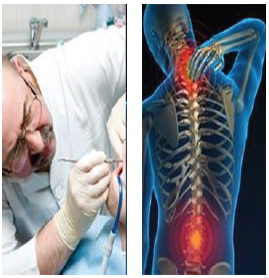
Figure 1a & b : Non-ergonomics working positions

Figure 1c & d : Non-ergonomics working positions

Figure 2 : Survey report of the cause of early retirement of dental professionals. (Evaluating Dental Office Ergonomic Risk Factors And Hazards. Journal of American Dental Association)
APPLICATIONS OF ERGONOMICS
A typical view of ergonomics has drawn from anatomy, physiology and psychology, and has close connections with the applied disciplines of medicine and engineering.
In the UK, the ideas and expertise from different disciplines interested in the electiveness of human performance (anatomy, physiology, psychology, industrial medicine, industrial hygiene, design engineering, architecture and illumination engineering), and an emphasis on theory and methodology, led to the formation of the discipline of ergonomics with two strong sub-groupings: those of anatomy/physiology and experimental psychology. Ergonomics is concerned with the efficiency of persons in their working environment. It takes account of the worker’s capabilities and limitations to ensure that tasks, equipment, information and the environment suit each worker (Kahri, 2005).
Studies show that 1/10 dentists report having poor general health and 3/10 dentists report having poor physical state (Gorter et al, 2000). It is a discipline that studies workers and their relationship to their occupational environment. This includes many different concepts such as, how dentists position themselves and their patients, how they utilize equipment, how work areas are designed and how all of this impact the health of dentists (Russell,1973)
SIGNIFICANCE OF ERGONOMICS
International dental literature shows that about 65 % of dentists, that means 2 out of every 3 dentists, have musculoskeletal complaints which vary in severity, but involve one or more of the following: discomfort, pain, hindrance in functioning and loss of working time. The risk of disability, whether partial or complete, as a consequence of either physical factors alone or a combination of mental and physical factors, is considerable. Muscle tension increases in relation to stress, so does the muscle load, moreover the physical load is often already high.
Recently alarming data were published with respect to the occurrence of musculoskeletal pain experienced by dental students in San Francisco. The percentage of students experiencing this pain, measured from the first to the third year, rose to about 70 % and the persistence, duration and frequency of pain also increased. One of the conclusions is that this may lead to serious physical disabilities later on. Furthermore, the number of woman entering the dental profession is increasing in most countries, and women are more prone to develop a variety of types of chronic musculo-skeletal pain than are men.
The following layout are the different suggested ergonomics positions of men and women according to The Americans Society of Ergonomics


Figure 3: Ergonomics layout of the upper limb
For example, when arms are fully outstretched, the elbow and shoulder joints are at the end of their range of motion.If an individual pulls or lifts repeatedly in this position, there is a higher risk of injury (OHSCO, 2007)
Through ergonomic advances made over the years, dental professionals have been able to modify and optimize their working environments. Ergonomic improvements in seating, instrumentation, magnification, lighting and glove use have offered a proactive measure for ensuring a proper balance between job requirements and worker capabilities
DISCUSSION
The effect of ergonomics on dental professionals and co-related other, non-traumatic, lifestyle factors to their painful symptoms in the cervical and lumbar spine. Analysis of our results confirms that dentists are indeed exposed to a lot of the factors highlighted in the literature as responsible for cervical and lumbar pain. Spinal malalignment appears to lie among factors for progressive spinal pain.
By improving awareness through the self-analysis of photographs, the intent was to improve postures and the accuracy of the self analysis. Study showed that the use of photographs improved the awareness of postures amongst dental students and resulted in the improved student postures and accuracy of self-analysis. Although dental practitioners’ musculoskeletal problems may start to develop during their dental education, the mechanisms to address and prevent those problems remain unclear. The identification and implementation of effective methods to improve clinical postures may improve the awareness of musculoskeletal problems and prevent the development of work-related musculoskeletal disorders (MSDs) amongst dental professionals.
Without this knowledge, dental professionals may unknowingly adopt postures during their dental educational programmes that may be detrimental to the longevity of their clinical careers. This review were utilized using feedback and survey involving photography and self-assessment to determine whether ergonomic scores and the accuracy of ergonomic self-assessments would improve amongst dental professionals.. Due to the static and sedentary nature of clinical dentistry, any improvement in ergonomic scores can benefit dental professionals. In the present days, the dentist who received the ergonomic training significantly improved compared to the participants who did not receive the ergonomic training. Although the early inclusion of ergonomics training into dental educational programmes has been suggested. Participants practicing in the pre-clinical laboratory responded to the ergonomics training as well as participants in the clinics .The results support the early introduction and the continual reinforcement of ergonomics training throughout dental educational programmes.
The limitations of this review included the use of a research sites, use or non-use of magnification loupes and/or coaxial illumination, use of still imaged postures, awareness of the photographs by the participants and the subjective later evaluations. Future studies should include the longitudinal effect of the ergonomic training, the effect of magnification loupes with the training, the predictive nature of self-assessment on ergonomic scores, the use of technology for the objective measurement of posture and methods to support the clinical application of ergonomics knowledge.
CONCLUSION
Ergonomics along with regular exercises, relaxation techniques (meditation, biofeedback & yoga), proper nutrition helps dentists combat stress, thus conserving the productive energy, thereby increasing comfort, improving the quality of life, ultimately leading to extended careers. Ergonomic training incorporating self-assessment and photography resulted in improved ergonomic scores and increased accuracy of ergonomic self-assessments amongst dental students. Any improvement in ergonomic score or awareness reduces the risks of developing MSDs, especially amongst dental and dental hygiene student clinicians. The use of photographs and self-assessment also provides dental and dental hygiene educators with a pragmatic method to improve self-assessment skills, increase student awareness of any postural deviations from ideal and to improve musculoskeletal health.
REFERENCES
- Russell JG: Ergonomics in the Dental Surgery, Occupational Medicine, 1973;23(4):128- 131
- Garcia PP, Gottardello AC, Presoto CD, Campos JA. Ergonomic work posture in undergraduate dentistry students: Correlation between theory and practice. J Educ Eth Dent 2015;5:47‑50
- .Al Wazzan KA, Almas K, Al Shethri SE, Al-Qahtani MQ: Back & Neck Problems Among Dentists and Dental Auxiliaries. The Journal of Contemporary Dental Practice, 2001;2(3):17-30.
- Kahri P: Ergonomics and teamwork in dental treatment. Planmeca, 2005: available from: http://www.planmeca.it/pdf/downloads/PLANMECA_ARTICLE_ Ergonomics_and_teamwork_web.pdf.
Disclaimer from Guident
The views and opinions expressed in articles published in Guident are solely those of the authors and do not necessarily reflect the views of the editors, the editorial board or the publisher, Ivory India. Guident does not endorse any product, technique or treatment described. Clinical content is intended for qualified dental and medical professionals and is not a substitute for individual clinical judgement. Guident, its editors and the publisher accept no liability for any consequence arising from the use of information published in the journal.
How to cite this article
Dr. Pretty Loushambam, Dr. Rathika Rai. Ergonomics in Prosthodontics. Guident. 2019 Feb;12(3). Available from: https://guident.net/articles/prosthodontics/ergonomics-in-prosthodontics.html