Telescopic Tooth Supported Overdentures Retained by Double Coping Method: A Case Report
Department Of Prosthodontics And Crown & Bridge, Seema Dental College and Hospital, Rishikesh
ABSTRACT
Overdenture are removable prosthesis which may be implant supported or tooth supported. These prostheses have overcome the shortcomings of the conventional complete denture prosthesis by improving retention, support, masticatory load bearing capability etc. The present case report emphasized on the advantages of tooth supported overdenture using double cast metal copings. These prostheses if planned properly can help to reduce the residual ridge resorption rate as well as preserve the sensory perception.
Keywords: tooth supported overdenture, complete denture, abutments, removable prosthesis
INTRODUCTION
Tooth loss/edentulousness is associated with gradual alveolar ridge resorption which pose to difficulty in rehabilitating the form, function and esthetics. Although implants supported fixed complete dentures are slowly emerging in the prosthodontic world, yet, due to less knowledge, technique sensitivity, increased maintenance of prosthesis, increased cost due to increased number of implants, increased morbidity due to requirement of adjuvant surgeries and increased treatment time has still posed some reluctance in the patient’s as well as in dentist’s mind.
Overdentures are removable prostheses which are either supported by implants or natural teeth. A conventional removable complete denture presents many inherent problems like lack of retention especially in case of mandibular region, loss of proprioception, taste sensation, reduced masticatory loading and ability to chew as compared to natural teeth. Overdentures take the retention from the retentive element which may be implants or few remaining natural teeth or root stumps. This helps to not only improve the retention but also decreases the residual ridge resorption rate. It also improve masticatory load bearing capability and proprioception ( tooth supported overdentures) relatively to conventional complete dentures. Various overdenture attachments can be used for retention include metal copings, ball attachments, bar attachments, custom attachments etc.
Overdentures can be of 4 types: transitional, training, immediate replacement and definitive. Usually canines and 2nd premolars are taken as ideal abutments in case of tooth supported and canine and 2nd premolar region for implant supported overdentures to maintain the anterior alveolar ridge and distribution of occlusal load. In case of tooth supported overdentures, abutments should be endodontically treated and they can be restored with cast coping to improve prognosis of the abutments.
Apart from these advantages, overdentures present a number of drawbacks which include technique sensitivity, increased cost relative to complete dentures, requirements of ideal abutments, mouth preparation, interarch distance more than required for complete denture. Along with these no matter how ideally we fabricate a denture but because of the increased bulk and overcontoured flanges, it might affect the esthetics and comfort for the patient. Due to increased coverage of the oral tissues it becomes mandatory to maintain vigorous hygiene of the prosthesis as well as of the abutments. The prognosis of the prosthesis depends on the prognosis of the abutments and other supporting structures, designing and treatment planning.
CASE REPORT
A 64 yr male patient presented in the department of prosthodontics and Crown & bridge, Seema Dental college and Hospital, Rishikesh. He came with chief complaint of dislodging bridge in the upper front teeth region since 2 days. He gave history of the procedure to be done 10yrs ago and had no complaints regarding to it. He gave the history of multiple Root canal treatments followed by the restoration with PFM FPD w.r.t maxillary anterior teeth region.
Medical History: patient was associated with uncontrolled diabetes and controlled hypertension.
Extraoral Examination: No gross asymmetry was associated. TMJ examination done using palpation method also showed no clinical signs and symptoms.
Intraoral examination: On examination, I found that the PFM Fixed partial denture was very loose and dislodging. There was multiple missing w.r.t maxillary posterior teeth region as well as mandibular all teeth region
- Missing: 11,12,14, 16,17, 18, 21,22,24,25,26,27,28,31,31,33,34,35,36,37,38,41,42,43,44,45,46,47,48.
- Faulty fixed prosthesis w.r.t 11,12,13,14,15,21,22,23,24,25
- RPD w.r.t 16,17,25,27
- Faulty mandibular complete denture.
- Root stumps: 15 (RC treated) associated with poor periodontal health, 13 (RC Treated)
- Fractured abutments: 23
Radiographic Examination: periapical radiograph revealed metallic post in the right canine and vertical bone loss associated with 15.
OPG examination was also done after the extraction of 15 which revealed severe bone resorption w.r.t maxillary posterior teeth region and adequate bone w.r.t mandibular arch.
Treatment options:
- Tooth supported overdenture w.r.t maxillary arch and conventional complete denture w.r.t mandibular arch
- Tooth supported overdenture w.r.t maxillary arch and implant supported overdenture w.r.t mandibular arch
- Complete denture w.r.t maxillary and mandibular arch
- Implant supported fixed complete denture.
Treatment goals:
- Restoration of form, function and esthetics
Treatment Plan: Tooth supported overdenture was planned after the extraction of Root stump due to its poor periodontal status and complete denture w.r.t. mandibular arch.
PROCEDURE
Firstly the faulty prosthesis was removed from the patient’s mouth and diagnostic impression was made using irreversible hydrocolloid. The cast was poured using type 2 gypsum and the cast was evaluated along with the diagnostic periapical radiographs. Extraction of 15 was planned and patient was recalled after 15 days for re-evaluation of the extraction site. The patient presented satisfactory healing and restoration of remaining teeth was done to improve the retentive area of the abutments using Composite resin. Abutments were prepared in dome shaped of 2-3mm in height to receive metal copings. Primary impressions were made using addition silicone putty with light body using stock tray .Cast was poured with die stone. Metal copings were made on the cast and cemented in the patient’s mouth. Border moulding and secondary impression was made using light body using custom tray. Again metal copings were fabricated to receive in the overdenture. Denture base using self cure resin was fabricated with the metal copings attached and tentative jaw relation was taken followed by facebow transfer on the Hanau articulator. Try-in was done. The denture was fabricated by using the compression moulding technique using hi-impact heat cure resin. Mandibular denture followed all the conventional steps from primary impression making with impression compound to denture fabrication.

Fig 1. Periapical radiograph w.r.t 13,15

Fig.2. Orthopantomogram of the patient after extraction of 15.

Fig.3. Primary impression of maxillary arch and mandibular arch using addition silicone and impression compound respectively.
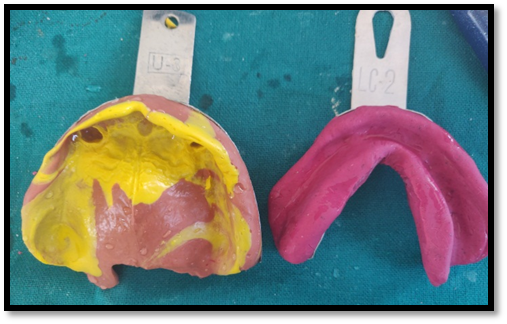
Fig.4. Master cast made with dental stone (mandibular) and die stone (maxillary)
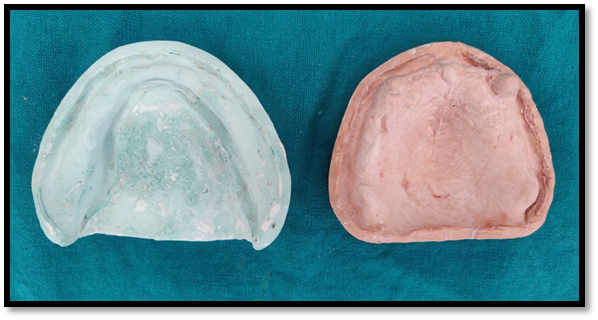
Fig.5. Metal copings cemented in the patient’s mouth w.r.t 13, 23.

Fig.6 Facebow transfer using Hanau spring Bow
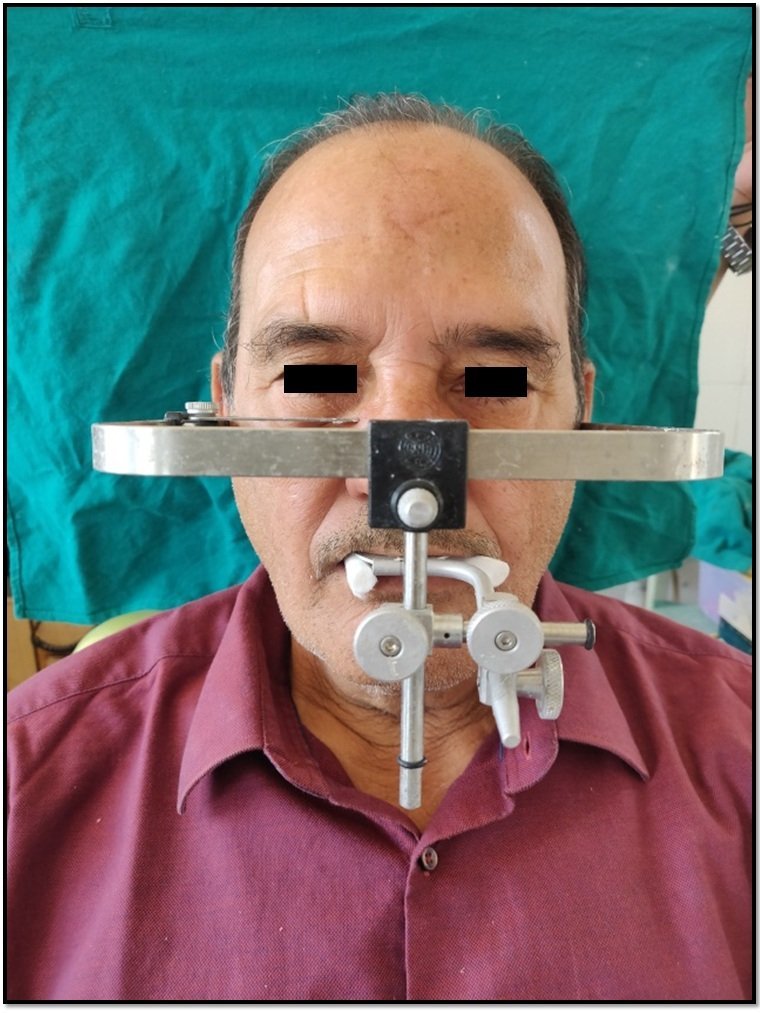
Fig.7 Facebow transfer to Hanau articulator
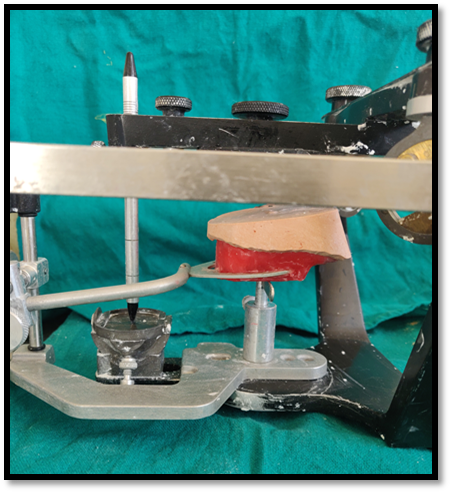
Fig.8 Teeth setting on the Hanau Articulator using acryrock anatomical teeth

Fig 9. Teeth setting on the Hanau Articulator using acryrock anatomical teeth

Fig.10. Final prosthesis
DISCUSSION
Tooth supported Overdentures are removable prosthesis which aids retentive elements through the teeth or remaining root stumps. These prostheses not only help to improve retention, support and masticatory efficiency of the patient as compared conventional complete dentures but also the proprioception and better neuromuscular control over the denture due to presence of periodontal ligament.
To fabricate an overdenture it is mandatory to have well maintained healthy abutments in the location where the occlusal load can be distributed equally to prevent alveolar ridge resorption. Studies have shown that in case of mandibular overdentures when canines were taken as abutments, showed 8x less residual ridge resorption.
The present case also presented the endodontically treated canines as the abutments and because the roots of canine are sufficient to distribute masticatory load, they can be considered as ideal abutments. To maintain the integrity of the abutments, cast metal copings were cemented over the abutments as well as 2 metal copings were inserted in the denture to avoid unnecessary relining of the denture. This telescopic design also helped in stress removal on the abutments.
Since the maxillary denture gets more support from palate, maxillary overdenture showed a good prognosis to resist shear forces, better masticatory efficiency and neuromuscular control on the denture to give more natural like psychological benefit to the patient.
CONCLUSION
Overdentures can be considered as an alternative to extract remaining root stumps or 2-4 widely spaced periodontally sound teeth to avoid the alveolar ridge resorption, greater masticatory efficiency and better support and retention of the prosthesis. Tooth supported overdentures can be considered as a relatively non-invasive treatment option than implant supported overdentures with equivalent or even more advantages.
REFERENCES
- Winkler, Textbook of essentials of complete denture prosthodontics, 2nd edi., AITBS Publishers
- Prieskal H W, Textbook of Overdentures made easy: A guide to implant and root supported prostheses, Quintessence Pub Co Ltd
- Misch’s contemporary implant dentistry, 4th edi, Elsevier
- Devi J et al., Customization of attachments in tooth supported overdentures: three clinical reports, IJDR 2019; 30(5):810-15.
- Nassar HI, Patient satisfaction of tooth supported overdentures utilizing ball attachments, FDJ 2016; 2(2):70-73
- Singh M, Chaudhary A, Aggarwal A, Dixit K, tooth supported overdenture with an attachment: a case report, IJSHR 2020; 5(1):242-46
- Wakure P et al, rehabilitation of partial edentulous patient with supported overdenture retained with metal coping- a case report, I P Int Jou of Maxillofac Imag 2021; 7(4):191-94
- Dong J, Ikebe K, Gonda T, Nokubi T. Influence of abutment height on strain in a mandibular overdenture, J Oral Rehabil 2006; 33:594-99.
- Pacer RJ, Bowman DC, Occlusal force discrimination by denture patients, J Prosthet Dent 1975; 33:602-9.
- Crum RJ, Rooney GE Jr., Alveolar bone loss in overdentures: A 5 year study. J Prosthet Dent 1978: 40:610-13.
Disclaimer from Guident
The views and opinions expressed in articles published in Guident are solely those of the authors and do not necessarily reflect the views of the editors, the editorial board or the publisher, Ivory India. Guident does not endorse any product, technique or treatment described. Clinical content is intended for qualified dental and medical professionals and is not a substitute for individual clinical judgement. Guident, its editors and the publisher accept no liability for any consequence arising from the use of information published in the journal.
How to cite this article
Dr. Himanshu Aeran Director, Dr. Shrashti Bansal, Dr. Jyotsna Seth. Telescopic Tooth Supported Overdentures Retained by Double Coping Method: A Case Report. Guident. 2021 Dec;15(1-2). Available from: https://guident.net/articles/prosthodontics/telescopic-tooth-supported-overdentures-retained-by-double-coping-method-a-case-report.html