Comprehensive Investigation of the Effect of Hydrofluoric Acid on the Bond Strength of Ceramics and Zirconia: Systematic Review and Meta-Analysis
Continuum Dental Education, Continuum Oral Health Studies, Bengaluru, India
ACKNOWLEDGEMENT
The authors of this research article express their heartfelt gratitude to Dr. Olugbenga Akinsanya for his invaluable contributions, insightful guidance, and unwavering support throughout the development of this article. His expertise and encouragement have greatly enriched this work.
Abstract:
Today's digital world of dentistry has changed the dental world completely. Many new materials have come into the market that mimic the natural apperance of the teeth.However bonding the restoration to the tooth have always been challenging. Thus this systematic review gives insight of the effect of hydrofluoric acid on the bond strength of ceramic and zirconia . Literature search was performed in various electronic data bases . According to the inclusion and exclusion criteria the articles were searched and included in the study. After doing the statistical analysis the conclusion were drawn and results showed that the too longer the etching time it weakens the bond strength and weakens the material, so optimal concentration of hydrofluoric acid for optimal time should be used for improved bonding
INTRODUCTION
The aesthetics in dentistry has completely changed with the latest significant improvements over the years, with different forms of ceramics like lithium disilicate ceramics, feldspathic ceramics leucite reinforced ceramics and zirconia being widely used for tooth restorations that mimics the natural teeth appearance. They have been off lately the Material of choice for indirect restorations due to their higher mechanical properties, excellent aesthetics and biocompatibility. Because these materials can replicate the appearance of original teeth, they are used most frequently used now a days for veneers, crowns and bridges. However, predictable bonding between the restorative material, metal framework and the tooth is the main obstacles when employing these materials in restorative dentistry. As a result, dental professionals have concentrated on investigating how various surface treatments impact bond strength, especially when it comes to ceramic(Cr) and zirconia (Zr) materials.
Hydrofluoric acid has emerged as most commonly employed etchant for the surface treatment of ceramics to increase the surface roughness and free surface energy and in turn the bonding of the indirect restorations to the tooth.1 The etching selectively attacks and removes the part of the glassy structure and allows to create micro-porosities and grooves which allows for mechanical interlocking between the adhesive material and the restoration by increasing the bond strength. Using the too high strength of hydrofluoric acid or using it for too much time also can lead to surface degradation, reducing the marginal integrity thereby reducing the adhesive interface between the restoration material and resin-based cements.2
The possible impact of hydrofluoric acid on the adhesive strength of ceramics and zirconia materials is a topic of considerable debate and discussion. Researches have shown various outcomes based on the concentration of hydrofluoric acid used and the total time it’s been used for the surface treatment and the type of material used like ceramic or zirconia. With the emphasis on comprehensive investigation about how the different percent of hydrofluoric acid affect the bond strength of zirconia and ceramic materials, this systematic review and meta-analysis is carried out to measure the effect of hydrofluoric acid on the bond strength of ceramics and zirconia.
METHODOLOGY
2.1 Study Design, Search Strategy, and Selection Criteria
The literature search was performed with reliable electronic databases for feasibility with comprehensiveness. Advances in electronic database coverage and indexing have resulted in a valuable period for analysis, representing a greater number of quality publications and covering pertinent up-to-date research. Key scholarly sources of databases were PubMed, Springer, Science Direct, Scopus, Biomed Central, CeRA, Krishikosh, ProQuest Dissertations & Theses Global, and Web of Science, the Google Scholar search engine utilized for this purpose (Fig 1).
Quality assessment of studies
Two reviewers separately scored the quality of the studies using structured questionnaires with 8 items, using modified risk of bias tool, the scale was established by using the Kappa Index and each study was scored on a Likert scale from 1 to 5, and the average mean score was calculated as the final score. The agreement among authors was measured by Aiken’s V Index. Quality of the study was considered confirmative and acceptable if the Aiken V Index was more than 0.7.
V= Sn(c-1) Where,
Aiken V = Validity index;
S = Scores assigned by each rater minus the lowest score used.
S=r-lo ; r = rater category
selection score; lo
 =
lowest scores in the scoring category.
c = Maximum score on the grading scale. n = number of raters.
V value ranges from 0 to 1, where 1 denotes that the rater has given 100% consent that has been in the structured question included.3
Data analysis
Systematic review
The systematic review was directed to ensure objectivity and transparency in data collection and evaluation of published articles. Compliance with declared PRISMA standards increased quality and credibility, enabling more observational evidence based and robust experimental approach within the field.
Meta-analysis
Meta-analysis, which is a systematic epidemiological model, analyzes the data from several independent studies with the same aim of improving accuracy, by aggregating results. The evaluation of hydrofluoric acid on Zirconia and ceramic groups by a meta-analysis is a statistical research method used to aggregate numerous studies to find a general summary of the study with R-open-source scripting software version 4.3.1.3

Fig 1. Mapping the path to scholarly insights through reputable sources (author’s work)
Forest and funnel plots
A forest plot is a graphical display used in meta-analysis to visually represent the results of multiple studies addressing the research question. It helps to visualize the heterogeneity among the studies and to estimate the overall effect. Whereas funnel plots are scatterplots used in meta-analysis to visually assess the publication bias.
Fixed-effects model and random-effects model
The fixed effect model is a statistical method to estimate a single, common effect size across studies, assuming differences are due to chance (sampling error), rather than genuine variations in the true effect size. This model is most suitable for homogeneous studies.
The random effect model is a statistical technique used to account for heterogeneity among the studies by recognizing that the effect size can differ due to factors such as populations, interventions, and methodological approaches. This model provides a robust and generalized estimate of the overall effect.3
Heterogeneity indices
The fixed effect model is one of the statistical methods that estimates a pooled, single effect size across studies, experiments on the basis that variability due to chance (sampling error), and not real variability in the true effect size. The model has its best use in homogeneous studies.
The random effect model is a statistical technique used to account for heterogeneity across the studies by recognizing the fact that effect size can differ depending upon populations, interventions, and type of methodological. The model provides a robust and generalized estimate of the overall effect of estimates.
Heterogeneity indices
To measure heterogeneity between studies, the diversity between the studies needs to be taken into consideration. Poor overlapping of confidence intervals for the effect of individual studies usually signifies heterogeneity. An I2 index was employed which ranged from 0 % to 100 %, representing levels of heterogeneity, a value less than 50 % indicated minimal heterogeneity, above 50% signifies moderate to high heterogeneity, and 95% shows high heterogeneity. Due to significant heterogeneity between the studies, a random effect model was utilized. Square size in the forest plots depicted study weight, and I2 statistics were quantified variation, τ, which was used to estimate study variance. A p-value of less than 0.05 from the test signifies heterogeneity.
Publication bias
The funnel plot showed evidence of a possible publication bias, ie, asymmetry. Positive findings are likely to be published more frequently than non-significant findings. Publication bias is a frequent issue in systematic review and meta-analysis, since it undermines the validity of the results. Published findings are skewed towards positive results, leading to an excess of confirmatory tests. Since meta-analysis is based on the accumulation of studies, findings in meta-analysis may unavoidably be affected by publication bias. To examine publication bias in the included studies, we used a funnel plot, which visualized heterogeneity. The level of publication bias in the selected studies was calculated and displayed in a funnel plot, the Y-axis represents the standard error, and the X-axis shows the Arcsine transformation of the study proportion. When there is no publication bias (p-value > 0.05), studies with high precision will be close to the normal line, and with lower precision will be scattered. We performed Egger’s tests to assess funnel plot asymmetry.
Sensitivity analysis by leave-one-out method
Under specific assumptions, sensitivity analysis is used to compare the impact of changing values of an independent variable on a given dependent variable, prevalence in the present study. In this regard, one study is dropped from the analysis, and the pooled estimates are re-computed, and this process is repeated for all studies. By comparing the pooled estimate without a selected study to the overall pooled estimate, the researcher can find studies that have a disproportionate impact on the results and help to identify potential outliers or studies with methodological unsound studies that are distorting the overall estimate.
RESULTS
Data extraction
An extensive literature search was executed using various keywords, including “Effect” “Hydrofluoric acid” “Bond Strength (Mpa)” “Zirconia” and “Ceramic”, along with Boolean operators [OR, AND, NOT] asterisk* and quotation marks [" "] were utilized to refine the search. This initial phase in the collection of 450 articles using PubMed, Springer, Science Direct, Scopus, Biomed Central, CeRA, Krishikosh, ProQuest Dissertations & Thesis Global, and Web of Science, complemented by the Google Scholar search engine to identify both national and international articles published (freely available), 40 studies were retained after earmarked for primary scrutiny for further screening. This stage considered broader exclusion criteria, encompassing publication of non-English language, lack of necessary data or full text, theoretical focus rather than practical application, overlapping data, and failure to measure defined outcomes. A comprehensive evaluation of titles and abstracts led to the exclusion of 22 additional articles. Two authors independently reviewed the complete texts of the rest 18 articles using Aiken’s Index to evaluate study quality based on systematic scoring. An additional 10 studies were excluded due to outliers. Ultimately, 8 articles were included to conduct a meta-analysis (Fig 2).
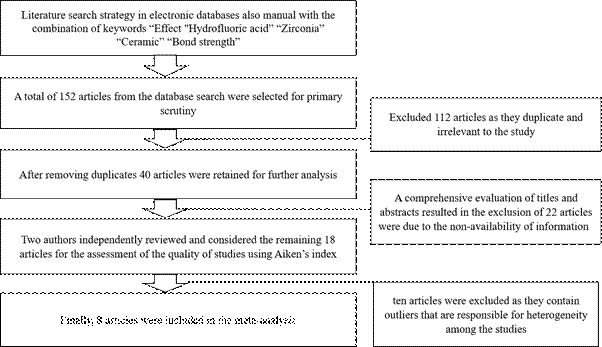
Fig 2. Schematic illustration of articles selection for systematic review (author’s work)
Systematic review
|
Author |
Aging or Storage |
HF acid percentage |
Time used (sec.) |
Ceramic |
Bond Strength (Mpa) |
|---|---|---|---|---|---|
|
Saracoglu et al 10 |
24 hours |
4.9%, 9.5% HF |
10s, 20s, 40 s |
Alumina-reinforced ceramic (IPS Empress, Ivoclar; Schaan, Liechtenstein) |
4.9%HF, 10S - 5.91 ± 0.84 Mpa , 4.9%HF, 20S - 6.35 ± 1.32 MpA , 4.9%HF, 40S - 6.94 ± 1.08 Mpa. 9.5%HF, 10S - 7.47 ± 0.96 Mpa ,9.5%HF, 20S - 10.55 ± 1.47 Mpa , 9.5%HF, 40S - 12.66 ± 2.00 Mpa. |
|
Chaiyabutr et al 5 |
48 hours |
5%, 9.5% HF |
90s, 120 s,180s 300s, 420s |
Lithium- zirconia veneering ceramics (Cerabien CZR (CZ), Lava Ceram (L), and Zirox (Z)) and |
Ceramic Group- 22.51 Mpa, 16.54 Mpa, 17.92 Mpa, 25.16 Mpa , Zioconia Group - 13.02 Mpa, 9.45 Mpa, 13.03 Mpa |
|
Kalavacharla et al 6 |
10,000 THERMOCYCLES |
5%, 9.5% HF |
20 s, 60 s |
Lithium-disilicate glass-ceramic (IPS e.max CAD, Ivoclar) |
5%HF - 19.08 ± 3.0 Mpa , 10%HF - 124.93 ± 2.6 Mpa |
|
Moura et al 8 |
90 days |
5%, 10% HF |
20 s, 60 s |
Feldspathic ceramic Vita Mark II, (Vita Zahnfabrik) |
5%HF - 11.55 ± 3.6 Mpa , 10%HF - 11.72 ± 5.2 Mpa |
|
Azevedo et al 4 |
24 Hour, 16 Months |
5%, 10% HF |
20 s, 40s, 60 s |
Zirconia reinforced lithium-disilicate glass-ceramic (Vita Suprinity, Vita Zahnfabrik) and VITAblocs TriLuxe (Vita Zahnfabrik) |
5%HF, 20S , 24 hour - 21.6 Mpa , 5%HF, 40S, 24 hour - 20.9 MpA , 5%HF, 60S, 24 Hour -22.3 Mpa. 10 %HF, 20S, 24 hour - 21.5 Mpa 10%HF, 40S, 24 hour - 23.9 Mpa , 10%HF, 60S, 24 hour - 24.7 Mpa. 5%HF, 20S , 16 Months - 10.1 Mpa , 5%HF, 40S, 16 Months - 11.5 Mpa , 5%HF, 60S, 16 Months -12.6 Mpa. 10 %HF, 20S, 16 Months- 12.4 Mpa 10%HF, 40S,16 Months - 13.3 Mpa , 10%HF, 60S, 16 Months - 16.0 Mpa. |
|
Kang et al 7 |
5,000 THERMOCYCLES |
5% HF |
20 s, 60s, 90s, 120s |
Lithium Di-silicate (Cameo Dental) and Zirconia (Superfect Zik) |
5%HF, 20S- 11.7 ± 1.9 Mpa, 5%HF, 60S -15.9 ± 2.5 Mpa, 5%HF, 90S - 19.1 ± 3.0 Mpa, 5 %HF, 120 S - 20.5 ± 2.1 Mpa (Before TMC) 5%HF, 20S- 4.5 ± 1.4 Mpa, 5%HF, 60S - 6.5 ± 1.8 Mpa, 5%HF, 90S - 8.8 ± 1.5 Mpa, 5 %HF, 120 S - 10.1 ± 1.2 Mpa (After 5000 TMC) |
|
Verissimo et al 11 |
10,000 THERMOCYCLES |
5%, 10% HF |
20 s, 60 s |
CAD / CAM lithium disilicate (IPS e.max CAD, Ivoclar Vivadent, Schaan, Liechtenstein), pressed lithium disilicate (IPS e.max Press, Ivoclar Vivadent, Schaan, Liechtenstein) and leucite-reinforced feldspathic ceramic (IPS Empress CAD, Ivoclar Vivadent, Schaan, Liechtenstein). |
LCAD LDHP LDCAD LCAD Ceramic 10% HF, 20 seconds- 7.17 ± 2.9, LDHP Ceramic 6.57 ± 1.6, LDCAD Ceramic 8.78 ± 3.6 LCAD Ceramic 10% 60 seconds 6.90 ± 3.5 , LDHP Ceramic 10.9± 4.1 ,LDCAD Ceramic 7.92 ± 4.3 LCAD Ceramic 5% 20 seconds 8.66 ± 5.1 , LDHP Ceramic 5.21 ± 1.6, LDCAD Ceramic 5.30 ± 2.9 LCAD Ceramic 5% 60 seconds 6.66± 3.5 , , LDHP Ceramic 5.66 ± 2.9 , LDCAD Ceramic 7.79 ± 2.9 |
|
Liang et al 8 |
10 Minutes, 100 DEGREE |
9.5% HF |
not mentioned |
Zirconia Ceramic Blocks |
20 - 25.09 Mpa |
Quality assessment of studies
Two independent reviewers rated the 8 articles using a Likert scale (1-5) to determine their relevance. The average score was designated as the final score. Inter-rater reliability was assessed using the Kappa Statistics (Table 1) and agreement between the two reviewers’ ratings was measured using Aiken’s Index3, a value greater than 0.7 was considered to have acceptable quality. Consequently, 140 articles were included to conduct a meta-analysis.
|
Sl.no |
Validation procedures |
Author 1* |
Authors 2* |
Kappa (95 % CI) |
|
|---|---|---|---|---|---|
|
External validation |
|||||
|
1 |
Was the study concerning relevant variables? |
4.00 |
5.00 |
0.75 (0.22-0.99) |
|
|
2 |
How were the samples selected, randomly, or was the census undertaken? |
5.00 |
5.00 |
0.80 (0.30-0.99) |
|
|
3 |
Was the probability of bias minimal? |
5.00 |
5.00 |
0.80 (0.30-0.99) |
|
|
Internal validation |
|||||
|
4 |
Was the data collected directly from the subjects? |
4.00 |
4.00 |
0.75 (0.22-0.99) |
|
|
5 |
Was an acceptable case definition used in the study |
4.00 |
4.00 |
0.75 (0.22-0.99) |
|
|
6 |
Were the used study methods to measure parameters valid and reliable |
5.00 |
5.00 |
0.80 (0.30-0.99) |
|
|
7 |
Was the same mode of data collection used? |
4.00 |
5.00 |
0.75 (0.22-0.99) |
|
|
8 |
Summary of the overall risk of the study bias |
5.00 |
5.00 |
0.80 (0.30-0.99) |
|
Table 1. Interrater agreement testing between two raters in using the risk of bias tool
Meta-analysis

Forest plots Graphs Fig 3. Forest plot graph for Ceramic Group

Publication bias
The funnel plot (Fig.5 & 6) portrays the publication bias, although it is relatively minor. This bias is more pronounced in smaller studies, which tend to report larger effect sizes compared to larger studies. The results of Egger’s test were t=1.89, with a p=0.107 confirms that observed asymmetry is highly significant and not due to chance, indicating potential publication bias.

Fig 5. Graphical illustration of publication bias among Ceramic studies

Fig 6. Graphical illustration of publication bias among Zirconia studies
Sensitivity analysis by leave-one-out method
Sensitivity analysis by the leave-one-out method revealed that the effect remained the same even when the individual studies were omitted, indicating that no single study had a substantial influence on the estimates, and the confidence intervals for these proportions, reinforcing the stability of the findings. Regarding heterogeneity, the study variance (τ2) remained relatively stable, fluctuating slightly but staying close to 1.3 across the omissions, revealing moderate heterogeneity (Fig. 7 & 8).

Fig 7. Sensitivity plot by leave-one-out or influence analysis for Ceramic studies

Fig 8. Sensitivity plot by leave-one-out or influence analysis for Zirconia studies
Discussion
The findings from this systematic review and meta-analysis confirm the significant influence of hydrofluoric acid (HF) etching on the bond strength of zirconia and ceramic materials. The analysis revealed that both the concentrations of Hydrofluoric acid and the etching duration are critical factors in optimizing adhesions, with longer etching times generally leading to increased bond strength, albeit with variations among different ceramic types.
For zirconia studies by Liang8 (2022) and Kang7 (2022) demonstrated that HF etching at higher concentrations (9.5% HF) and extended durations (60-120s) enhanced bond strength, particularly when combined with thermocycling resistance tests. However, the results of Kang7 (2022) indicated a decline in bond strength post-thermocycling, emphasizing the need for surface treatments that maintain durability over time. Similarly, Azevedo4 (2021) found that zirconia-reinforced lithium disilicate ceramics etched with 10% HF for 40-60s exhibited superior bond strength even after 16 months of water storage, though a gradual reduction was observed compared to initial bond strength values.
In case of ceramic material, studies by Chaiyabur5 (2008) and Verissimo11 (2019) highlighted that leucite-based and lithium disilicate ceramics benefitted most from HF etching. The findings revealed that 5% HF applied for 20-60s effectively enhanced adhesion, with pressed lithium disilicate ceramics showing the highest bond strength when treated with 10% HF for 60s. Kalavaharla6 (2015) also confirmed that lithium disilicate ceramics achieved optimal bond strength with at least 20s of 55 HF etching, further improved when followed by silane application.
Aging and thermocycling significantly impacted bond strength across studies, Moura9 (2020) reported that feldspathic ceramics treatment with 10% HF for 60s showed higher bond strength compared to 5% HF, but long-term exposure to moisture led to a decline in adhesion. Similarly, Verissimo11 (2019) found that leucite-based ceramics (Cr) exhibited lower bond strength post thermocycling, reinforcing the need for appropriate surface treatments.
The meta-analysis results showed an overall mean bond strength of 14.23 MPa [7.38, 21.08] for ceramics and 13.74 MPa [11.03, 16.45] for zirconia, confirming significant heterogeneity across studies. Forest plot analysis indicated that higher HF concentrations (9.5%-10%) and longer etching times (40-60s) consistently improve adhesion. However, the sensitivity analysis revealed that specific studies, particularly Liang8 (2022) had a disproportionate influence on pooled estimates due to exceptionally high bond strength values, necessitating cautious interpretations. The funnel plot further suggested potential publication bias, with studies reporting higher bond strength more frequently.
Conclusion
This comprehensive analysis confirms that hydrofluoric acid (HF) etching is a key factor in how well dental ceramics bond. Stronger HF and longer etching times generally improve bonding, especially for certain types of ceramics. However, etching for too long can damage the material and weaken the bond over time. The analysis also revealed that bond weakens with age and temperature changes, highlights the need to find the right balance between strong initial bonding and long-term durability. Furthermore, differences in study methods and potential biases in publishing research were identified, emphasizing the need for consistent testing standards. Future studies should focus on refining etching techniques to improve the long-term performance of these dental materials.
References
- Colombo L do A, Murillo-Gómez F, De Goes MF. Bond strength of CAD/CAM restorative materials treated with different surface etching protocols. J Adhes Dent. 2019; 21:307–317.
- Ramakrishnaiah R, Alkheraif AA, Divakar DD, Matinlinna JP, Vallittu PK. The effect of hydrofluoric acid etching duration on the surface micromorphology, roughness, and wettability of dental ceramics. Int J Mol Sci. 2016;17: 822.
- Ashwini Mallappa, Suresh Kuralayanapalya Puttahonnappa, Rajeshwari Shome, Sharanagouda S. Patil, Raghavendra G. Amachawadi, Kumar S.K. Mohan, Sudarshan Peramachanahalli Venkatesh, Varsha Ramesh, Yamini Sri Sekar, Hariprasad Thippeswamy, Archana Veeranagouda Patil. Systematic review, Meta-analysis, and Pan-genome analytics predict the surging of Brucella melitensis by China and India-specific strains, elucidating the demand for enhanced preparedness, Journal of Infection and Public Health. Volume 17, Issue 5, 2025.
- Azevedo VLB, de Castro EF, Bonvent JJ, de Andrade OS, Nascimento FD, Giannini M, et al. Surface treatments on CAD/CAM glass–ceramics: Influence on roughness, topography, and bond strength. J Esthet Restor Dent. 2021;33(5):739–49.
- Chaiyabutr Y, McGowan S, Phillips KM, Kois JC, Giordano RA. The effect of hydrofluoric acid surface treatment and bond strength of a zirconia veneering ceramic. J Prosthet Dent. 2008;100(3):194–202.
- Kalavacharla VK, Lawson NC, Ramp LC, Burgess JO. Influence of etching protocol and silane treatment with a universal adhesive on lithium disilicate bond strength. Oper Dent. 2015;40(4):372–8.
- Kang CM, Lin DJ, Feng SW, Hung CY, Iwaguro S, Peng TY. Innovation Glass-Ceramic Spray Deposition Technology Improving the Adhesive Performance for Zirconium-Based Dental Restorations. Int J Mol Sci. 2022;23(21).
- Liang Z, Liu Y, Jiang Y, Liu P, Zhang Y, Meng F, et al. Effect of hot etching with HF on the surface topography and bond strength of zirconia. Front Mater. 2022;9(September):1–10.
- Moura DMD, de Araújo AMM, de Souza KB, Veríssimo AH, Tribst JPM, de Assuncao e Souza RO. Hydrofluoric acid concentration, time and use of phosphoric acid on the bond strength of feldspathic ceramics. Braz Oral Res. 2020; 34:1–10.
- Saraço?lu A, Cura C, Çotert HS. Effect of various surface treatment methods on the bond strength of the heat-pressed ceramic samples. J Oral Rehabil. 2004;31(8):790–7.
- Veríssimo AH, Moura DMD, Tribst JPM, de Araújo AMM, Leite FPP, de Assuncao e Souza RO. Effect of hydrofluoric acid concentration and etching time on resin-bond strength to different glass ceramics. Braz Oral Res. 2019; 33:1–11.
Abbreviations
1. HF - Hydrofluoric acid
2. MPa - Megapascals
3. Cr - Ceramics
4. Zr - Zirconia
5. CAD/CAM = Computer Aided Designing and Computer Aided Machining.
Disclaimer from Guident
The views and opinions expressed in articles published in Guident are solely those of the authors and do not necessarily reflect the views of the editors, the editorial board or the publisher, Ivory India. Guident does not endorse any product, technique or treatment described. Clinical content is intended for qualified dental and medical professionals and is not a substitute for individual clinical judgement. Guident, its editors and the publisher accept no liability for any consequence arising from the use of information published in the journal.
How to cite this article
Dr. Divya Shashank Babel, Dr. Shashank Babel, Dr. Ashwini Mallappa. Comprehensive Investigation of the Effect of Hydrofluoric Acid on the Bond Strength of Ceramics and Zirconia: Systematic Review and Meta-Analysis. Guident. 2025 Jun;18(7). Available from: https://guident.net/articles/research/comprehensive-investigation-of-the-effect-of-hydrofluoric-acid-on-the-bond-strength-of-ceramics-and-zirconia.html