Evaluating the Oral Effects of Commercially Available Teething Snacks: An in Vitro Experimental Analysis
Department of Pediatric and Preventive Dentistry College of Dental Sciences, Davangere, Rajiv Gandhi University of Health Sciences, Karnataka, India.
ABSTRACT
Background: Teething snacks are commonly used to soothen infants; however, their impact on oral health, particularly their acidogenic potential, remains a concern. Evaluating their pH changes, buffering capacity, sugar content, and dissolution properties can provide insights into their cariogenic risk.
Objectives: To assess the Oral Effects of Commercially Available Teething Snacks by analyzing pH drop over time in artificial saliva, titratable acidity, sugar content, and dissolution properties.
Methods: Four commercially available teething snacks (Early Food G1, Slurp G2, Gerber G3, Timios G4) were tested. pH levels were recorded at different time intervals. Buffering capacity was determined using NaOH titration, sugar content was measured via a semi-automated analyzer, and dissolution properties were assessed based on water requirement for dissolution. Pearson’s correlation was performed to determine relationships between sugar content, pH drop, and buffering capacity.
Results: Gerber G3 exhibited the highest pH drop (1.49), followed by Early Food G1 (1.41), Slurp G2 (0.98), and Timios G4 (0.66). The highest sugar content was observed in Gerber G3 (141.1 mg/dl), whereas Early Food G1 had the least (52.1 mg/dl). Buffering capacity varied, with Slurp G2 requiring the highest NaOH volume (1.7 ml). Dissolution properties suggested prolonged oral exposure for Slurp G2 and Gerber G3. Pearson’s correlation showed no significant relationship between sugar content and pH drop (r = -0.031, p = 0.969) but indicated a moderate correlation between titratable acidity and pH drop (r = 0.592, p = 0.408).
Conclusion: Gerber G3 and Early Food G1 demonstrated the highest acidogenic potential. The findings suggest that prolonged retention and high sugar content may contribute to cariogenicity. Further in vivo studies are required to assess clinical implications.
Keywords: Teething snacks, pH drop, buffering capacity, sugar content, dissolution, cariogenic potential
INTRODUCTION
Teething is a significant milestone in infant development, which is often accompanied by discomfort, irritability, increased drooling and various other factors, to alleviate these effects teething snacks are used. Use of these teething snacks regarding their potential impact on oral health have not been highlighted. Studies have shown that early exposure to fermentable carbohydrates can contribute to dental caries development, a major public health concern. The acidogenic potential of these snacks, creates an environment conducive to enamel demineralization, is particularly important. Understanding the acidogenic and cariogenic properties of teething snacks will help in recommending safer alternatives.
Early Childhood Caries (ECC) is a highly prevalent condition affecting young children worldwide, ECC is a significant public health challenge due to its rapid progression and long-term consequences.1 The development of ECC is influenced by various etiological factors, including frequent exposure to sugary foods, poor oral hygiene, and the presence of acid-producing bacteria such as Streptococcus mutans and Lactobacillus2, One of the major etiological factor which leads to ECC is the consumption of fermentable carbohydrates that are readily metabolized by oral bacteria, leading to acid production and subsequent enamel demineralization.3
Saliva plays a pivotal role in maintaining oral health by modulating the caries process through its natural protective mechanisms. Key salivary properties—such as flow rate, pH, buffering capacity, and remineralizing potential—are essential in influencing the balance between demineralization and remineralization. In a favourable oral environment, saliva aids in neutralizing acids and provides essential ions for enamel repair, thereby reinforcing tooth structure. Conversely, under cariogenic conditions, adequate salivary flow and buffering action help counteract acid attacks, minimizing demineralization.4
The cariogenic potential of foods, particularly teething snacks, is primarily linked to their sugar content, fermentable carbohydrates, and the resulting drop in pH. A critical factor in this context is the acidogenicity of these snacks, which is assessed by measuring the pH drop they induce; a fall below the threshold of 5.5 can initiate enamel demineralization and increase the risk of caries.5 Buffering capacity, another vital parameter, reflects the oral environment’s ability to resist pH changes—foods with poor buffering capacity can prolong acidic conditions and enhance caries risk. Therefore, this study evaluates the pH drop and buffering capacity, along with sugar content and dissolution properties of teething snacks, to comprehensively assess their cariogenic potential.6
Sugar content plays a key role in cariogenicity, as high sugar concentrations provide a substrate for acidogenic bacteria, accelerating the caries process. Previous studies have demonstrated a strong correlation between sugar consumption and increased risk of dental caries, particularly in young children.6 However, recent research suggests that not only sugar content but also the duration of oral exposure plays a crucial role in determining cariogenic potential. Snacks that take longer to dissolve remain in contact with teeth for extended periods, prolonging acid attack and increasing demineralization risk.7
Although previous studies have examined the cariogenic potential of various food items, limited data exist on commercially available teething snacks. This study aims to fill this gap by evaluating the pH changes over time, titratable acidity, sugar content, and dissolution properties of selected teething snacks. The findings will aid parents and healthcare professionals in making informed choices regarding infant oral health.
METHODOLOGY
Study Design
This study was designed as an experimental in vitro investigation to evaluate the acidogenic and cariogenic potential of commercially available teething snacks. Various analytical techniques were employed to assess the effects of these snacks on oral health, including pH dropout analysis in artificial saliva, titratable acidity (TA) measurement, sugar content estimation, and dissolution properties.
The selection of these parameters was based on existing literature, which suggests that a combination of pH drop, buffering capacity, sugar content, and dissolution rate influences the cariogenicity of food products consumed by infants and toddlers.1,2 By adopting a comprehensive approach, this study aims to provide insights into the potential risks associated with prolonged exposure to teething snacks.
Selection of Teething Snacks
Four commercially available teething snacks were selected based on market availability and frequent use in paediatric nutrition. The selected brands included:
- Early Food G1
- Slurp G2
- Gerber G3
- Timios G4

Fig 1
These brands were chosen to represent a range of ingredient compositions and textures, as prior research has demonstrated that food texture and composition play a significant role in oral retention and cariogenicity3. The study aimed to assess whether certain snacks posed a greater risk to enamel demineralization and dental caries in infants.
Preparation of Snack Solutions for pH Testing
To ensure standardized testing conditions, each snack was processed into a homogeneous suspension under controlled laboratory settings. A fixed quantity of 5g of each snack was accurately weighed using an analytical balance and crushed into fine powder. The powdered snack was then dissolved in 10ml of distilled water, stirred thoroughly, and left to stand for 5 minutes to mimic oral dissolution.
The initial pH of each solution was recorded using a digital pH meter (which was calibrated with standard buffer solutions before each measurement. This step ensured that any pH variations observed in later tests could be attributed to the intrinsic properties of the snacks rather than inconsistencies in equipment calibration.5
pH Dropout in Artificial Saliva
Since oral conditions significantly influence the acidogenic potential of food, pH dropout analysis was performed in artificial saliva. This method replicates the changes in oral pH after snack consumption, providing a more realistic assessment of potential enamel demineralization risks.
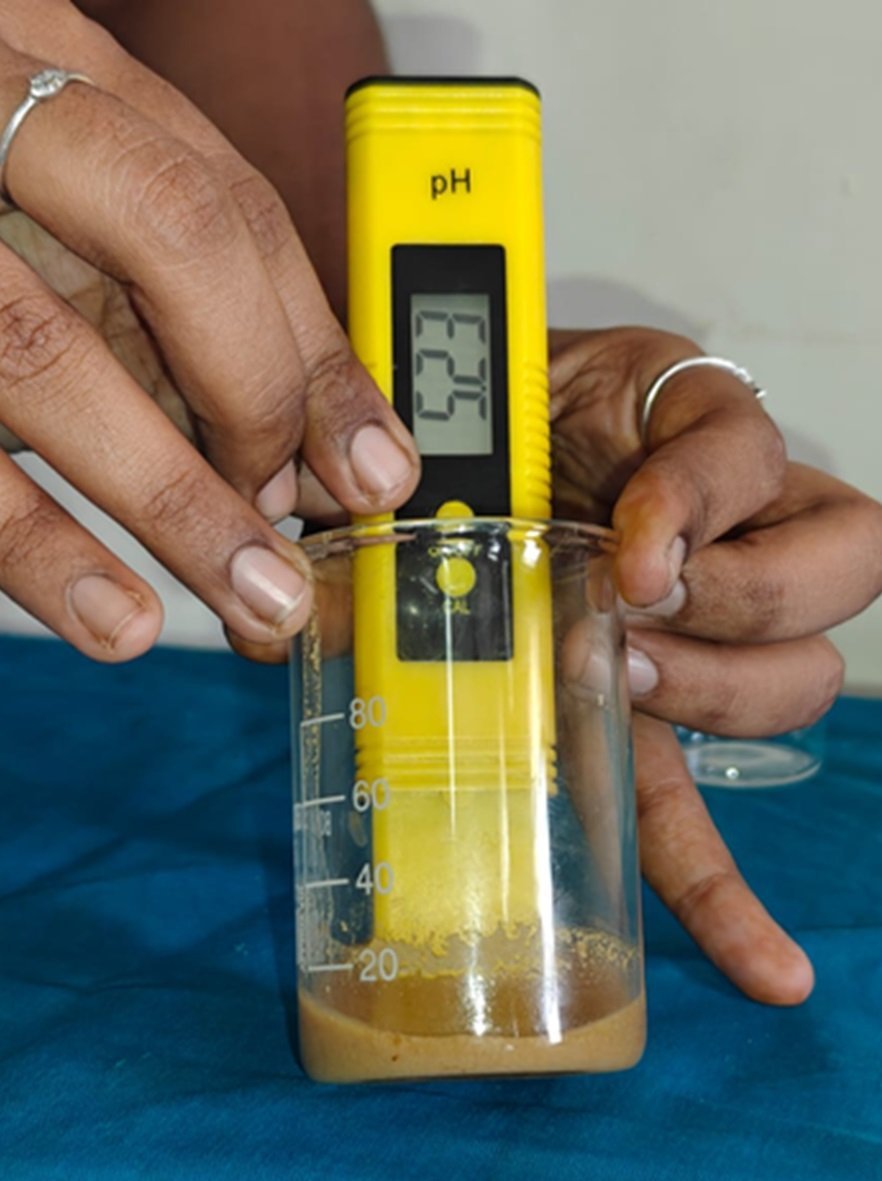
Fig 2

Fig 3
Artificial saliva was prepared following the McDougall’s artificial saliva formulation, which contained a combination of NaCl, KCl, CaCl2, MgCl2, and KH?PO? dissolved in deionized water. The solution was maintained at 37°C to simulate physiological condition.6
For each trial, 10ml of artificial saliva was placed in individual test tubes. To this, 1ml of the prepared snack solution was added, and the pH was recorded at 0, 5, 10, 15, and 30 minutes using a calibrated digital pH meter.7
Titratable Acidity (TA) Measurement
Titratable acidity (TA) quantifies the total acid content of a solution, offering a more comprehensive understanding of a snack’s potential to lower oral pH and contribute to dental erosion. A higher TA indicates greater acid content, which is associated with enamel demineralization and increased cariogenic potential.8
For each snack solution, 5ml of sample was placed in a beaker, and 0.1M NaOH (sodium hydroxide) solution was added dropwise using a burette while continuously stirring with a magnetic stirrer. The titration was continued until the pH reached 7.0, and the volume of NaOH required for neutralization was recorded. Snacks requiring a higher volume of NaOH to reach neutrality were considered to have a higher acid load, suggesting a greater risk for enamel erosion.9
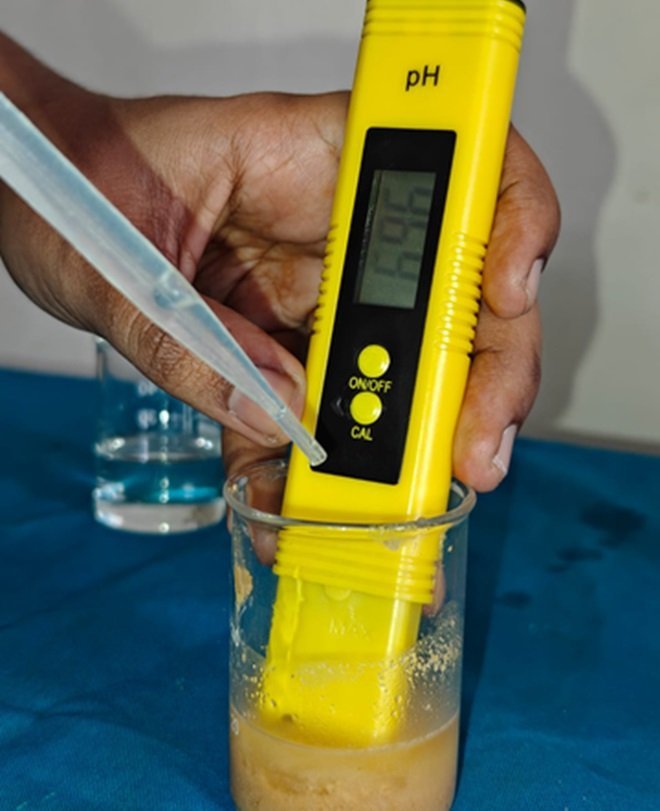
Fig 4
Sugar Content Analysis
The sugar content of each snack was measured using an Erba Chem 7 semi-automated biochemical analyser.9 A 5g sample of each snack was dissolved in 10ml of distilled water, and 1ml of the resulting solution was analysed. Since higher sugar content correlates with increased acid production by oral bacteria, this analysis was crucial in determining the potential cariogenicity of each snack.11
Dissolution Properties of Teething Snacks
The rate at which teething snacks dissolve in the oral environment influences oral clearance time and subsequent acid production by bacterial biofilms. Foods that dissolve quickly are less likely to adhere to teeth and promote prolonged bacterial fermentation, whereas those that retain their structure for extended periods pose a higher risk for prolonged acid exposure.12
To evaluate the dissolution properties, 5g of powdered snack was placed in a beaker, and distilled water was added dropwise while stirring. The volume of water required to fully dissolve the snack was recorded. Snacks requiring more water to dissolve were considered higher risk, as they are likely to remain in the oral cavity longer, increasing their cariogenic potential.13
Statistical Analysis
To analyse the collected data, descriptive statistics (mean, standard deviation) were calculated for pH dropout, titratable acidity, sugar content, and dissolution time. Additionally, Pearson’s correlation analysis was conducted to evaluate relationships between:
- Sugar content and pH drop
- Titratable acidity and buffering capacity
A significance level of p < 0.05 was used to determine statistical significance. Previous studies have demonstrated a strong correlation between higher sugar content, prolonged acidic conditions, and increased enamel demineralization, supporting the importance of these statistical analyses.14
RESULTS
1. pH Changes Over Time in Artificial Saliva
The initial baseline pH of distilled water varied slightly among the snack solutions, ranging from 6.20 to 6.83. Upon addition of the teething snack suspensions to artificial saliva, an initial rise in pH was noted at 0 minutes for all groups, likely due to buffering interactions between ingredients and artificial saliva. However, this was transient; all samples exhibited a progressive decrease in pH over the 30-minute observation period.
Gerber G3 exhibited the most pronounced acidogenic potential, with a pH drop of 1.49 units, followed by Early Food G1 (1.41 units). Slurp G2 and Timios G4 demonstrated more modest reductions in pH—0.98 and 0.66, respectively—suggesting a comparatively lower acidogenic profile. Among the tested snacks, Early Food G1 was the only sample with a statistically significant pH drop (p = 0.003) over time.
These results indicate that while all products showed pH reduction, Gerber G3 and Early Food G1 may create a more acidic intraoral environment conducive to enamel demineralization

2. Titratable Acidity (Buffering Capacity)
The buffering capacity, measured as the volume of 0.1M NaOH required to raise the pH of the sample solution to neutrality (pH 7.0), varied among the groups. Slurp G2 required the highest volume of NaOH (1.7 ml), followed by Gerber G3 (1.5 ml) and Early Food G1 (1.2 ml). Timios G4 required the least (0.5 ml), indicating lower acid buffering and hence a possibly greater susceptibility to rapid pH reduction in vivo.
These findings suggest that despite their acidogenic potential, Gerber G3 and Slurp G2 exhibit stronger buffering, which may delay pH fall initially but does not eliminate cariogenic risk due to their prolonged acidic retention.

3. Sugar Content Analysis
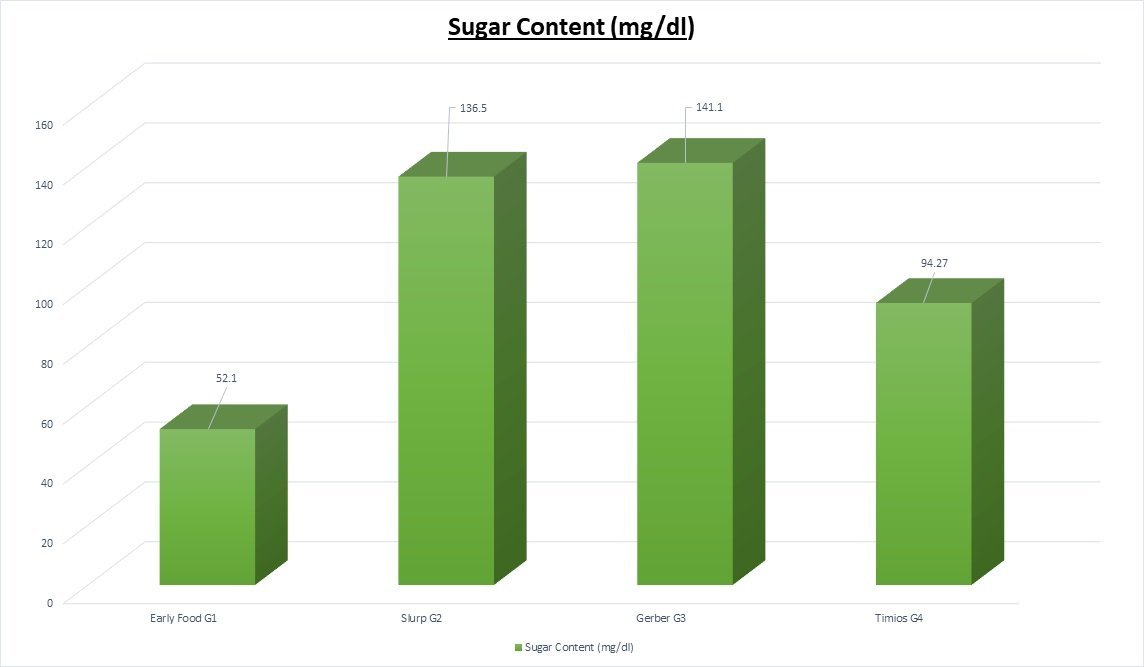
Sugar concentration was estimated using a semi-automated biochemical analyzer. Among the evaluated snacks, Gerber G3 recorded the highest sugar content at 141.1 mg/dl, followed closely by Slurp G2 (136.5 mg/dl). Timios G4 had a moderate level at 94.27 mg/dl, whereas Early Food G1 exhibited the lowest concentration (52.1 mg/dl).
These results underscore that high sugar concentration does not necessarily equate to greater acidogenicity, as reflected by the weak correlation found in the subsequent analysis. Nonetheless, elevated sugar levels remain a known risk factor for the proliferation of acidogenic oral microbiota.
4. Dissolution Properties
The oral clearance potential of each snack was approximated by measuring the volume of distilled water required to dissolve 5 grams of each product. Slurp G2 and Gerber G3 required the highest water volumes (25 ml), indicating longer intraoral retention and thus potentially prolonged exposure to acidic by-products. In contrast, Early Food G1 and Timios G4 dissolved readily in 10 ml, suggesting a shorter exposure time.
Prolonged retention in the oral cavity, particularly in an acidic environment, is associated with increased demineralization and caries risk, particularly in erupting primary teeth.

5. Pearson’s Correlation Analysis
To assess relationships between measured variables, Pearson’s correlation coefficients were calculated:
| Variables | Correlation Coefficient (r) | p-value |
|---|---|---|
| Sugar Content vs pH Drop | -0.031 | 0.969 |
| NaOH vs pH Drop | 0.592 | 0.408 |
The correlation analysis between sugar content and pH drop revealed a negligible inverse relationship (r = –0.031, p = 0.969), indicating that sugar content alone was not a reliable predictor of pH reduction in the present sample. This lack of statistical significance suggests that other factors may be more influential in determining the acidogenic potential of teething snacks. In contrast, the relationship between titratable acidity, measured as the amount of NaOH required for neutralization, and pH drop showed a moderate positive correlation (r = 0.592, p = 0.408). Although this association was also not statistically significant, it implies that titratable acidity may play a role in shaping the pH dynamics of the oral environment. These findings highlight the need for further investigation with a larger sample size to better understand the interplay between these variables and their contribution to cariogenic potential.
DISCUSSION
The present in vitro study evaluated the acidogenic and cariogenic properties of four commercially available teething snacks—Early Food G1, Slurp G2, Gerber G3, and Timios G4—based on pH changes, titratable acidity, sugar content, and dissolution profiles. The findings indicate that Gerber G3 and Early Food G1 exhibit the most pronounced acidogenic potential, characterized by a significant pH drop in artificial saliva. This supports Featherstone’s foundational concept that prolonged acidic conditions can disrupt the remineralization-demineralization balance, leading to enamel breakdown and early childhood caries (ECC).1
Although sugar content is a well-established contributor to dental caries, this study revealed a weak correlation between sugar content and pH drop (r = –0.031, p = 0.969). These findings mirror the observations of Moynihan and Petersen, who emphasized that sugar form, frequency, and clearance time may influence cariogenicity more than sugar quantity alone.9 For example, despite Slurp G2 having high sugar levels, it caused a smaller pH drop than Early Food G1, suggesting that intrinsic snack properties like composition, matrix structure, and acidity may mediate acid production and retention.
The titratable acidity findings provide deeper insight into the buffering resistance of each snack. Gerber G3 and Slurp G2 required the most NaOH to reach neutral pH, signifying a higher acid load. These results are in line with Kleinberg’s ecological approach, which proposed that foods with high titratable acidity not only challenge salivary buffering but also sustain low pH environments that foster caries-causing bacterial growth 3. High TA may prolong acidic exposure, particularly detrimental during the teething phase when primary enamel is immature and more susceptible to demineralization.
Dissolution properties further illustrate the cariogenic dynamics of these snacks. Gerber G3 and Slurp G2 exhibited slower dissolution (requiring 25 ml of water), indicating longer oral retention. Previous studies, including those by Zero,14 confirm that snacks adhering to the teeth or dissolving slowly are associated with increased enamel demineralization due to extended acid contact time. In contrast, Timios G4, which dissolved quickly and had moderate sugar content, posed a lower risk, aligning with Cury and Tenuta’s assertion that oral clearance time is a key factor in caries development.13
The buffering role of saliva is critical in moderating cariogenic challenges. Jayaraj and Ganesan highlighted that children with reduced salivary flow or low buffering capacity are at higher risk for ECC, especially when frequently consuming acidic or sugary foods.4 The artificial saliva model used here, although standardized, may not fully replicate the dynamic in vivo environment of young children, particularly those with underdeveloped salivary function or altered oral microbiota.
It is worth noting that the pH drop observed in Gerber G3 (1.49 units) crosses the critical threshold of 5.5 below which enamel demineralization occurs. This observation supports the microbial findings of Bowen and Koo, who demonstrated that acidogenic oral bacteria such as Streptococcus mutans thrive in such low-pH conditions, increasing caries risk.2 Even though Gerber G3 showed higher buffering capacity, its persistent acidic profile indicates a delayed yet sustained acidogenic challenge.
Interestingly, the lack of statistically significant correlation between sugar content and pH drop contrasts with Anderson et al.’s systematic review, which reported a positive association between dietary sugar and caries incidence in children.11 This discrepancy may reflect differences in study designs, sample size, and confounding factors such as food texture, processing, and ingredient composition. Recent research by Milgrom et al. also emphasizes that snack adherence and texture significantly influence plaque pH and bacterial activity, often more than sugar alone.15 Hence, relying solely on sugar content as an indicator of cariogenic potential can be misleading without accounting for acidogenicity and retention behavior.
An important preventive strategy emerging from this and other research is the formulation of snacks with remineralizing agents. Ten Cate and Reynolds advocated incorporating fluoride and calcium phosphate systems (e.g., CPP-ACP) in food items to counterbalance demineralization.7,8 Moreover, work by Hegde and Kumar suggests that integrating xylitol or sugar alcohols into pediatric snacks can help modulate plaque pH and reduce S. mutans colonization.16 Future formulations of teething snacks could integrate such agents to enhance enamel repair, especially considering infants' inability to maintain oral hygiene independently.
From a clinical perspective, the study’s findings underscore the importance of nutritional counseling in pediatric dental settings. As Sheiham suggested, public health interventions targeting dietary habits in early childhood can substantially reduce dental disease burden.5 In this context, the role of anticipatory guidance, as proposed by Nowak and Casamassimo, becomes crucial in shaping infant feeding practices and oral health trajectories from birth.17 Educating parents about selecting teething snacks with low sugar, minimal acidity, and rapid dissolution characteristics is vital in preventing ECC.
Despite the valuable insights offered, this study is limited by its in vitro nature. In vivo factors such as individual salivary composition, chewing behavior, microbial biofilm dynamics, and feeding frequency could significantly alter the cariogenic potential of snacks. Therefore, longitudinal clinical studies are essential to validate these findings under realistic oral conditions and to assess long-term dental outcomes in children.
In summary, this study underscores the complex interplay of factors contributing to the cariogenic potential of teething snacks. While sugar content remains a critical determinant, parameters such as pH fluctuation, titratable acidity, and oral clearance dynamics are equally influential in shaping the overall risk profile. Among the products evaluated, Gerber G3 and Early Food G1 demonstrated the highest acidogenic potential, warranting cautious use during infancy. These findings highlight the imperative for pediatric dental professionals, nutritionists, and caregivers to collaboratively implement evidence-based dietary guidance and product selection to promote optimal oral health during the teething period.
CONCLUSION
The study highlights the acidogenic potential of commercially available teething snacks, with Gerber G3 and Early Food G1 exhibiting the highest cariogenicity. Factors such as pH drop, buffering capacity, sugar content, and dissolution properties play a significant role in determining their impact on oral health. Parents and caregivers should be aware of these risks and consider alternative options with lower acidogenic potential. Further research is warranted to develop teething snacks that minimize the risk of early childhood caries while providing relief during teething.
REFERENCES
- Featherstone JD. Dental caries: a dynamic disease process. Aust Dent J. 2008;53(3):286–91.
- Bowen WH, Koo H. Biology of Streptococcus mutans-derived glucosyltransferases: role in extracellular matrix formation of cariogenic biofilms. Caries Res. 2011;45(1):69–86.
- Kleinberg I. A mixed-bacteria ecological approach to understanding the role of oral bacteria in dental caries causation. Crit Rev Oral Biol Med. 2002;13(2):108–25.
- Jayaraj D, Ganesan S. Salivary pH and buffering capacity as risk markers for early childhood caries: a clinical study. Int J Clin Pediatr Dent. 2015;8(3):167–71
- Sheiham A. Dietary effects on dental diseases. Public Health Nutr. 2001;4(2B):569–91.
- Marsh PD. Microbial ecology of dental plaque and its significance in health and disease. Adv Dent Res. 1994;8(2):263–71.
- ten Cate JM. Contemporary perspective on the use of fluoride products in caries prevention. Br Dent J. 2013;214(4):161–7.
- Reynolds EC. Calcium phosphate-based remineralization systems: scientific evidence? Aust Dent J. 1997;42(4):247–54.
- Moynihan PJ, Petersen PE. Diet, nutrition and the prevention of dental diseases. Public Health Nutr. 2004;7(1A):201–26.
- Newbrun E. Sugar and dental caries: a review of human studies. Science. 1982;217(4558):418–23.
- Anderson CA, Curzon ME, Van Loveren C, Tatsi C, Duggal MS. Sugar consumption and dental caries. Br Dent J. 2009;207(2):7–12.
- Lussi A, Hellwig E, Klimek J. Fluorides—mode of action and recommendations for use. Schweiz Monatsschr Zahnmed. 2012;122(11):1030–6.
- Cury JA, Tenuta LM. Enamel remineralization: controlling the caries disease or treating early caries lesions? Braz Oral Res. 2009;23(1):23–30.
- Zero DT. Dental caries process: physical and chemical aspects. J Dent Res. 1999;78(1):1768–75
- Milgrom P, Ly KA, Rothen M, et al. The role of snack foods and sugar-sweetened beverages in caries development. Pediatr Dent. 2009;31(3):233–9.
- Hegde RJ, Kumar A. Xylitol: a revolution in dental care. J Adv Clin Res Insights. 2016;3:81–85.
- Nowak AJ, Casamassimo PS. The dental home: a primary care oral health concept. J Am Dent Assoc. 2002;133(1):93–8
Disclaimer from Guident
The views and opinions expressed in articles published in Guident are solely those of the authors and do not necessarily reflect the views of the editors, the editorial board or the publisher, Ivory India. Guident does not endorse any product, technique or treatment described. Clinical content is intended for qualified dental and medical professionals and is not a substitute for individual clinical judgement. Guident, its editors and the publisher accept no liability for any consequence arising from the use of information published in the journal.
How to cite this article
Dr. Varshini S, Dr. Neena I E, Dr. Mallikarjuna K. Evaluating the Oral Effects of Commercially Available Teething Snacks: An in Vitro Experimental Analysis. Guident. 2025 Jul;18(8). Available from: https://guident.net/articles/research/evaluating-the-oral-effects-of-commercially-available-teething-snacks-an-in-vitro-experimental-analysis.html