Conservative Management of Discolored Nonvital Teeth- a Case Report on Walking Bleach Technique
Department of Conservative Dentistry & Endodontics, Department of Oral Medicine & Radiology, K.D. Dental College & Hospital, Mathura
ABSTRACT
A substantial cosmetic impairment might result from tooth discoloration in the anterior region. Depending on the cause, location, look, and severity of a tooth's discoloration, it may be intrinsic or extrinsic. "Walking" bleaching techniques are one of the methods that are frequently used to whiten teeth that have undergone endodontic treatment. Compared to other prosthodontic treatments like crowns or veneers, bleaching is a more conservative and minimally intrusive method. The purpose of this article is to provide a case involving the walking bleach procedure used on teeth that had endodontic treatment. Following up regularly after 4 weeks revealed a considerable decrease in tooth discolouration.
Key words- Aesthetic, Bleaching agent, Nonvital teeth, Walking bleach technique.
INTRODUCTION
A clinically apparent aberration from the natural tooth colour is a tooth dyschromia. Some patients become extremely concerned about this as a result, which prompts them to look for expert dental guidance or care.1,2 In the last years, there have been more tooth-whitening procedures performed among dental offices, with a preference for minimally invasive methods due to the rising concern for aesthetics, particularly in young adults.3 There are two basic categories of whitening procedures: vital bleaching is done on vital teeth, whereas nonvital bleaching is done on endodontically treated teeth.
Dental dyschromias can be categorised as: extrinsic, which affects the outer surfaces of teeth and may be caused by habits, diet, or both; intrinsic, which results from the administration of medicines; progressive dystrophies; the physiological process of age; iatrogenic causes; traumatic factors; pulp.4In cases of anterior endodontically treated teeth with sound dental structure and mild to moderate discolouration, bleaching is a superior alternative of complete veneer crowns since it is noninvasive, takes less time, and is less expensive.5,6
The walking bleach procedure, which combines sodium perborate with distilled water or 3 percent hydrogen peroxide to treat intracoronal discolouration, is preferred. This mixture releases H2O2, which then interacts with pulp disintegration products to produce tooth discolouration. The bleaching process's outcome is primarily influenced by the bleaching agent's concentration, accessibility to the chromogenic molecules, and the length and frequency of its application.6 In order to whiten discoloured nonvital teeth, Spasser introduced the use of sodium perborate and water in the pulp chamber of root canal-treated teeth in 1961.7 Nutting and Poe modified this method in 1963. The "walking" bleach procedure was used to replace water with 30% hydrogen peroxide.8 This study intends to report a case that demonstrates successful bleaching of discoloured, nonvital teeth that have undergone endodontic treatment using the walking bleach technique, along with a positive prognosis and no adverse effects.
CASE REPORT
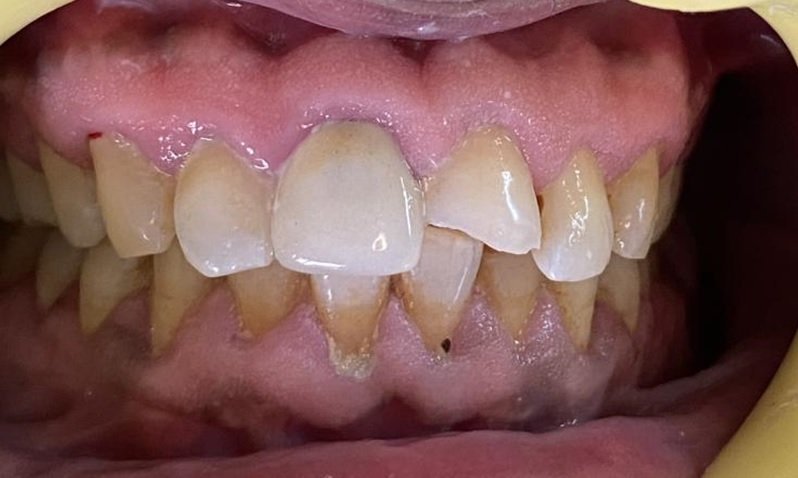
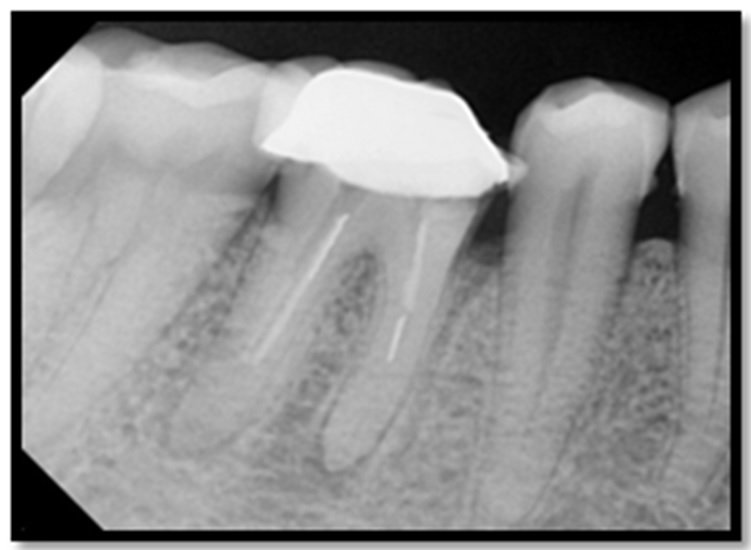
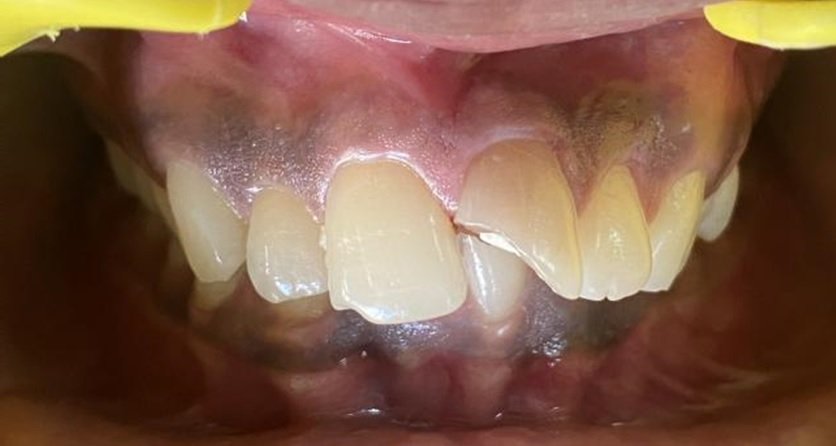
A 25-years-old female patient reported to the Department of Conservative Dentistry and Endodontics with complaint of discoloration in upper right anterior teeth region. Patient had history of trauma 5 years back and there are no pertinent medical histories or allergies mentioned. Intraoral examination of the patient revealed yellowish discoloration in right maxillary central incisor and brownish discoloration in right maxillary lateral incisor (Figure1A). Pulp sensitivity test with heated gutta-percha (Dentsply Maillefer, Switzerland) and Endo Ice (Coltene/Whaledent GmbH+ Co. KG, Langenau, Germany) showed negative response with right maxillary central and lateral incisors. Intraoral periapical radiographic examination showed normal periapical tissues (Figure1B). Based on clinical and radiographic examination diagnosis of pulpal necrosis was made. Following an explanation of the tooth-whitening procedure to the patient, informed consent was obtained.

Figure. 1(A) Preoperative clinical photograph. (B) Preoperative intraoral periapical radiograph
Teeth were first isolated with a rubber dam, then the surface was cleaned with pumice and slurry, and the shade was recorded using a VITA shade guide. The root canal treatment of right maxillary central and lateral incisors was completed (Figure 2A,B,C). Following obturation for both teeth, a round bur was used to remove a 2 mm Gutta percha from the coronal section of the root beneath the CEJ. To form a mechanical barrier between the sealed root canal and the bleaching agent to be employed in the pulp chamber, the prepared coronal part of the root was sealed with 2mm glass ionomer cement packed over the gutta purcha (Figure 2D).
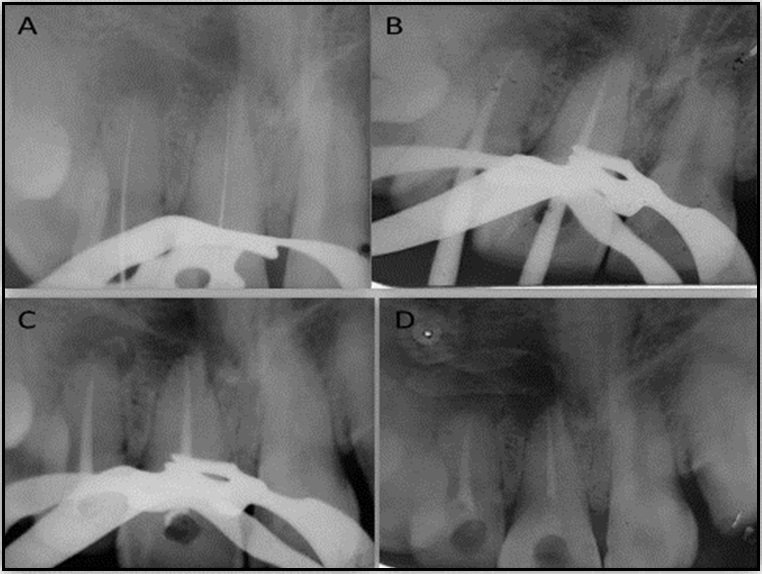
Figure. 2 (A) Working length determination. (B) Master cone radiograph. (C) Obturation was done. (D) Glass ionomer cements barrier was applied irt 11,12
A mixture of sodium perborate (2gm) and 30% H2O2 (1ml) in ratio of 2:1 was used for bleaching (Figure 3).

Figure. 3 Bleaching agents
After placement of bleaching material, a cotton pellet was placed in the pulp chamber and the cavity was sealed by GIC (Ivoclar Vivadent). After each week for three weeks, the bleaching chemical was replaced for both teeth. The shade changed after one week. The outcome was attained after the third week (Figure4).
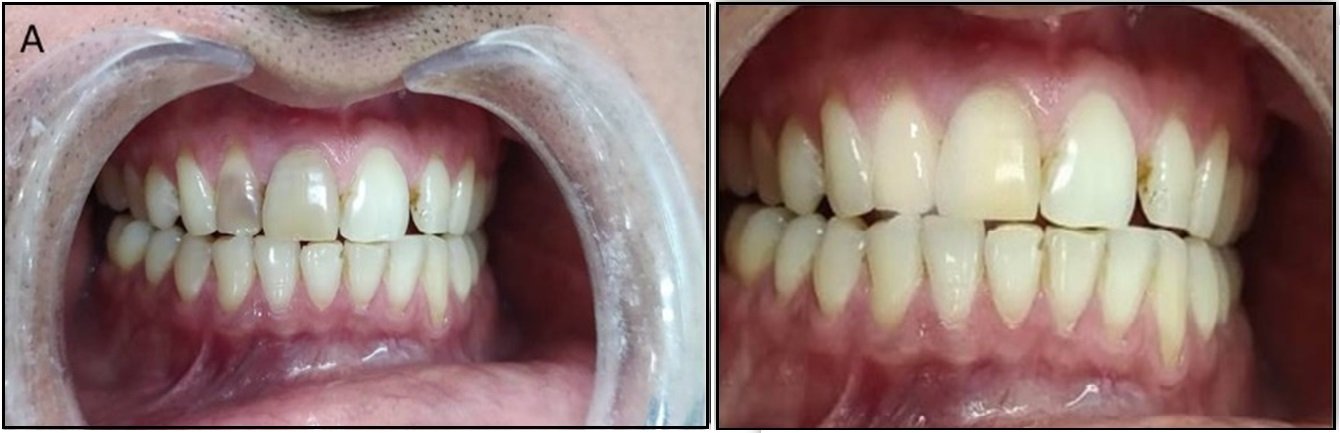
Figure. 4 (a) Preoperative (b)Postoperative results after 3-weeks follow-up
The pulp chamber was cleaned, dried, and calcium hydroxide suspension was applied for 7 days to neutralise the acidic atmosphere after the bleaching procedure was finished. The cavity was filled temporarily, and the patient was contacted seven days later for a permanent composite resin restoration (Ivoclar Vivadent). Patient was recall after 4 weeks for follow up and found no reversible changes in colour.
DISCUSSION
For the management of discoloured teeth, various treatment options are available, including complete veneers, laminates, crowns, and non-invasive techniques like bleaching. Modern cosmetic dentistry has given rise to a variety of bleaching techniques that are effective in the treatment of single-tooth discolouration. The most frequent causes of intrinsic tooth discoloration include intrapulpal haemorrhage, pulp necrosis, intracanal medications, obturation materials and sealants, and metallic restorations placed in the coronal access such as AH 26, endomethasone, iodoform cement, and medications that contain tetracycline and iodine.9,10
One of the potential side effects of whitening treatment for nonvital teeth is cervical resorption.11 In order to avoid this, gutta-percha was removed from the end of the root canal procedure all the way down to the cement-enamel junction, and then GIC placed the barrier. After bleaching, the tooth cavity's acidic environment should be neutralised by putting calcium hydroxide suspension for seven days.12 For the purpose of stabilising the colour and ensuring sufficient adhesion of the composite filling material to the tooth, this amount of time is required for the release of any leftover oxygen and dentin remineralization.12,13
Amato et al.14 examined the chromatic durability of non-vital discoloured teeth that underwent a combination of endodontic therapy and intracoronal bleaching during a 16-year period (1989–2005). They discovered that in 22 cases (or 62.9 %), the colour had remained stable and was identical to that of neighbouring teeth, indicating the combination bleaching procedure had been successful. 13 cases (37.1%) were deemed failures due to a clear colour relapse. In these re-examined cases, they did not discover any instances of internal or exterior root resorption. These findings supported the combined intracoronal bleaching technique's effectiveness, speedy aesthetic outcome, and safety.
CONCLUSION
The case demonstrated illustrates how the nonvital bleaching by walking bleach method can produce a favourable and predictable cosmetic result. Thus, it can be stated that, as compared to prosthetic treatments, the walking bleaching technique is a better option for treating discoloured, nonvital endodontically treated patients. It is a far more straight forward and effective way to get the desired effects.
REFERENCES
- Attin T, Paqué F, Ajam F, Lennon AM. Review of the current status of tooth whitening with the walking bleach technique. Int Endod J. 2003 May;36(5):313-29.
- Oliveira M, Bittencourt JA, Salgado IO, Chaves F. Non vital teeth bleaching: Current considerations. (Blanqueamiento dental en dientes no vitales; Consideracionesactuales) Int J Odontostomatol 2008;2:61–6.
- Awadhiya S, Narang A, Agarwal M, Jain M. Nonvital Bleaching: A Case Series on whitening Procedure for Discolored Endodontically Treated Teeth. Int J Prosthodont Restor Dent 2018;8(1):28-31
- Durán M, Martínez M, Fabián N. In vivo comparison of the effectiveness of carbamide peroxide and sodium perborate, in non-vital discolored teeth. Universidad Autónoma de Santo Domingo. 2009-01. Thesis.Dominican Republic. 2009. P. 8-81.
- MacIsaac AM, Hoen CM. Intracoronal bleaching: concerns and considerations. J Can Dent Assoc 1994 Jan;60(1):57-64.
- Rostein, I. Tooth discoloration and bleaching. In: Ingle JI, Bakland LK, editors. Endodontics. 5th ed. Hamilton: BC Decker Inc.; 2002. pp. 845-860.
- Spasser HF. A simple bleaching technique using sodium perborate. NYS Dent J 1961;27:332?4.
- Nutting EB, Poe GS. A new combination for bleaching teeth. J So Ca Dent Assoc 1963;31:289?91.
- Walton R. Bleaching discolored teeth: Internal and external. Principles and Practice of Endedontics. Chap. 24. Philadelphia: WB Saunders, 1989. p. 385? 97.
- Davis MC, Walton RE, Rivera EM. Sealer distribution in coronal dentin. J Endod 2002;28:464?6.
- Patel S, Kanagasingam S, Pitt Ford T. External cervical resorption: A review. J Endod 2009;35:616?25.
- Rahimi S, Shahi S, Kimyai S, Khayyam L, Abdolrahimi M. Effect of calcium hydroxide dressing on microleakage of composite restorations in endodontically treated teeth subsequent to bleaching. Med Oral Patol Oral Cir Bucal 2010;15:e413?6.
- García?Godoy F, Dodge WW, Donohue M, O’Quinn JA. Composite resin bond strength after enamel bleaching. Oper Dent 1993;18:144?7.
- Amato M, Scaravilli MS, Farella M, Riccitiello F. Bleaching teeth treated endodontically: Long?term evaluation of a case series. J Endod 2006;32:376?8.
Disclaimer from Guident
The views and opinions expressed in articles published in Guident are solely those of the authors and do not necessarily reflect the views of the editors, the editorial board or the publisher, Ivory India. Guident does not endorse any product, technique or treatment described. Clinical content is intended for qualified dental and medical professionals and is not a substitute for individual clinical judgement. Guident, its editors and the publisher accept no liability for any consequence arising from the use of information published in the journal.
How to cite this article
Dr. Rashmi Saini, Dr. Juhi Dubey, Dr. Anuj Gaur. Conservative Management of Discolored Nonvital Teeth- a Case Report on Walking Bleach Technique. Guident. 2022 Aug;15(9-10). Available from: https://guident.net/articles/endodontics/conservative-management-of-discolored-nonvital-teeth-a-case-report-on-walking-bleach-technique.html