Endo Microrobots: A Narrative Review
Department of Conservative Dentistry and Endodontics, K. D. Dental College and Hospital, Mathura, UP., India
ABSTRACT
Endodontic microrobots are amalgamation of robotics and technology that revolutionized dentistry especially endodontics. These microrobots use artificial intelligence and microelectromechanical systems (MEMS) to improve the precision and efficiency of root canal procedures, overcoming issues like as human error and time consumption. They are equipped with modern sensors, actuators, and controllers to automate duties like as cleaning, drilling, and obturation, while 3D computer modeling reduces intrusive access preparations. Reduced operator fatigue and enhanced usability are two benefits of the ergonomic design. A major development in dental technology, endodontic microrobots provide improved patient results and a new standard of dental care. This narrative review looks at the transformative potential of endodontic microrobots in dental care.
Keywords: Artificial Intelligence, Endodontics, Microrobots, Review, Robotics
INTRODUCTION
Artificial intelligence has paved the way for future research in science and technology. The precision of robots and the ergonomics of it makes it a magical tool in all fields of medicine and dentistry is not an exception. Ever since AI has been introduced, the technologies have widely been used for diagnosis and treatment in dentistry.1 Root canal treatment is one of the most common procedures in dentistry or in particular endodontics that requires the precision and skill of the operator to find canals, biomechanical preparation, assessment of working length, chemical debridement and filling (obturation). In addition to RCTs, restoration of dental caries is one of the frequent treatments in children and adults that needs electronic gadgets and human skills to achieve what is intended.2
The nexus between robots and medicine has transformed the field of healthcare by opening up new directions for study and creativity. Among these, the use of robotics in dentistry specifically, endodontics represents a promising but largely uncharted territory. The foundation of root canal therapy is endodontic therapy, which includes access opening, biomechanical preparation, and obturation.3 These treatments require exacting precision and specialised knowledge from doctors with years of experience. Nonetheless, the necessity for developments in this area is highlighted by innate difficulties including time consumption and the possibility of human error.
The creation of an endodontic micro robot presents itself as a revolutionary remedy to these problems, seeking to update conventional treatment modalities by switching from labor-intensive manual procedures to automation powered by science. This research explores the manufacturing and mechanical design of this type of micro robot, emphasising the transition from traditional endodontic procedures to technologically advanced systems.4
Robotics in dentistry is one example of a larger movement in the medical field to improve safety, quality, and accuracy in a range of treatments. Microscale robots have the potential to completely transform the way healthcare is delivered. One topic that is gaining a lot of interest is microrobotics, which embodies this paradigm shift. Stemming from the concepts of artificial intelligence and driven by developments in microelectromechanical systems (MEMS), these little works of art have the capacity to perform incredibly precise and effective navigation of complex dental environments.5
As we travel through the fields of endodontic microrobotics, it becomes clear that the fusion of technology, science, and medicine is a sign of a new era of innovation that will redefine the norms of care in dentistry.
Medical microrobotics is a growing discipline that uses small sensors and actuators to provide non-invasive diagnosis and therapy within the human body. Smart microcatheters and microendoscopes are examples of microrobots that can be either tethered or untethered (e.g., cell-based drug delivery systems). Microrobots can be controlled externally using physical fields such as magnetism or ultrasound to achieve active mobility and numerous capabilities, separating them from passive carriers and traditional nanomedicines.6
A microrobot is a small, frequently microscopic device made to carry out particular duties quickly and precisely. These technological wonders can manoeuvre into intricate spaces, including as root canals and restorations. The word "microrobot" is occasionally used imprecisely to describe miniature robots. It has been used as a moniker for any exceptionally little robot, but it has also been used to describe robots that are smaller than one millimetre on one side. Although microrobotics is still in the latent stage, it has a huge potential as a catalyst in endodontia and restorative dentistry.7
Microelectromechanical systems (MEMS) are the technology behind working of these microrobots. MEMS refers to micro-scale active mechanical and electrical systems. Robots that are smaller than a millimetre typically have design elements that are measured in microns. Using the less precise concept of "microrobot," which refers to a robot that is only a few centimetres in diameter, feature sizes are expressed in millimetres.8
ENDODONTIC MICRO ROBOT DEVELOPMENT
The research project "Improved Endodontic Technology Development" was inspired by the demand for innovative advanced endodontic technology. Using two-dimensional x-rays and images to create a computerised, three-dimensional tooth model that is displayed with cutting-edge computer graphics, the Advanced Endodontic Technology Development project consists of four sub-subjects: designing and building a smart, multi-purpose precision micro machine to perform automated root canal treatment; designing and building an automatic prescription system from the three-dimensional root canal model; and developing a new ultrasonic cleaning tool with pressure assisted jetting/vacuum waste removal.9
The core of the Advanced Endodontic Technology Development project is the creation of an endodontic micro machine, since the ultimate application of advanced endodontic technology will depend on the micro machine's ability to precisely perform tasks that are beyond the capabilities of the human hand. The patient will have this computer-controlled device fixed to their teeth. The micro machine or robot will carry out the automated root canal cleaning, drilling, filling, and probing with intelligent control and online monitoring. This robotic operation will include the outcomes of the other subprojects.10
The tasks involved in developing the micro robot are as follows: defining the robot's specifications and requirements; designing, selecting, and fabricating the robot's mechanical components; designing and constructing the electrical control system; designing and manufacturing the robot's mechanical components.11
ENDODONTIC MICRO ROBOT CRITERIA & SPECIFICATIONS
Particular goals for the design of microrobots include: providing a means of accurate diagnosis and treatment, minimising human error, and decreasing reliance on the dentist's skills. The following features are what this machine ought to have:10
- A change to the micro-position and orientation to guarantee that the tools begin at a specific place;
- To guarantee that the instruments can reach the necessary canal depth and halt at a predetermined location, an automatic feed rate and travel distance control;
- Integrated microsensors to track the drilling/reaming and probing operations;
- Apex sensing and control to stop the possibility of overshooting or root perforations (exceeding the apex of the canal);
- Flexible drills or files that make it possible to shape and clean curved canals;
- Attachments for a vacuum that can be used to remove loose tissue or debris from a root canal, or that use pressured solution jets to remove chips from the root canal.
An endo microrobot is distinguished by its extraordinary ergonomic design, which makes it extremely user-friendly, in addition to its exceptional precision. It reduces errors and ensures exact motions even in the most delicate procedures because to its unmatched accuracy. Additionally, its ergonomic characteristics let operators work more comfortably and efficiently for extended periods of time by reducing physical strain. Its effective design also guarantees low energy use, avoiding needless resource depletion. The endo microrobot's precision, efficiency, and ergonomics combine to make it a vital tool for a variety of applications, from industrial to medical procedures.12,13
MICRO SENSORS, ACTUATORS, AND CONTROLLERS
Sensors for sophisticated treatment process monitoring are also incorporated into this machine design. Owing to its small size, the sensors can be manufactured in silicon-on-insulator (SOI) wafers by the surface micromachining technique and then integrated into tiny robots. The tool's spindle will be turned on and off by six micro actuators, which will also work to control the tool's five axes, or five degrees of freedom. A digital NC controller works independently with each actuator. Rapid sensor input response—a few milliseconds, at most—is required from the controller. Conducting additional research will determine whether to use cord linked controllers or embedded microcontrollers. Additionally, auxiliary features such an irrigation nozzle for cleaning, a vacuum suction cup for removing chips and waste fluid, and/or optical fibres for illumination, imaging, and observation will be available. The ultimate goal for zero-defect operation is a totally automatic operation with computer-aided treatment procedure planning and control, but a manual remote control will be given to the physician. The machine control can be interfaced with by the physician through an interface system.10
PROCESS PLANNING FOR COMPUTER-AIDED THERAPY
Systems for computer-aided treatment process planning perform similar tasks to CAD/CAM software in the machinery sector. Standard NC codes from computer-aided design files are the program's output; these codes operate the robot's motions via an NC digital controller. The automated endodontic therapy's tool placement and movement control are handled by the computer-aided root canal technique. This computer programme is designed to automatically choose the right tool and identify the following: the path, starting point, stopping point, and location of the tool; the cutting parameters (feed and speed); the geometry of the 3-D tooth model following treatment. Similar to CAD/CAM software in the machinery industry, computer-aided treatment process planning systems perform similar tasks. The application outputs standard NC codes from computer-aided design files, which are used by an NC digital controller to control the robot's motions. Tool location and movement control for automated endodontic therapy are the focus of the computer-aided root canal treatment technique.4,11
3D COMPUTER MODELLING OF ROOT CANALS
Usually, a destructive access preparation involving the removal of the tooth's crown and dentin is required prior to a clinician's examination. A non-destructive method of evaluating the internal structure of teeth is 3D computer modelling of root canals. In order to evaluate internal tooth geometry within the limitations of the human body, a computer software and a less invasive method are devised. This involves creating 3-D dental models from 2-D radiographs. The location of the canal orifice and canal curvature are shown in 3-D computer graphics, together with the root canal's size and shape. This model can help prevent the damaging access preparation that occurs before to a clinician's inspection.11
MECHANICAL DESIGN OF ENDODONTIC MICRO ROBOTS
Different machine combinations are possible. The design of a multifunctional micro machine for root canal preparation is presented here, as shown in Figure 1. This machine has five axes of motion, as shown in the figure: rotational motion in the θ x and θ y directions and linear motion in the X, Y, and Z directions. Further linear actuators X' and Y' regulate the tilt angles θ x, θ y. For the spindle ω z, there is an additional rotating motion available.14
The base of the machine is saddle-shaped. The teeth row and two reference brackets will support it. It is necessary to pre-clamp the tooth to be treated tightly using a set of brackets that come in different sizes to match the patients' teeth before mounting the equipment and obtaining X-rays. It is possible to use nearby teeth for support.
The bracket pair creates a coordination system for the machine by offering three radiopaque reference points for machine registration. No matter how the patient moves their head or jaw, the machine base won't move in relation to their teeth once it is positioned on the reference bracket. The device is made to be rigid and small so that the patient can bite into it. Neither actively maintaining a wide-open mouth nor maintaining complete stillness of the head are required of the patient. There are no jagged edges to harm the patient, and further safety measures include a protective case (only visible in the photo; not in the drawings).
Various endodontic tools and accessory devices can be held by this multipurpose machine. Pre-mounted tools can be placed on a compact modular unit that can be slid into a Z-axis sliding adaptor with the help of a quick tool change idea that makes use of a cartridge design.10
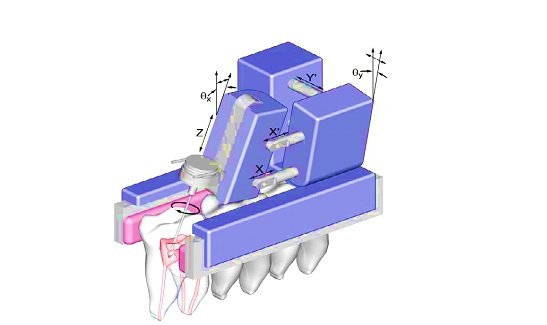
Figure 1: Multifunctional micro-device for automated endodontic therapy
CONCLUSION
A fascinating tale of invention and promise is revealed when one travels through the field of endodontic microrobotics. As science, technology, and medicine come together, new possibilities for accuracy and effectiveness in dental treatment open up. Endodontic microrobots clearly represent more than just mechanical devices as we approach this revolutionary era; rather, they represent a vision for a complete overhaul of conventional treatment procedures.
The emergence of endodontic microrobots signals a change in the practise of root canal therapy toward automated precision, tackling issues like human error and time consumption. These little wonders can navigate challenging dental conditions with unmatched accuracy because they are outfitted with sophisticated sensors, actuators, and controllers. The integration of cutting-edge technology such as computer-aided therapy planning and microelectromechanical systems (MEMS) in microrobots holds the potential to revolutionise endodontics patient care standards.
These microrobots' versatile architecture further emphasises how flexible and adaptable they are to different dental procedures. The intricacies of contemporary endodontic treatments can be effectively addressed by these technologies, which provide everything from automated root canal cleaning to accurate drilling and filling. Furthermore, their non-invasive method minimises the need for damaging access preparations, thanks to 3D computer modelling of root canals, which represents a paradigm change in dental diagnosis.
When we consider endodontic microrobots' prospective applications down the road, it's clear that they have the power to completely transform dental treatment worldwide. These microrobots exemplify the collaborative relationship between technology and healthcare because of their capacity to reduce human error, increase treatment precision, and improve patient outcomes. In fact, they serve as a living example of the seemingly endless possibilities that arise when innovation combines the science and art of dentistry. We are starting a journey toward a day when dental care will not only be efficient but also genuinely revolutionary as we welcome this new era of endodontic microrobotics.
REFERENCES
- Robotics In Dentistry: The Next Generation Technology [Internet]. 2019 [cited 2024 Feb 18]. Available from: https://dentalreach.today/robotics-in-dentistry-the-next-generation-technology/
- Marvaniya J, Agarwal K, Mehta DN, Parmar N, Shyamal R, Patel J. Minimal Invasive Endodontics: A Comprehensive Narrative Review. Cureus. 14(6):e25984.
- Liu L, Watanabe M, Ichikawa T. Robotics in Dentistry: A Narrative Review. Dent J. 2023 Feb 24;11(3):62.
- Neha S, P S, K S, Reddy S, Cherukupalli R, G S. Micro Robot - A Revolution in Endodontics. Ann Int Med Dent Res. 2017 Jul 1;3.
- Cheng C, Yinan X, Zongxin X, Lei S, Yanan X, Yanli Y. Robotic and Microrobotic Tools for Dental Therapy. J Healthc Eng. 2022 Feb 18;2022:3265462.
- Soto F, Wang J, Ahmed R, Demirci U. Medical Micro/Nanorobots in Precision Medicine. Adv Sci. 2020 Oct 4;7(21):2002203.
- Lai G, Dunlap C, Gluskin A, Nehme WB, Azim AA. Artificial Intelligence in Endodontics. J Calif Dent Assoc. 2023 Dec 31;51(1):2199933.
- Diller E. Micro-Scale Mobile Robotics. Found Trends Robot. 2011;2(3):143–259.
- Lerner E. Applying Microrobotics in Endodontic Treatment and Diagnostics [Internet]. Penn Engineering Blog. 2022 [cited 2024 Feb 19]. Available from: https://blog.seas.upenn.edu/applying-microrobotics-in-endodontic-treatment-and-diagnostics/
- Dong J, Hong S, Hesselgren G. WIP: A Study on Development of Endodontic Micro Robot. 2006;
- Mittal S, Kumar T, Mittal S, Sharma J. Endodontics Generation Next- Microrobotics Category of The Article-Review. Dent J Adv Stud. 2013 Apr 1;01:043–5.
- Das H, Motghare DV, Singh M. Ergonomics in dentistry: Narrative review. Int J Appl Dent Sci. 2018;4:104–10.
- Hastings C. Magnetic Microrobots Assist with Root Canal Treatment | [Internet]. Medgadget. 2022 [cited 2024 Feb 19]. Available from: https://www.medgadget.com/2022/08/magnetic-microrobots-assist-with-root-canal-treatment.html
- R P, Jyoti B, Ganesan S, B S. MICROROBOTICS IN ENDODONTICS – A REVIEW. Unique J Med Dent Sci. 2020 Jul 18;8:16–9.
Disclaimer from Guident
The views and opinions expressed in articles published in Guident are solely those of the authors and do not necessarily reflect the views of the editors, the editorial board or the publisher, Ivory India. Guident does not endorse any product, technique or treatment described. Clinical content is intended for qualified dental and medical professionals and is not a substitute for individual clinical judgement. Guident, its editors and the publisher accept no liability for any consequence arising from the use of information published in the journal.
How to cite this article
Dr. Arjeet Ghosh, Dr. Ajay Kumar Nagpal, Dr. Aditya Kumar. Endo Microrobots: A Narrative Review. Guident. 2024 Jun;17(7). Available from: https://guident.net/articles/endodontics/endo-microrobots-a-narrative-review.html