
Nutrition and Dental Health-an Insight
ABSTRACT
Nutrition is the key to a healthy body. Nutritious food is essential not only for overall physical health, but also for the development and maintenance of a healthy mouth, especially the teeth and gums. An unhealthy diet has been implicated as risk factors for several chronic diseases that are known to be associated with oral diseases. Therefore, the relationship between diet and oral health is highly related as good nutrition plays a key role in preventing tooth decay and gum diseases. Good oral health practices should begin early in life and should be maintained throughout life. This review provides an overview on nutrition and also highlights the importance of a balanced diet to achieve a healthy oral cavity.
KEYWORDS: Nutrition, Balanced diet, Periodontal Diseases, Malnutrition, Oral diseases.
INTRODUCTION
In 1946, the World Health Organization (WHO) defined Health “as a state of complete physical, mental and social well-being and not merely the absence of disease or infirmity”.1 To maintain this healthy state, our body requires nutrients. Nutrition is considered as the core pillar of human growth. Deficiencies, excesses, or imbalances in a person’s intake of energy and/or nutrients are termed as malnutrition. This over-nutrition or under-nutrition impacts the oral health of a person. There is a continuous harmony between nutrition and the integrity of the oral cavity in health and disease. Therefore, nourishment plays an integral part of oral health. Nutrition impacts oral health and oral wellness affects nourishment. This interdependent relationship sees good nutritional health and wellness, advertising good oral health and the other way around.
WHAT ARE NUTRIENTS?
Nutrients are organic and inorganic complex substances contained in food that provide nourishment essential for the maintenance of life and for growth. Each nutrient has a specific function in the body. These nutrients can be divided into (Figure 1):
- Macro nutrients: They form the major bulk of the food. They contribute to the total energy intake.
- Micro nutrients: They form the minor portion of the food and yet are very essential in a balanced diet. They help in immune function, growth, fluid balance and several other processes.
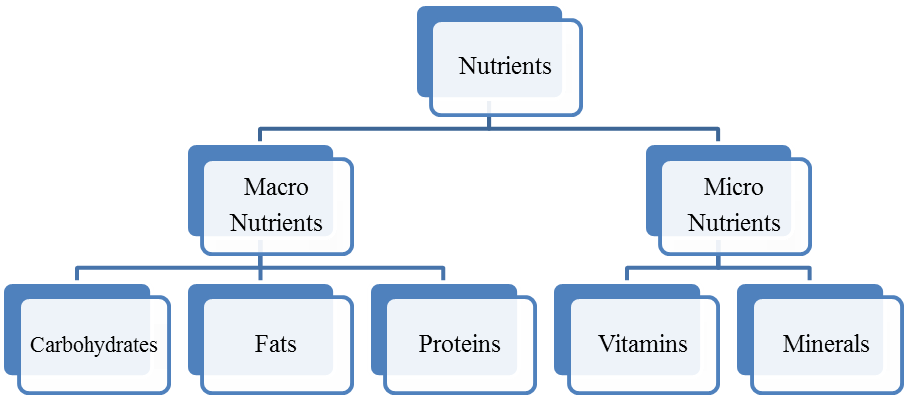
Figure 1: Classification of Nutrients.
WHY IS NUTRITION IMPORTANT?
Nutrition plays a major role in maintaining good dental health. We need healthy teeth and gums to eat nutritious food and we need nutritious food for healthy teeth and gums. Adequate nutrition is important in disease prevention and nutritional counseling is becoming an increasingly important component of preventive dentistry.
HOW DOES THE MOUTH RELATE TO GOOD HEALTH?
Mouth being a reflecting mirror of general health often helps in early diagnosis of many diseases and disturbances. Nutrient deficiency or excess will show up in the mouth before they show up anywhere else in the body. The health state of teeth and gums can often signal systemic problems including cardiovascular disease, diabetes, sinus infection, irritable bowel disease and more. Hence, a diet full of specific nutrients can be important in the successful treatment of many disorders.
DIET AND THE DEVELOPMENT OF ORAL CAVITY
Oral cavity begins to develop from the fourth week of embryologic development.2 Therefore, pregnancy period is a critical time, both for the mother and the fetus. Pregnant women are at risk of deficiencies of vitamin A, folate and B-complex, minerals like iodine, iron and zinc. These insufficiencies make the oral mucosa vulnerable to pathogens and causes periodontal infections. These nutritional deficiencies also influence the development of the oral cavity of the fetus. The consequences are different depending on whether it is an early or late nutritional imbalance. A shortage of vitamins and minerals in the phase before conception influences dental organogenesis, growth of the maxilla and facial development.
An insufficient supply of proteins can lead to-
- Atrophy of the lingual papilla.
- Alteration in dentinogenesis and cementogenesis.
- Malocclusion.
- Linear hypoplasia of the enamel.3
An insufficient supply of lipids can lead to-
- Inflammatory and degenerative pathologies.
- Parotid swelling leading to hyposalivation.
- Altered mucosal trophism.4.
An insufficient supply of carbohydrates can lead to-
- Altered organogenesis.
- Influence of the metabolism on the dental plaque.
- Caries.
- Periodontal disease.5
INFLUENCE OF MICRONUTRIENTS ON ORAL HEALTH
Micronutrients are one of the major groups of nutrients our body needs. They include vitamins and minerals. Vitamins are necessary for energy production, immune function, blood clotting and other functions (Table 1).6,7,8 Meanwhile, minerals play an important role in growth, bone health, fluid balance and several other processes (Table 2).9
Table 1: Vitamins
VITAMIN |
FOOD SOURCE |
ORAL MANIFESTATIONS |
|
B1 |
Cereals, nuts, milk, legumes, green leafy vegetables, meat |
Hypersentivity of oral mucosa, pain in tongue, jaw. |
|
B2 |
Milk, cheese, eggs, cereals, whole grains. |
Angular cheilosis, sore tongue, magneta tounge, shiny red lips. |
|
B3 |
Legumes, cereals, meat. |
Ulcerative gingivitis, denuded tongue, stomatitis, tip of tongue is red and swollen. |
|
B6 |
Legumes, wheat bran, cereals, meat. |
Angular cheilosis, sore or burning mouth, glossitis. |
|
B12 |
Milk, cheese, eggs, meat, fish. |
Halitosis, xerostomia, apthous ulcers, loss or distortion of taste, delayed wound healing. |
|
C |
Citrus fruits, Strawberries, Raspberries, Blueberries, Potatoes (sweet, white), Tomatoes. |
Scurvy, sore burning mouth, soft tissue ulceration, increased risk of candidiasis, malformed teeth due to inadequate dentin. |
|
A |
Bananas, carrot, green leafy vegetables, potatoes. |
Xerostomia, disturbed or arrested enamel development, gingival hypertrophy, increased risk of candidiasis, increased caries risk. |
|
D |
Milk, butter, egg, fish. |
Incomplete mineralization of teeth and alveolar bone, pulp calcification, enamel hypoplasia. |
|
K |
Green leafy vegetables, cauliflower, cabbage, fish, meat. |
Increased risk of bleeding and candidiasis. |
|
E |
Milk, cereals, soybean, corn, eggs, meat. |
No oral manifestation. |
Table 2: Minerals
MINERAL |
FOOD SOURCES |
ORAL MANIFESTATIONS |
|
Calcium |
Milk and milk products, green leafy vegetables. |
Malformed teeth and jaws, Teeth crowded too closely in a narrow jaw (attributable to the mothers receiving an insufficient supply of calcium during pregnancy). |
|
Phosphorus |
Milk, dried peas, beans, fish, eggs, meat. |
Poor quality teeth, Teeth crowded too closely in a narrow jaw (attributable to the mothers receiving an insufficient supply of calcium during pregnancy). |
|
Magnesium |
Green leafy vegetables, nuts, soybeans. |
Localized degeneration of ameloblasts, enamel hypoplasia, complete cessation of enamel formation. |
|
Fluorine |
Fluoridated water, seafood. |
Dental caries. |
|
Iron |
Green leafy vegetables, egg yolk, meat. |
Glossitis and fissures at the corners of the mouth, stomatitis, ulceration, and petechial hemorrhages, burning sensation accompanied by a reddening at the tip and around the margins. |
|
Zinc |
Nuts, beans, seafood, eggs, meat, |
In the tongue the epithelium of the anterior dorsum becomes thick. |
|
Iodine |
Iodized salt, dairy products, seafood. |
Maldevelopment of jaw bones, retarded tooth eruption and predisposition to root resorption. |
|
Copper |
Cocoa powder, peanut butter, organ meat. |
The condyle of the temporomandibular joint exhibits widening with irregularly arranged cartilagenous layers and a decrease in vascularity and trabeculae. |
DENTAL PROBLEMS DUE TO IMBALANCED DIET
Dental problems like tooth decay and dental erosion are very common problems in all age- groups, which are largely preventable. Adults over the age of thirty years suffer from some form of periodontal, or gum disease like gingivitis, or inflammation of the gum tissue, which, if untreated, can lead to periodontitis – permanent destruction of the tissues that connect teeth to bone in the mouth.
Some of the common dental problems are:
CARIES/TOOTH DECAY:
Caries is a demineralization of the inorganic part of the tooth with the dissolution of the organic substance due to a multifactorial etiology. The demineralization of the enamel and of the dentine is caused by organic acids that form in the dental plaque because of bacterial activity, through the anaerobic metabolism of sugars found in the diet (Figure 2).
Very low levels of dental caries are found in communities with a traditional lifestyle and low consumption of sugars. As soon as the quantity of sugars and other fermentable carbohydrates increases in the diet, a notable increase in dental caries is noticed.10

Figure 2: Dental Caries.
DENTAL EROSION
Dental erosion is the progressive irreversible loss of dental tissue that is chemically corroded by extrinsic and intrinsic acids through a process that does not involve bacteria (Figure 3).
Extrinsic acids commonly found in our diet are citric, phosphoric, ascorbic, malic, tartaric, and carbonic acids. These acids are mostly found in fruit, fruit juices, drinks, and vinegar. Intrinsic acids are derived from gastro esophageal reflux.11
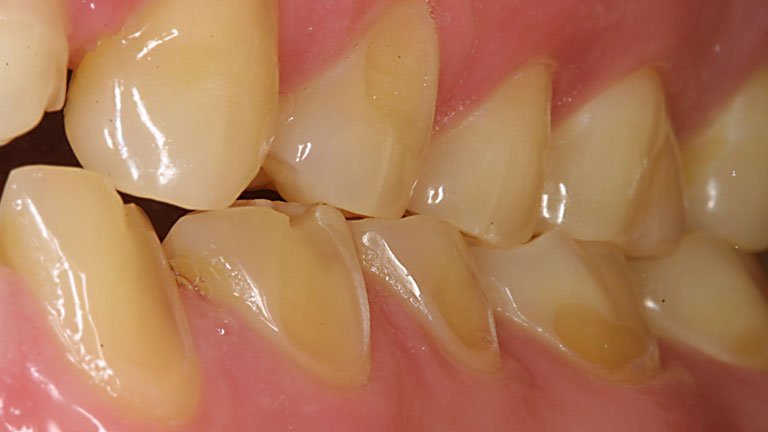
Figure 3: Dental Erosion.
ENAMEL HYPOPLASIA
Teeth in a pre-eruptive phase are influenced by the nutritional state. One such condition is enamel hypoplasia. Enamel hypoplasia is a developmental defect that results in inadequate enamel. It can affect both baby teeth and permanent teeth (Figure 4).
A lack of vitamin D, A and protein-energy malnutrition have been associated with enamel hypoplasia.12

Figure 4: Enamel Hypoplasia.
PERIODONTAL DISEASES
Periodontal disease is an infection of the tissues that hold our teeth in place i.e. gums. The food components adhere to tooth enamel, forming dental plaque—a clear, gelatinous material that allows bacteria to remain on the teeth. If dental plaque is not removed frequently (at least once a day) by proper brushing and flossing, the plaque becomes tightly attached to the tooth and only a professional cleaning can remove it. Dental plaque can also cause gingivitis, a condition that causes inflammation of the gums and is also referred to as gum disease. Gingivitis can breakdown tissue and possibly lead to tooth loss (Figure 5).
The most important risk factor in the development of periodontal disease is inadequate oral hygiene and malnutrition.13

Figure 5: Periodontal Disease.
ORAL CANDIDIASIS
Oral candidiasis is a fungal disease caused by Candida albicans. This is also known as oral thrush. There is a significant correlation between lack of iron and candidiasis. The correlation between candidiasis and the lack of folic acid, vitamins A, B1, B2, vitamins C, K, zinc, and a diet rich in carbohydrates is also significant. In its early stages, oral thrush may not cause any symptoms. But as the infection gets worse, one or more of the following symptoms may develop:
- White or yellow patches of bumps on your inner cheeks, tongue, tonsils, gums, or lips (Figure 6).
- Slight bleeding if the bumps are scraped.
- Soreness or burning in your mouth.
In some cases, oral thrush can affect your esophagus, though this is uncommon.14

Figure 6: Oral Candidiasis.
POTENTIALLY MALIGNANT ORAL LESIONS
Potentially malignant oral lesions include Lichen planus, Leukoplakia. These pathologies of the oral mucous present a tendency for malignant degeneration if some favorable conditions persist. With regard to these lesions, a significant association has been found with reduced serum levels of vitamins A, C, B12, and folic acid. Diets rich in fruit and vegetables, tomatoes and products derived from them, significantly reduce the risk of the onset of these lesions.
Leukoplakia:
- Leukoplakia is a condition in which thick, white or grayish patches form usually inside your mouth. It’s primarily linked to tobacco use. Smoking is the most common cause. But chewing tobacco can also cause leukoplakia.
- It occurs on parts of the body that have mucosal tissue, such as the mouth. The condition is marked by unusual-looking patches inside the mouth which may be white or gray in color with thick, hard and raised surfaces (Figure 7). Very rarely red spots may appear which may be a sign of cancer.15

Figure 7: Oral Leukoplakia.
Lichen Planus:
- Lichen planus is an itchy skin rash that is caused by an immune response inside the mouth which includes inside of cheeks (the most common location for these lesions), gums, tongue, inner tissues of lips, palate.
- Lesions can appear as either white, lacy, raised patches of tissue that resemble spiderwebs or tender, swollen patches that are bright red. They can also appear as — or develop into — open sores (ulceration) (Figure 8).
- Symptoms include:
- Burning in the affected area
- Pain or discomfort when speaking, eating, or drinking.
- Increased sensitivity to acidic, spicy, coarsely textured, or hot foods.
- Inflammation of gums, including bleeding when brushing teeth.
- Certain lifestyle changes such as eating well and getting plenty of nutrients through foods like fruits, vegetables, nuts, and lean protein can help manage oral lichen planus.16

Figure 8: Oral Lichen Planus.
FOODS TO EAT FOR GOOD DENTAL HEALTH
A diet rich in whole foods like whole cereals, millets, legumes, fresh vegetables and fruits is ideal for dental health. Foods, nutrients and supplements that may play a specific role in oral health are as follows.17,18,19
DAIRY FOODS
Dairy foods have a specific role to play in dental health. Milk, cheese and yoghurt or curd contain nutrients such as calcium, casein and phosphorus that helps protect tooth enamel and prevent tooth decay and erosion. Casein when combined with calcium and phosphorus creates a protective protein film over the enamel surface of the tooth, reducing the risk of tooth decay. The tooth strengthening minerals, calcium and phosphorus, found in dairy foods, also help repair teeth after acid attacks. Consuming fermented dairy products like curd, buttermilk, fermented milk etc. will reduce the incidence of periodontal diseases.
GREEN TEA
Polyphenols have been known to reduce bacteria and toxic by-products of bacteria in the mouth. Tea also tends to be rich in fluoride, possibly the most well-known tooth- strengthener. Drinking green tea improves the health of teeth and gums, as it decreases inflammation, making mouth more alkaline, inhibiting growth of cavity-causing bacteria. It also prevents tooth loss, makes progression of oral cancer slow, and freshens breath by killing odor-causing bacteria.
FRUITS
Berries like cranberries, strawberries, blueberries are rich in anthocyanin which prevents the attachment and colonization of pathogens on teeth. Cranberry or blueberry extract-infused mouthwash improves dental health. Antioxidant vitamins, such as vitamin C and other nutrients from fruits help protect gums and other tissues from cell damage and bacterial infection.
VEGETABLES
Raw vegetables like carrots and cucumber help clean plaque from teeth and freshen breath. Avocado flesh and garlic is full of prebiotic fiber that promotes healthy digestion. In addition to this garlics also contain allicin which make it antifungal, antiviral and antibacterial. Green leafy vegetable like spinach is a good source of iron, vitamin A, vitamin C and folic acid which improve dental health. Antioxidants present in spinach remove damaging oxidizing agents from the body extending the benefits to healthy teeth and gums.
WHOLE GRAINS
Whole grains like cereals, legumes, millets provide plenty of calcium, phosphorus, magnesium, vitamin K (especially K2) and vitamin D.
FOODS TO AVOID FOR GOOD DENTAL HEALTH
Avoiding processed foods, especially those that are high in simple sugars, help in preventing dental decay. Energy drinks, sticky foods such as candy, caramel and snacks with sugars such as cookies, cakes, pastries are particularly damaging to teeth as they combine a high sugar load with an acidic pH. Foods that take a long time to chew or that are held in the mouth can damage teeth, as they retain sugar in the mouth longer than other foods do. Other than these foods, consumption of nicotine based products like cigarettes; pan masala also does a lot of damage to the oral cavity.20,21
TIPS TO MAINTAIN GOOD ORAL HEALTH FOR ALL AGE GROUPS
BIRTH- 12 MONTHS
- Begin oral hygiene practices (brushing or rinsing the mouth) after the first tooth erupts.
- Wipe gums with a washcloth or gauze pad after feedings to reduce the transmission of bacteria.
- Do not leave child to fall asleep with a bottle to prevent nursing bottle syndrome.
- Attempt to wean the child from the bottle by 15 months of age.
1- 10 YEARS OF AGE
- Avoid or limit consumption of sugar beverages such as soda, juice, and sports drinks.
- Limit bedtime snacks.
- Include dairy products with meals and snacks along with fruits and vegetables to induce salivation.
- Brush teeth 2 times per day for 2 minutes using fluoride toothpaste preferably 30 minutes after meals.
ADOLESCENTS AND ADULTS
- Beverages without sugar (milk, tea, coffee) are the best choices to prevent tooth decay.
- Use artificial sweeteners in place of real sugars. Artificial sugars do not contribute to tooth decay.
- Choose nutrient dense snacks that do not harm teeth, such as cheese, yogurt, meats, plain nuts, peanut butter, fresh fruits and vegetables, unsweetened breads or cereals, and popcorn.
- Brush teeth twice daily with fluoride containing toothpaste for 2 minutes, preferably after meals and snacks.
- Clean tongue and floss at least once a day, daily.
- Regular check-ups and cleanings (at least once a year) with a dentist are important steps in maintaining good oral health.
- In communities with low fluoride levels in the water supply, use of a toothpaste or mouthwash containing fluoride is highly recommended.
CONCLUSION
Nutrition is considered as a core pillar of human growth. From gestation through the end of life, nutrition influences the integrity and function of the dentition and supporting oral structures. Understanding exactly how diet plan, add to rates of caries in infants, babies, adolescent and adults is vital to boost the oral health. Most notably, nutritional adjustments might not only influence present health and wellness but may also determine whether a person will establish illness such as cancer, heart disease and diabetes mellitus much later in life. Knowledge of these relationships and understanding of the fact that oral health is reflection of the physiological, social and psychological factors is essential to enhance our quality of life. And also it is very important to brush and floss our teeth, clean our tongue and to regularly visit a dentist to maintain a good oral hygiene.
“Be true to your teeth, and they won’t be false to you.”
REFERENCES
- https://www.who.int/governance/eb/who_constitution_en.pdf
- Angelina Magreni, Jason G. May, Embryology of the oral structures; Operative Techniques in Otolaryngology, 26, 110-114, 2015.
- N. Dion, J. L. Cotart, and M. Rabilloud, “Correction of nutrition test errors for more accurate quantification of the link between dental health and malnutrition,” Nutrition, vol. 23, no. 4, pp. 301–307, 2007.
- B. A. Dye, L. K. Barker, X. Li, B. G. Lewis, and E. D. Beltr ´an-Aguilar, “Overview and quality assurance for the oral health component of the National Health and Nutrition Examination Survey (NHANES), 2005–08,” Journal of Public Health Dentistry, vol. 71, no. 1, pp. 54–61, 2011.
- G. A. Scardina and P.Messina, “Nutrition and oral health,” Recenti Progressi in Medicina, vol. 99, no. 2, pp. 106–111, 2008 (Italian).
- A h m e d S P, E l m a n t a s e r M . S e c o n d a r y osteoporosis. Endocr Div; 16: 170-190, 2009.
- Graells J, Ojeda RM, Muniesa C, Gonzalez J, Saavedra J. Glossitis with linear lesions: an early sign of Vitamin B12 deficiency. J Am Acad Dermatol 2009; 60(3): 498 -500.
- RG. Shiva Manjunath. Role of Antioxidants as an adjunct in periodontal therapy. J Academy Adv Dental Res 2011; 2(2): 9-16.
- Mohammad Iqbal Khadim, Oral Manifestations Of Malnutrition II. The Effect Of Minerals, Volume 32, Issue 8, August 1982.
- G. Bang and T. Kristoffersen, “Dental caries and diet in an Alaskan Eskimo population,” Scandinavian Journal of Dental Research, vol. 80, no. 5, pp. 440–444, 1972.
- R. Huew, P. Waterhouse, P. Moynihan, S. Kometa, and A. Maguire, “Dental caries and its association with diet and dental erosion in Libyan schoolchildren,” International Journal of Paediatric Dentistry, vol. 22, no. 1, pp. 68–76, 2012.
- A. Faggella, M. G. Guadagni, S. Cocchi, T. Tagariello, and G. Piana, “Dental features in patients with Turner syndrome,” European Journal of Paediatric Dentistry, vol. 7, no. 4, pp. 165–168, 2006.
- M. S. Al-Zahrani, “Increased intake of dairy products is related to lower periodontitis prevalence,” Journal of Periodontology, vol. 77, no. 2, pp. 289–294, 2006.
- E. Paillaud, I. Merlier, C. Dupeyron, E. Scherman, J. Poupon, and P. N. Bories, “Oral candidiasis and nutritional deficiencies in elderly hospitalised patients,” British Journal of Nutrition, vol. 92, no. 5, pp. 861–867, 2004.
- L. Gould and S. Lewis, “Care of head and neck cancer patients with swallowing difficulties,” British Journal of Nursing, vol. 15, no. 20, pp. 1091–1096, 2006.
- K. Thongprasom, P. Youngnak, and V. Aneksuk, “Folate and vitamin B12 levels in patients with oral lichen planus, stomatitis or glossitis,” Southeast Asian Journal of Tropical Medicine and Public Health, vol. 32, no. 3, pp. 643–647, 2001.
- P. J. Moynihan, S. Ferrier, and G. N. Jenkins, “The cariostatic potential of cheese: cooked cheese-containing meals increase plaque calcium concentration,” British Dental Journal, vol.187, no. 12, pp. 664–667, 1999.
- R Gary Rozier, Steven Adair, Frank Graham, Timothy Iafolla, Albert Kingman, William Kohn, et al. Evidence based clinical recommendations of dietary fluoride supplement for caries prevention. JADA 2010; 141(12): 1480-1489.
- Graells J, Ojeda RM, Muniesa C, Gonzalez J, Saavedra J. Glossitis with linear lesions: an early sign of Vitamin B12 deficiency. J Am Acad Dermatol 2009; 60(3): 498 -500.
- US Preventive Services Task Force. Final Recommendation Statement: Tobacco Smoking Cessation in Adults, Including Pregnant Women: Behavioral and Pharmacotherapy Interventions. September 2015. RecommendationStatementFinal/tobacco-use-in-adults-and-pregnant-women-counselingand-interventions Accessed September 8, 2017.
- Cogliano VJ, Baan R, Straif K, et al. Preventable exposures associated with human cancers. J Natl Cancer Inst. 2011;103(24):1827-1839.
Disclaimer from Guident
The views and opinions expressed in articles published in Guident are solely those of the authors and do not necessarily reflect the views of the editors, the editorial board or the publisher, Ivory India. Guident does not endorse any product, technique or treatment described. Clinical content is intended for qualified dental and medical professionals and is not a substitute for individual clinical judgement. Guident, its editors and the publisher accept no liability for any consequence arising from the use of information published in the journal.
How to cite this article
Dr. Eeha Chhajer. Nutrition and Dental Health-an Insight. Guident. 2020 Dec;14(1). Available from: https://guident.net/articles/general/nutrition-and-dental-health-an-insight.html


