Dental Care for a Child with Adrenal Neuroblastoma Undergoing Their Final Chemotherapy Cycle and Preparing for Stem Cell Transplantation: A Case Report
Ex P.G Student, Rajiv Gandhi University of Health Sciences, Bengaluru, Kar. India
ABSTRACT
Neuroblastoma is a extremely rare developmental neoplasm arising from the embryonic sympathoadrenal lineage of the neural crest which affects young children whose prognosis becomes poor and poor as the age advances. Neuroblastoma arise as tumour from the tissues of the sympathetic nervous system, typically in the adrenal medulla or paraspinal ganglia, and thus can present as mass lesions in the neck, chest, abdomen, or pelvis. The clinical presentation is highly variable, ranging from a mass that causes no symptoms to a primary tumour that causes critical illness possibly resulting from local invasion, widely disseminated disease, or both. There is no standard dental treatment protocol for the management of neuroblastoma due to its poor survival rate and rarity. However, any dental treatment may follow a preventive and restorative protocol. Surgical procedures should be performed under supervision as it may trigger metastasis and further complications.
This paper is a case report on a 4-year-old child who is suffering from stage 4 neuroblastoma- a malignant round cell tumour, which has a survival rate of 20%.
KEYWORDS: Neuroblastoma; Chemotherapy; Adenectomy
INTRODUCTION
Neuroblastoma is a developmental tumour that originates from the embryonic sympathoadrenal lineage of the neural crest, primarily affecting young children. Dr. Rudolf Virchow first described it as a "glioma" in the abdominal cavity, while Dr. Homer-Wright characterized it as a tumour of primitive neural cells within the bone marrow.1-3 This cancer arises from tissues in the adrenal medulla or paraspinal ganglia, leading to mass lesions in areas such as the neck, chest, abdomen, or pelvis. It is the most common extracranial solid tumour in infants and children, with an incidence of approximately 1 in 7,000 live births. There is a slight male predominance, and neuroblastoma accounts for about 15% of cancer-related deaths in the paediatric population.4
About 50% of the Neuroblastoma cases diagnosed are in children below the age of 5 and in some cases conjunction with Hirschsprung’s disease, congenital hypoventilation disorder and neurofibromatosis type 1.3,5 Even though it’s rarely present in adolescence and adulthood, the chances of recovery are much poorer in this age group. The aetiology of Neuroblastoma is still not well understood and possibly be sporadic in nature, however the recent genomic studies have shed light into the genetic susceptibility towards neuroblastoma and its autosomal dominant inheritance.
Most of the patients are asymptomatic, however some might present with constitutional symptoms (malaise, fever and weight loss), an enlarging mass, pain, abdominal distension, lymphadenopathy, or respiratory distress secondary to compression or hepatomegaly. It has been observed that at the time of diagnosis, about 50% of patients have localized disease while there is a regional lymph node spread in 35% of the patients, with metastasis taking place by hematogenous and/or lymphatic route.5 Patients develop blue subcutaneous nodules known as blueberry muffin syndrome when distribution occurs in the skin and in the orbit it exhibits as periorbital swelling and proptosis known as raccoon eyes.
Some of the treatment options which can be carried out for Neuroblastoma are chemotherapy, surgery of the primary site, radiotherapy for residual and unresectable sites, stem cell transplantation and biotherapy. Due to the poor survival rate of the patients and the rarity of the disease, there is no standard dental treatment protocol. This paper is a case report on a 4-year-old child who is suffering from stage IV neuroblastoma a malignant round cell tumour, which has a survival rate of 20%.
CASE REPORT
A 4 year old male child who is a known case of neuroblastoma came to the department of paediatric and preventive dentistry, with a chief complaint of pain in the lower right back tooth region since two days. The pain is insidious in onset, intermittent in nature, with severe intensity, radiating to the ear which gets aggravated during the night and while having food and relief it on.
General examination revealed a conscious child with a bald head and less hair on the eyebrows. The child was having a normal gait and was moderately build and moderately nourished. He was oriented to time, place and person. He is a single child born to the parents in a consanguineous marriage. Extra- oral examination revealed blackish discoloration of the nails and sparse hair on the body.
Medical history revealed that the patient has been having stage IV neuroblastoma and has undergone adenectomy for suprarenal neuroblastoma along with chemotherapy sessions. At the age of 3, the child was getting recurrent fevers and was treated in private clinics and hospitals, however when the child had abdominal pain, he was admitted to the hospital, at this point a CT was taken. This revealed evidence of hypodense enhancing lesion with multiple areas of calcification and non-enhancing areas of necrosis noted superior to the right kidney in the hepato-renal space measuring 4.9 - 5.4 cm. The lesion was seen compressing on the right kidney inferiorly and indenting on the liver parenchyma superiorly with displacement of IV anteriorly. Mix sclerotic and lytic lesion noted involving all lumbar and lower dorsal vertebral bodies including D10, D11, D12.
The mass originating from the right adrenal gland, typical rosette formation in the bone marrow and elevated urine VMA level led to the diagnosis of Stage 4 neuroblastoma. The excision of the lesion was done with adrenal gland Then the child underwent ten cycles of induction chemotherapy sessions followed by right adenectomy. At this point, child had come for dental treatment and during this period, ten more sessions of chemotherapy was recommended for the patient at the pace of five days a month. Written consent was taken from concerned doctors and parents prior to dental procedures.
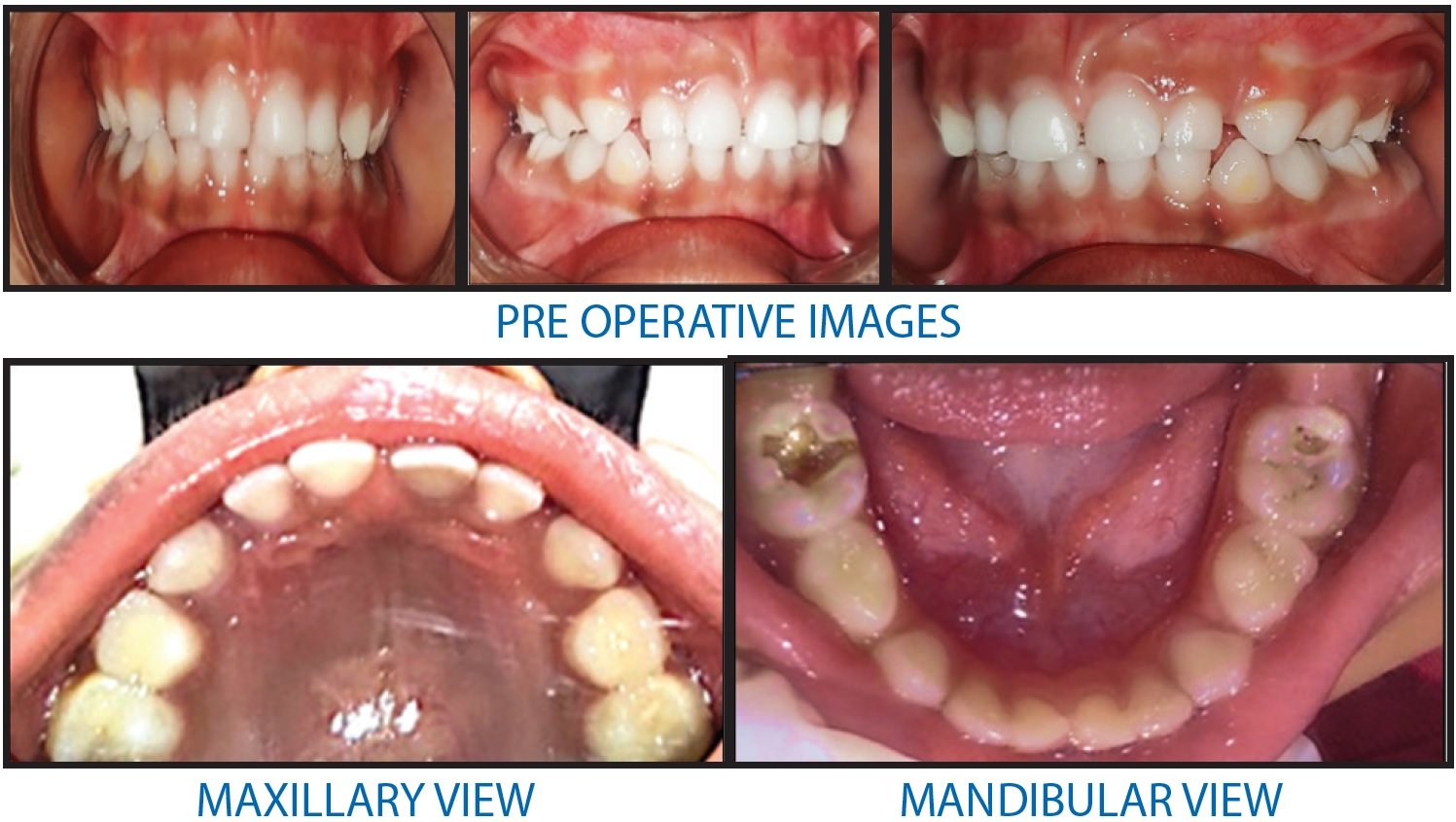
Intraoral examination revealed deep dentinal caries with 85 and dental caries with and 75,55,65. IOPA showed radiolucency involving enamel, dentin and pulp with respect to 85 . Treatment plan was pulpectomy with 85, followed by stainless steel crown, GIC restoration with 55,65 and 75 oral prophylaxis and fluoride application. No other intraoral findings were noticed. Patient was uncooperative possibly due to white coat phobia arising from repeated encounters during chemotherapy sessions
We used behaviour modification technique ‘Tell Show DO’ during our treatment sessions to reduce the patient’s anxiety and make him feel comfortable. Since the patient was under chemotherapy treatment, the dental treatment sessions had to be planned to care- fully align with the chemotherapy schedule. The patient undergoes chemotherapy every month for five days and the blood count normally decreases in 5-7 days after each cycle of chemotherapy and further staying low for another 14 - 21 days before returning back to normal levels. Hence, we had carried out dental treatment 2 day.

DISCUSSION
Dental management of medically compromised children is an immense challenge. In this case, the child has been diagnosed with Neuroblastoma which when compared to other solid tumours is heterogeneous and distinct with a range of clinical behaviours ranging from spontaneous regression to highly-aggressive metastatic dis- ease. The international classification of neuroblastoma specifies and mortality, which is determined by the age and the degree of differentiation, however the chances of survival are the highest in newborns followed by infants and toddlers. Children with stage IV neuroblastoma are at high risk of death from refractory disease which is the situation in this case where in the child was diagnosed with stage 4 neuroblastoma at the age of 4 and the parents have been informed by the medical professionals that the survival rate of the child is only 20%. Initially after the diagnosis the child had undergone induction chemotherapy which included 10 cycles at the rate of one session a week to reduce the tumour burden, which was intended to allow a more complete resection.
The child had hair loss on the head and limbs which may be because of the side effects of chemotherapy. Although, chemotherapy is effective in the treatment of cancer even in advanced stages by rapidly destroying malignant proliferative cells, it can also affect normal tissues as well with high mitotic rates such as oral mucosa, the gastrointestinal tract, and hematopoietic tissue leading to an increased risk of infection. The rest of the cells other than the cancer cells are usually repaired by themselves after the course of the chemotherapy session. Treatment guidelines available. Since the children are treated for neuroblastoma at an early age both the primary and permanent dentition are at risk for treatment-associated abnormal development. Considering these factors, the approach should be interdisciplinary and symptomatic. Since the immune system of the child is weakened during the is recommended to have all the required dental care provided prior to the chemotherapy. However, in acute cases the dental treatment needs to be carried out during the chemotherapy sessions, such as the situation for this child, who had come to the hospital with severe dental pain. Proper dental management should be ensured while keeping in mind the order of priorities i.e. infections, extractions, periodontal care and sources of tissue irritation.
There have been no studies addressing the safety of performing pulp therapy in primary teeth prior to the initiation of chemotherapy and/or radiotherapy. So We have opted for a less invasive treatment such as pulpectomy and restorations while considering that the patient undergoes chemotherapy every month for five days and that the blood count normally decreases in 5-7 days after each cycle of chemotherapy and further staying low for another 14 - 21 days before returning back to normal levels. Hence, we had carried out dental treatment 2 days after and 4 days before chemo cycles. It was made sure before each treatment session that absolute neutrophil count (ANC) was more than 2000/mm3 and the platelet count was more than > 75,000/mm3.
The parents were advised to adhere to non-cariogenic diet for the child to minimize oral problems. A non-alcoholic mouthwash was recommended for enhanced oral hygiene to reduce the dis- comfort and dehydration caused by the high alcohol content in commercially-available chlorhexidine. The management of patients with neuroblastoma remains complex and difficult till date and there are no standard dental.
CONCLUSION
The oral manifestations of neuroblastoma is rare however, it should be familiarized to dental health care providers for early diagnosis and early referral. The blood count of the patient undergoing chemotherapy must be considered before starting the dental treatment. There is no standard dental treatment protocol for neuroblastoma, it should be preventive and restorative, whereas minor surgical interventions should be performed under supervision as it may trigger metastasis and may lead to further complications.
REFERENCES
- Berthold F and Simon T. “In: Clinical Presentation”. Cheung, Nai- Kong V, Cohn, Susan L, editors. Neuroblastoma: Springer (2006): 63-85.
- Rothenberg AB., et al. “Neuroblastoma-remembering the three physicians who described it a century ago: James Homer Wright, William Pepper, and Robert Hutchison”. Pediatric Ra- diology 39 (2009): 155-160.
- Podda MG., et al. “Neuroblastoma in patients over 12 years old: A 20-year experience at the Istituto Nazionale Tumori of Milan”. Tumori 96 (2010): 684-689.
- London WB., et al. “Evidence for an age cutoff greater than 365 days for neuroblastoma risk group stratification in the Children’s Oncology Group”. Journal of Clinical Oncology 23 (2005): 6459-6465.
- Park JR., et al. “Neuroblastoma: biology, prognosis, and treat- ment”. Hematology/Oncology Clinics of North America 24 (2010): 65-86.
- American Academy of Pediatric Dentistry. “Guideline on den- tal management of pediatric patients receiving chemotherapy, hematopoietic cell transplantation, and/or radiation”. Pediat- ric Dentistry 35.5 (2013): E185.
- Niranjana CN., et al. “Dental Management of a Child with Neuroblastoma Undergoing Chemotherapy - A Case Report”. Acta Scientific Dental Sciences 4.10 (2020): 112-114.
Disclaimer from Guident
The views and opinions expressed in articles published in Guident are solely those of the authors and do not necessarily reflect the views of the editors, the editorial board or the publisher, Ivory India. Guident does not endorse any product, technique or treatment described. Clinical content is intended for qualified dental and medical professionals and is not a substitute for individual clinical judgement. Guident, its editors and the publisher accept no liability for any consequence arising from the use of information published in the journal.
How to cite this article
Dr. Gopika S.. Dental Care for a Child with Adrenal Neuroblastoma Undergoing Their Final Chemotherapy Cycle and Preparing for Stem Cell Transplantation: A Case Report. Guident. 2026 Sep;19(10). Available from: https://guident.net/articles/pedodontics/dental-care-for-a-child-with-adrenal-neuroblastoma-undergoing-their-final-chemotherapy-cycle-and-preparing.html