Easy Brace - a Preorthodontic Appliance
Department of Pedodontics & Preventive Dentistry Guru Nanak Institute of Dental Science & Research Panihati, Kolkata, W.B, India
Abstract
Functional appliances are passive appliances which harness natural forces of oro-facial musculature whichare transmitted to the teeth and alveolar bone through the appliance. Easy brace is a myofunctional latex made parabolic shaped appliance which is helpful to prevent abnormal oral habits along with correction of minor excess of over jet and overbite. Three different cases are presented in this article with successful prevention of oral habits and correction of minor malocclusions during periods of deciduous, mixed and permanent dentition.
Key words: Easy brace; pre-orthodontic appliance.
INTRODUCTION
According to Sir Isaac Newton, ‘every action has an equal and opposite reaction’ - a universal truth which is a reality from nonliving material to living particle. In human oral cavity, forces among muscles create a balanced environment, which indeed provide an accurate occlusion along with a symmetrical facial profile . Any imbalance of these muscle forces, due to abnormal oral habits or any abnormal neuromuscular behaviour, the occlusion as well as facial profile may be changed. Early intervention in growing period, using myofunctional appliances is the best way to achieve definite corrective orthodontic treatment in future. There are different types of myofunctional appliances introduced to modify the muscle behaviour but the new appliance Easy Brace has some additional qualities with improved functions and patient acceptance.
Easy brace is a pre orthodontic appliance and one kind of latex made appliance (Fig- 1and Fig- 2) which is used as an interceptive and preventive orthodontic device in growing children. It is also used as habit breaking device during deciduous and mixed dentition period. This appliance is soft and parabolic shaped like dental arches (combining upper and lower arch). It has no orthodontic wire component and its labial and buccal screen act as labial support.

Fig 1: Parts of Easy brace (schematic diagram).
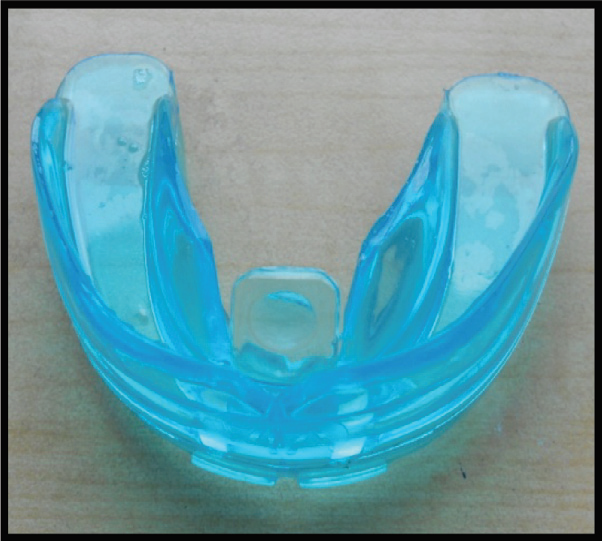
Fig 2: Parts of Easy brace (manufactured by C.E Tom/ Myofunctional Co. Ltd)
Easy brace gives action like oral screen and thus help to prevent various abnormal habits like thumb sucking, digit sucking, nail biting, pillow biting, handkerchief biting, lip biting. This appliance also allows child patient to take normal breathing through nose in case of habitual mouth breather. Its tongue tag attached in lower arch helps to stop infantile tongue thrusting habit. The ‘U’ shaped form of this appliance help to recontour the irregular shaped arch into normal form and function.
This appliance is available in two forms- a) blue colour
b) pink or light red in colour.
Blue coloured easy brace is used for first 6-10 months which helps to correct abnormal orofacial muscle movement and to correct minor irregularities of teeth including overjet. Pink or light red coloured appliance is firm and gives more pressure to proclined teeth and orofacial musculature.
The appliance is usually worn 1hr in the day time and during sleeping. It is used in class I, class II div 1 and 2, anterior crossbite, pseudo class III, anterior openbite and patients with different types of oral habits of extra oral origin.
This case report presents three cases of young adult child having different types of dental problems.
CASE NO 1 (FIG -3)
A 16 years old female patient came to the out patient department of Gurunanak Institute of Dental Science & Research, Pedodontics and Preventive Dentistry, Kolkata; with the chief complaint of spacing in upper front teeth. Patient gave history of thumb sucking habit during her childhood period with no significant medical and dental history.
Extraoral examination revealed patient had mesocephalic head and mesoprosopic, symmetrical face with convex profile and incompetent lips.
Intraoral examination showed permanent dentition with angles class II div2 occlusion bilaterally.
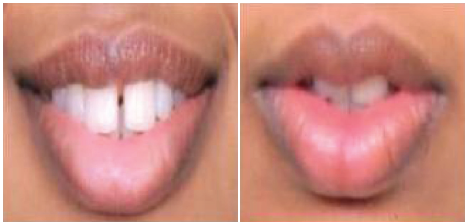
Fig 3: Pre-operative and post-operative pictures of case no. 1.
Treatment done- initially Hawley’s plate with crib was given to stop persistent oral habit for 3 months but no significant
clinical improvement was observed. So, treatment plan was changed and easy brace made by C.E. Toms Co. was given. Patient used this appliance 1 hr daily during day time and throughout night that is 8 hours. Change of facial profile and correction of anterior diastema took place after 1 yr.
CASE NO 2(Fig- 4)
A 5 years old male child came to the Department of Pedodontics and Preventive Dentistry, of the same institution with the complaint of front positioning of lower jaw.
Patient had no significant medical and dental history.
On extraoral examination, patient had mesocephalic head and mesoprosopic, symmetrical, concave face.
Intraoral examination showed permanent dentition with mesial step occlusion bilaterally along with anterior cross bite.
After proper clinical evaluation, patient was given blue color easy brace and advised to use in the same manner mentioned in case no. 1. After continuous use for one and half year, anterior cross bite got corrected and 1 mm of overjet was achieved.
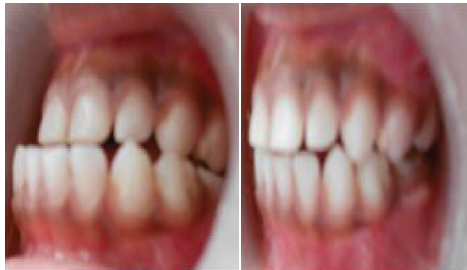
Fig 4: Pre-operative and post-operative pictures of case no. 2.
DISCUSSION
The distribution of force depends upon the muscles behaviour. In the oral cavity a balance is created by the orofacial musculatures; which maintain the arrangement of the teeth in upper and lower arches and normal facial profile of a person.2 (Fig- 5 & 6)
Latex made Easy brace is one type of “U” shaped combined appliance like monoblock and oral screen having different parts including lip bumper, tongue guard , lingual depression and labial depression ; and tooth channels. This appliance is also known as pre orthodontic jaw trainer (light red colour). Rao3 also suggested Easy Brace as a preorthodontic jaw trainer.
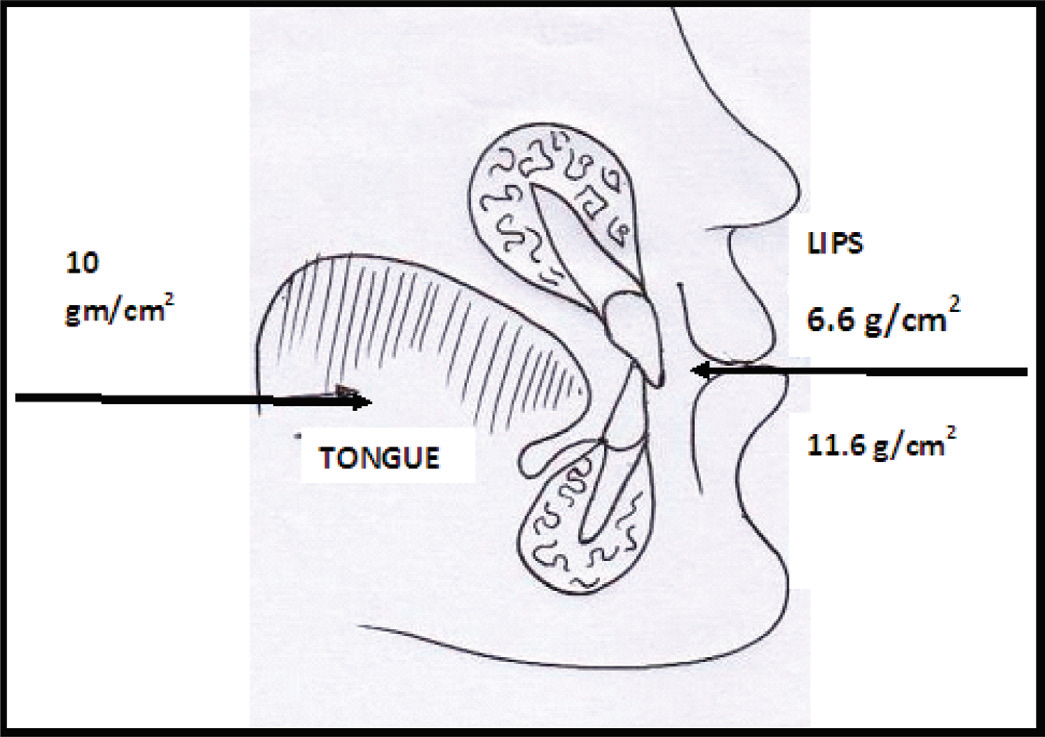
Fig 5: Muscle force acting antero-posteriorly.

Fig 6: Muscle force acting medio-laterally.
Open bite anterior proclination (3-3.5 mm), anterior spacing can be corrected by Easy brace. Tongue tag can prevent tongue pressure to lower anterior teeth. Lingual depression can prevent injury of lingual frenum. Upper anterior depression can prevent upper labial frenum injury and help proper positioning of upper anterior teeth. Lip bumper prevent lower lip labial pressure. Teeth channels of upper and lower jaw help proper jaw development. Its labial extension not only prevent oral habits like thumb sucking, finger sucking, nail biting,mouth breathing but also prevent bruxism habit. This appliance act on various orofacial musculature resulting in correction of dental occlusion as well as facial profile.
The advantages of using Easy brace includes- less irritation of the oral tissue which improve the patients acceptance; Latex made body helps to accommodate the appliance on minor over or under sized dental arch, Multifunctionality of the appliance helps to correct the abnormal arch and habits simultaneously. Another advantage of less chairside time with no laboratory work, makes the appliance more acceptable by the dentists. The advantage of this appliance like all other myofunctional appliance is, it gives good result in growing children. However, in one word Easy brace is a good interceptive preventive appliance which can prevent mild to moderate malocclusion and help correction of facial profile.
CONCLUSION
‘Age is the high price to pay for maturity’ and using the growth spurt as guidance, easy braces can be used to channelize the growth of the jaw to correct and prevent developing malocclusion. The long term use (1-2years) of easy brace can give the successful prevention of severe malocclusion in a non invasive manner, with less injury and irritation to the oral tissue.
REFERENCES
1. Damle SG. Textbook of Pediatric Dentistry. 4th edition. New Delhi: Arya (Medi) Publishing House; 2012.
2. Bhalaji SI. Orthodontics:The Art and Science.4th edition. New Delhi: Arya (Medi) Publishing House; 2009.
3. Rao A. Principles and Practice of Pedodontics. 2nd edition. New Delhi: Jaypee Brothers Medical Publishers (P) Ltd; 2012.
Disclaimer from Guident
The views and opinions expressed in articles published in Guident are solely those of the authors and do not necessarily reflect the views of the editors, the editorial board or the publisher, Ivory India. Guident does not endorse any product, technique or treatment described. Clinical content is intended for qualified dental and medical professionals and is not a substitute for individual clinical judgement. Guident, its editors and the publisher accept no liability for any consequence arising from the use of information published in the journal.
How to cite this article
Dr. Subrata Sarkarr, Dr. Roshni De, Dr. Monalisa Das. Easy Brace - a Preorthodontic Appliance. Guident. 2013 Jun;6(8). Available from: https://guident.net/articles/pedodontics/easy-brace-a-preorthodontic-appliance.html