Aesthetic Rehabilitation of Fractured Anterior Teeth Using Custom Made Post and Core: A Case Series
Department of Prosthodontics and Crown & Bridge, K.D. Dental College & Hospital, Mathura, UP, India
ABSTRACT
Appropriate endodontic retreatment plays a crucial role in preserving teeth. Successfully treating teeth with significant damage to the tooth structure relies not only on effective endodontic procedures but also on the timely post-endodontic restoration once the treatment is completed. The advancements in endodontic techniques and materials have minimized the need for surgical interventions, even in cases involving intracanal posts. In instances where a substantial amount of tooth structure is lost or an inadequate ferrule is present, opting for a custom cast post and core becomes the recommended course of action.
KEYWORDS: Endodontically restored teeth, Post and Core , Ferrule
INTRODUCTION
The primary objective in endodontics is to maximize the preservation of a patient's tooth over an extended period. The success of endodontic procedures hinges not only on the efficacy of the treatment itself but also on adeptly sealing the canal. It involves minimizing the ingress of oral fluids and bacteria into periradicular areas through the prompt placement of coronal restorations.1
Endodontic treatment stands as the preferred approach for addressing teeth with necrotic or non-vital pulp. However, there are instances where sole reliance on root canal treatment falls short of achieving the desired outcomes.
The management of trauma in the permanent dentition of anterior teeth presents a particularly intricate challenge. Such cases not only result in non-vital pulp but may also entail fractures in the coronal tooth structure. For anterior teeth with more than 50% tooth structure loss, post and core followed by full coverage restoration is mandatory.2 The incorporation of a post enhances the strength of the root structure and facilitates the proper reconstruction of the coronal tooth structure.
As per Franklin Weine, the majority of failures in endodontically treated teeth are attributed not to primary endodontic causes but rather to inadequate post-endodontic restoration.3 The selection of post-endodontic materials is contingent upon factors such as the remaining amount of tooth structure after root canal treatment (RCT), esthetics, and the existing periodontal condition.
The conventional choice for treatment involves the use of a custom-made cast post and core with metal-ceramic crowns. Custom cast posts offer the advantage of closely approximating and adapting to the morphology of the prepared canal.4 They remain a superior option in situations requiring a change in the angulation of the core and in cases of substantial tooth structure loss.
This case report illustrates the restoration of fractured maxillary incisors using a custom cast post, followed by porcelain fused to metal restorations. The approach not only addresses the specific challenges posed by the case but also highlights the efficacy of this traditional treatment choice.
CASE REPORT 1
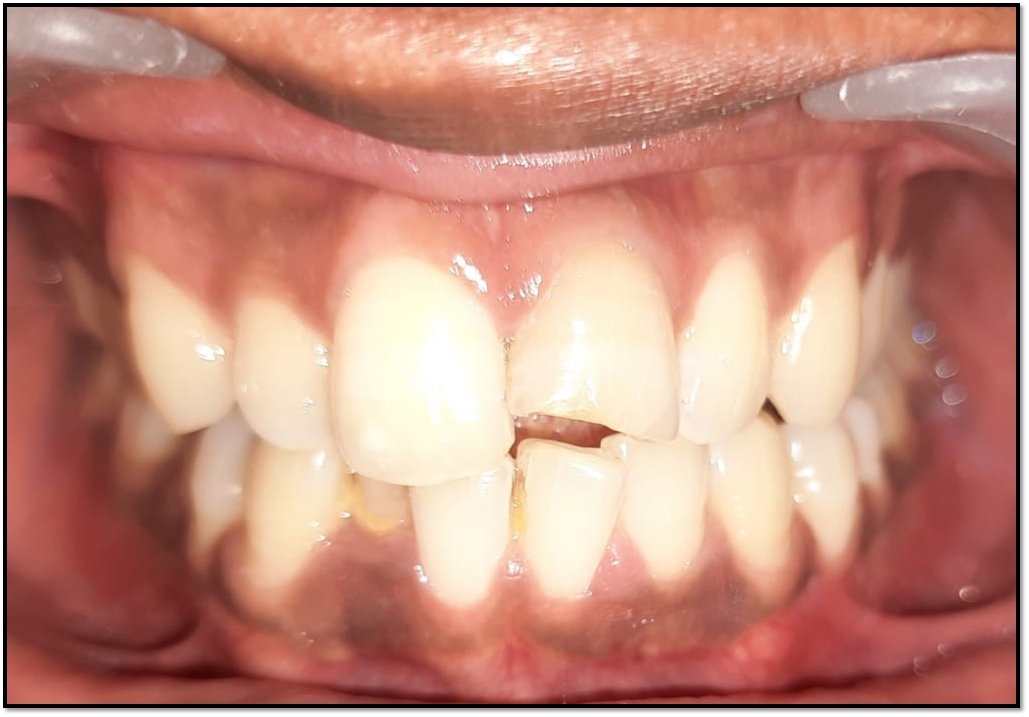
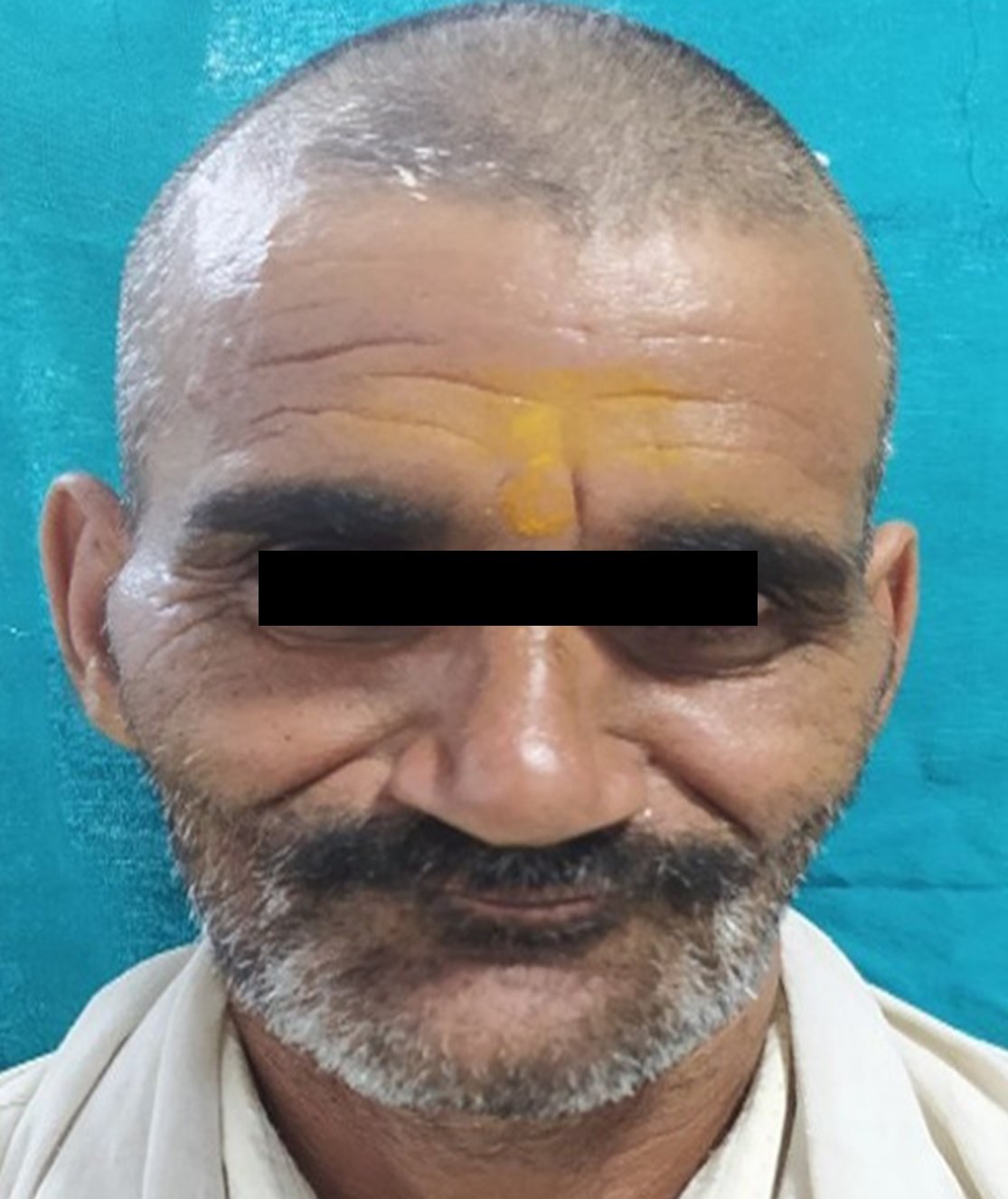
A 25 year old male patient reported to the department of prosthodontics with a chief complaint of fractured and discolored teeth in his front region. (Figure 1)
On clinical examination it was reported as Elli’s class III fracture involving considerable dentin, exposing pulp. (Figure 2). On radiographic examination, the anterior teeth were endodontically treated. There were no signs of periapical infection and periodontal widening; hence, the goal was to restore the form and function of the lost tooth structure. The treatment plan for the involved teeth included a custom-made cast post and core followed by full coverage porcelain fused metal crowns with 11 and 12.

Figure 1. Extraoral Pre-operative view

Figure 2. Intraoral Pre-operative view
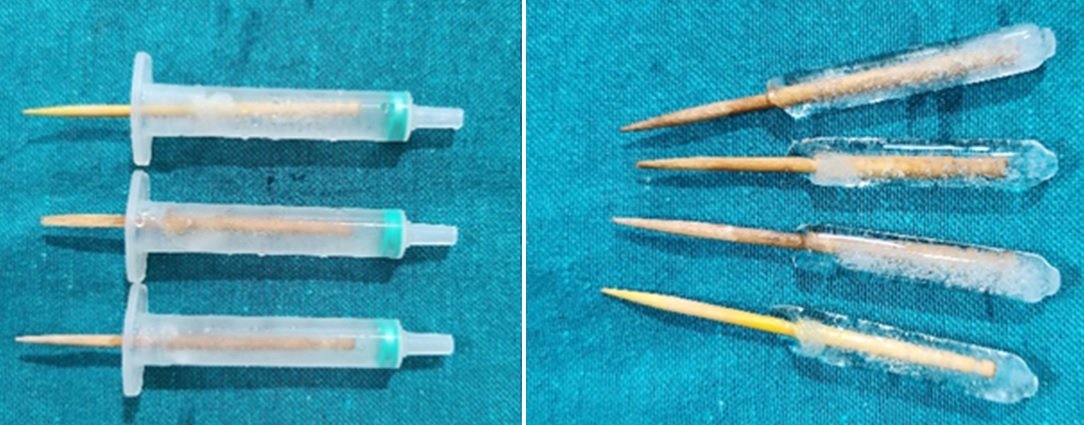
Post space preparation was done in 11, 12 using peeso reamer and endodontic hand instruments for placement of post. The canal was prepared leaving 5mm of gutta-percha to maintain apical seal. Radiograph was taken to confirm obturation and apical seal (Figure 3). Petroleum jelly was used to lubricate the canal space and post space impression was made using inlay wax with direct technique. Inlay wax was carried into the canal and the pattern was made supported by a tooth pick wrt 11 and 12 (Figure 4).
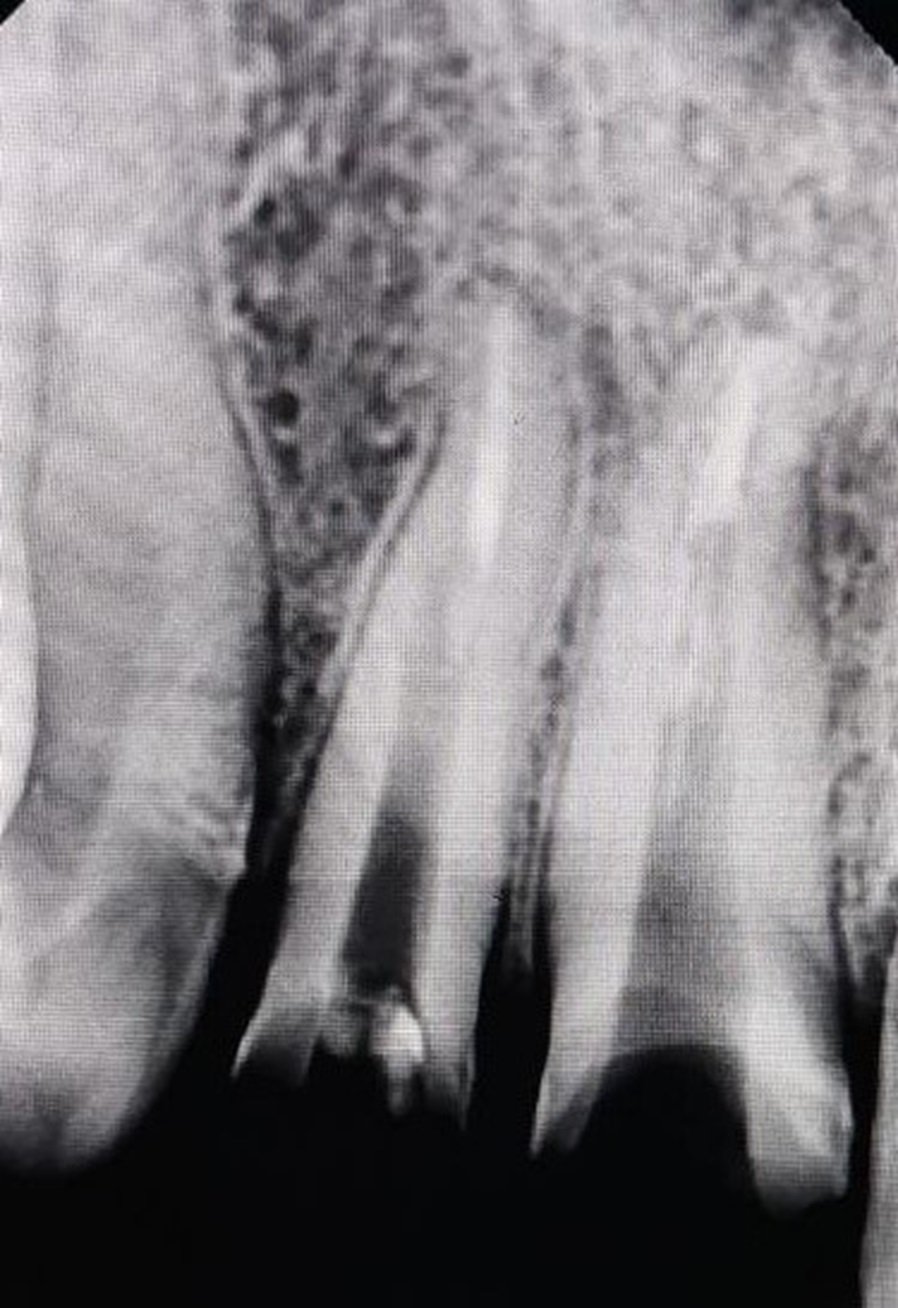
Figure 3. Post Space Preparation wrt 11,12


Figure 4. Pattern made with inlay wax wrt 11, 12
Investment of post and core pattern was done (Figure 5). The cementation of post was done with glass ionomer cement. It was followed by crown preparation for metal-ceramic crowns on 11, 12 (Figure 6). There was presence of adequate crown height of about 1.5-2 mm of sound tooth structure ferrule between the core and the crown margin.

Figure 5. Sprue attachment for casting the pattern

Figure 6. Cementation of the cast metal post with GIC wrt 11,12
Final impression was made with Putty and light body wash impression. Provisional restorations were fabricated and luted with non-eugenol cement. Shade selection for metal ceramic crowns was matched with adjacent teeth. Individual metal-ceramic crowns made for 11 and 12 were cemented using glass ionomer (GIC) cements (Figure 7).


Figure 7. Cementation of metal ceramic crown wrt 11,12 - Intraoral and Extraoral view
CASE REPORT 2
A 22 years old female patient presented to the department of prosthodontics with the chief complaint of poor esthetics of her front teeth and wanted to get them treated. Patient was apparently asymptomatic 3 years back when she met with an accident and the teeth in the front region of his upper jaw broke off. There was no history of pain or swelling in the region. Patient has previously undergone root canal treatment.
On clinical examination it was reported as Elli’s class III fracture (Figure 8). On radiographic evaluation, 11, 21 were found to be endodontically treated (Figure 9).
The treatment plan included cast post and core, followed by porcelain fused to metal crowns in 11 and 21.
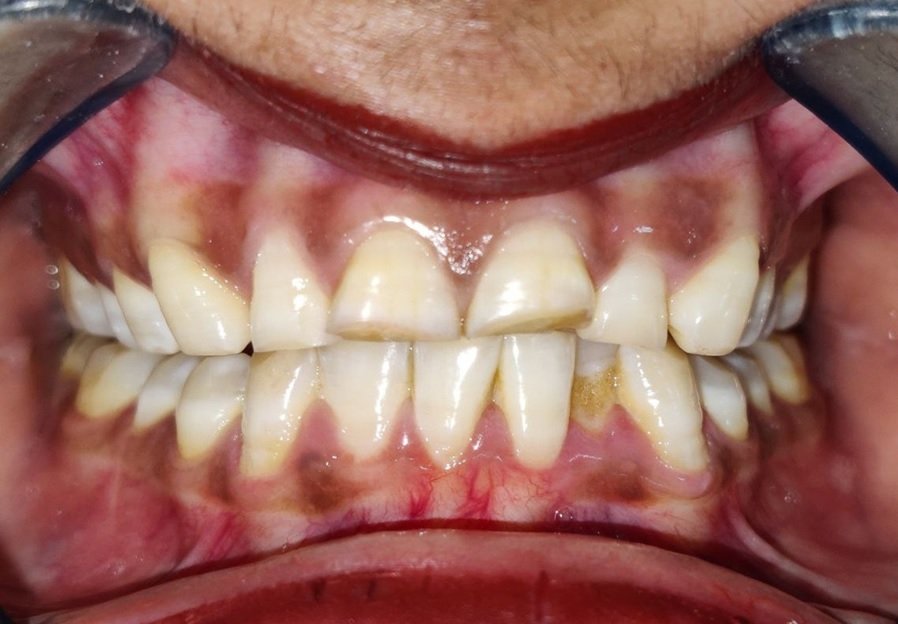
Figure 8. Intraoral Pre-operative view

Figure 9. Radiographic View - Root canal treated teeth wrt 11,21
Post space was prepared with 11 and 21 using a peeso-reamer #1 through #5 and an endodontic hand instrument to accept the post (Figure 10). The canal was prepared in a manner to ensure 5 mm of gutta-percha to maintain the periapical seal. The apical seal and post-space preparation were evaluated on the radiograph (Figure 11).

Figure 10. Preparation of canal for custom made post

Figure 11. Radiographic view- Post space prepared wrt 11,21
The canal space was lubricated using petroleum jelly and impression of post pattern was made by direct technique using inlay wax. The inlay wax was carried into the canal and supported by pattern made with autopolymerising resin (Figure 12). Core build-up was also done with autopolymerising resin and the fit of the pattern was evaluated intraorally (Figure 13).
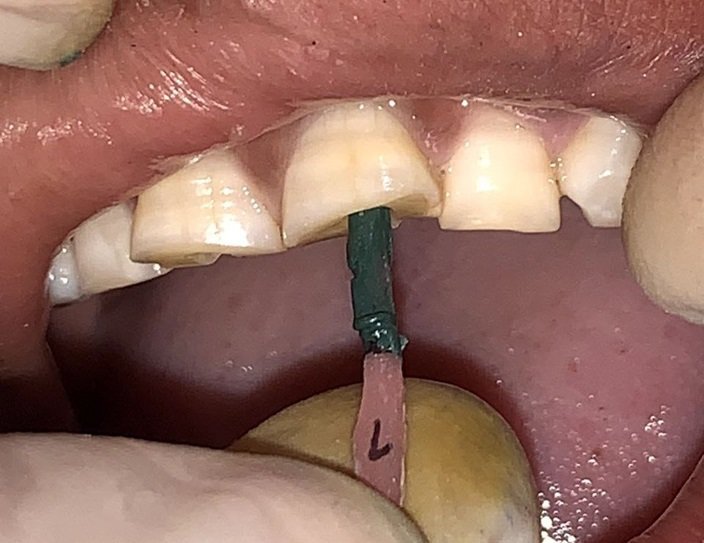
Figure 12. Post preparation with inlay wax

Figure 13. Fit of the impression was evaluated intraorally
Post and core pattern was invested immediately and casting was done with special precaution of mixing distilled water with investment taken to avoid of expansion of mold (Figure 14).

Figure 14. Sprue attachment, investing and casting of the pattern
The cast post and core was cemented with glass ionomer cement. Crown preparation for porcelain fused to metal crowns was done on 11 and 21 (Figure 15). Final impression was made in polyvinyl siloxane impression material (Figure 16).
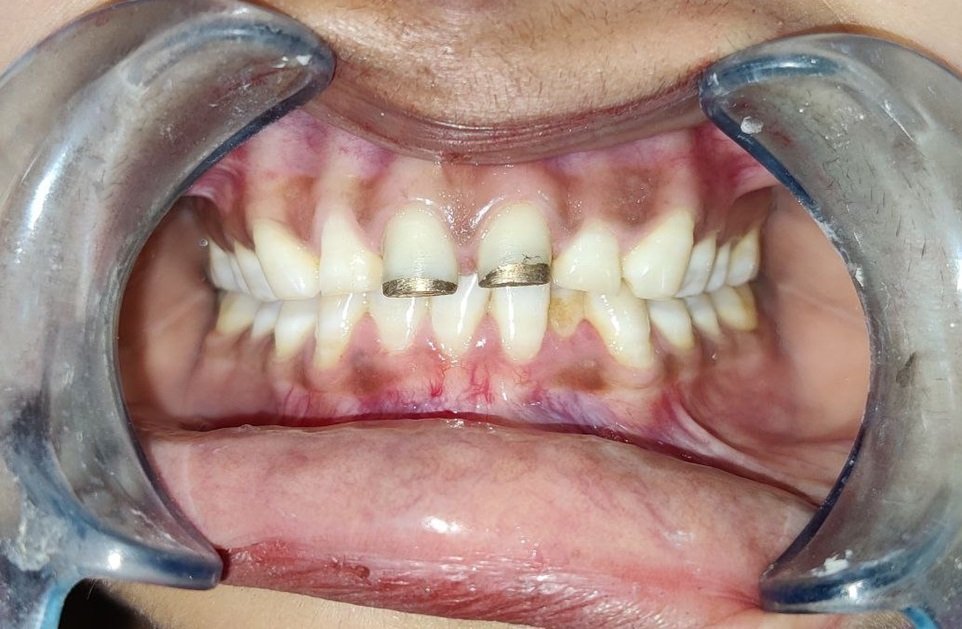
Figure 15. Cementation of the custom made cast post with tooth preparation including a ferrule wrt 11,21

Figure 16. Final impression with polyvinyl siloxane impression material
Provisional restorations was fabricated and luted with non eugenol cement (Figure 17). Shade selection for metal ceramic crowns was matched with adjacent teeth. Individual metal-ceramic crowns made for 11 and 21 were cemented using glass ionomer (GIC) cements (Figure 18).

Figure 17. Temporisation wrt 11,21
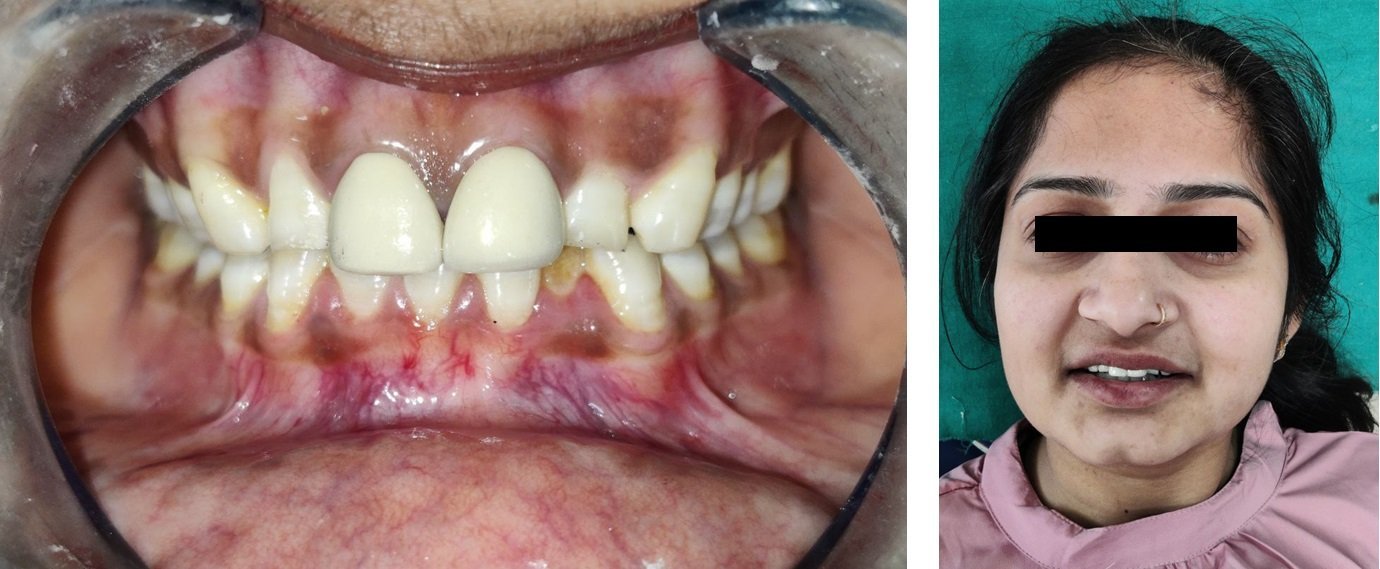
Figure 18. Cementation of metal ceramic crown wrt 11,21 - Intraoral and Extraoral view
DISCUSSION
Endodontically treated and fractured teeth are commonly restored using either custom metallic cast posts or prefabricated posts and cores, followed by full-coverage crowns. These crowns can be either metal-ceramic or all-ceramic. The distinctive advantage of custom cast post and core restoration lies in its precise fit, with a minimal luting cement interface and an inherent anti-rotation mechanism.5 Additionally, custom cast posts offer high strength and entail minimal tooth reduction during the preparation of the root canal crown.
The success of post and core procedures predominantly hinges on the preservation of the tooth structure.6 In this specific case, custom-made metallic post and core, combined with metal-ceramic individual crowns, were chosen due to factors such as extensive loss of anterior teeth structure, coronal destruction, and the need for functional rehabilitation. The primary function of the post is to build up and securely retain the core for crown retention; however, it's important to note that the post itself doesn't strengthen or reinforce endodontically treated teeth.7
Research by Santos Filho PC et al. highlights that the presence of a 2mm crown ferrule surrounding the remaining tooth structure enhances the fracture resistance of anterior teeth restored with a cast post and core and metal-ceramic crowns.8 This underlines the importance of considering factors such as crown ferrule in the overall treatment approach for optimal outcomes.
CONCLUSION
The restoration of endodontically treated teeth, particularly those with significant loss of tooth structure, often requires post and core treatment for long-term success. These case reports emphasizes the utilization of cast post and core and metal-ceramic crowns. Clinicians must make informed decisions regarding the choice of post, considering factors such as design and material. In the broader context of dental restoration, the importance lies in preserving the coronal dental tissue, employing posts that mimic dentin properties, and ensuring effective post adhesion. The thoughtful selection of post design and material is paramount to guaranteeing a successful outcome in endodontically treated teeth restoration.
REFERENCES
- Heling I, Gorfil C, Slutzky H, Kopolovic K, Zalkind M, Slutzky-Goldberg I. Endodontic failure caused by inadequate restoration procedures: Review and treatment recommendations. J Prosthet Dent 2002; 87:674–678.
- Cheung W. A review of the management of endodontically treated teeth: post, core and the final restoration. Journal of the American Dental Association 2005;136(5):611-619.
- Goerig AC, Mueninghoff LA. Management of the endodontically treated tooth. Part I: concept for restorative designs. J Prosthet Dent 1983;49(3):340-345
- Peroz I et al. Restoring endodontically treated teeth with posts and cores—A review. Quintessence international 2005;36(9):737-746.
- Torbjörner A et al. A literature review on the prosthetic treatment of structurally compromised teeth. Int J Prosthodont 2004;17(3):369-376.
- Assif D, Bitenski A, Pilo R, Oren E. Effect of post design on resistance to fracture of endodontically treated teeth with complete crowns. J Prosthet Dent 1993;69(1):36-40.
- Sorensen JA, Engelman MJ. Ferrule design and fracture resistance of endodontically treated teeth. J Prosthet Dent 1990;63:529-536.
- Cooney JP, Caputo AA, Trabert KC. Retention and stress distribution of tapered-end endodontic posts. J Prosthet Dent 1986;55:504-506.
Disclaimer from Guident
The views and opinions expressed in articles published in Guident are solely those of the authors and do not necessarily reflect the views of the editors, the editorial board or the publisher, Ivory India. Guident does not endorse any product, technique or treatment described. Clinical content is intended for qualified dental and medical professionals and is not a substitute for individual clinical judgement. Guident, its editors and the publisher accept no liability for any consequence arising from the use of information published in the journal.
How to cite this article
Dr. Nivea Verma, Dr. Rahul Nagrath, Dr. Manesh Lahori. Aesthetic Rehabilitation of Fractured Anterior Teeth Using Custom Made Post and Core: A Case Series. Guident. 2023 Dec;17(1). Available from: https://guident.net/articles/prosthodontics/aesthetic-rehabilitation-of-fractured-anterior-teeth-using-custom-made-post-and-core-a-case-series.html