Improving Daily Living: The Impact of Maxillary Obturator on Patient Well-Being: A Case Report
Department of Prosthodontics and Crown & Bridge Seema Dental College & Hospital, Rishikesh, Uttarakhand, India.
ABSTRACT
Maxillary obturators play a pivotal role in rehabilitating patients who have undergone maxillectomy, aiming to restore essential oral functions and enhance overall well-being. This case report presents the fabrication of a definitive obturator with a cast metal framework for a patient who had an acquired maxillary defect. The patient's quality of life, speech clarity, and masticatory efficiency all improved as a result of the final prosthesis.
Keywords: obturator, partial maxillectomy, palatal defect.
INTRODUCTION
Maxillary defects, often resulting from surgical interventions like maxillectomy, can severely impair essential functions such as speech, mastication, and swallowing, leading to significant psychological distress. Prosthodontic rehabilitation using obturator prostheses offers a non-invasive solution to restore these vital functions. Numerous studies have highlighted the positive impact of obturators on patient’s quality of life, emphasizing improvements in daily activities and emotional well-being.1 For instance, a study reported significant enhancements in speech intelligibility, mastication, and swallowing post-rehabilitation, leading to enhanced daily functioning. Moreover, psychological assessments indicate a marked reduction in anxiety and depression levels after prosthetic intervention. Despite these benefits, challenges such as discomfort during insertion, nasal leakage, and speech difficulties persist for some patients.2 Therefore, treatment of the maxillary defects through surgery or prosthodontics is crucial to these patient’s recovery.3
This case report underscores the importance of a multidisciplinary approach, combining prosthetic rehabilitation with psychological support and patient education, to optimize outcomes. By addressing both functional impairments and emotional well-being, maxillary obturators significantly contribute to improving the daily lives of individuals affected by maxillary defects.
CASE REPORT
A 33-year-old male patient came to the Department of Prosthodontics and crown & Bridge, Seema Dental College Rishikesh with chief complaint of inability to eat. The patient had undergone a right maxillectomy due to the surgical removal of squamous cell carcinoma from the right maxillary sinus. Following the surgery, the patient was referred to prosthodontics department for fabrication of an obturator for defect caused by the partial maxillectomy. The intra-oral examination revealed a surgical defect on the right side of the hard palate resulting from a right maxillectomy (Figure 1). According to Aramany's classification of maxillary defects, this defect is classified as Class II. The gingiva on the intact side and lower arch appeared healthy, displaying pink, but with generalized recession.
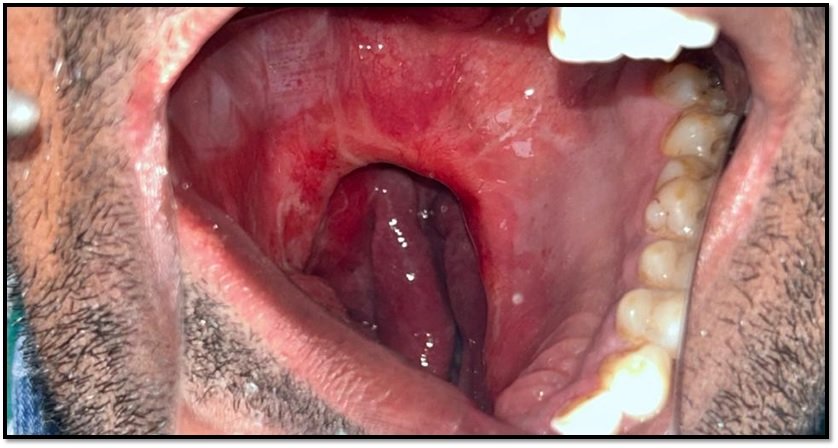
Figure 1: Pre-operative Intraoral picture
The patient was given oral health instructions (OHI), scaling and polishing the supragingival and subgingival areas, advising on the use of floss and interdental brushes, recommending a fluoridated mouthwash with 0.05% sodium fluoride (NaF), and recommending toothpaste with at least 1350 parts per million (ppm) of fluoride were all part of the suggested treatment plan. The patient was to receive a detachable cobalt-chrome partial obturator for the maxilla.
Irreversible fast-setting hydrocolloids (Zelgan, Dentsply Sirona) were used to take the maxillary and mandibular impressions after modifying the upper stock tray to improve fit and prevent undercuts with gauze soaked in petroleum. Study model casts were poured using Type III gypsum. (Figure 2)
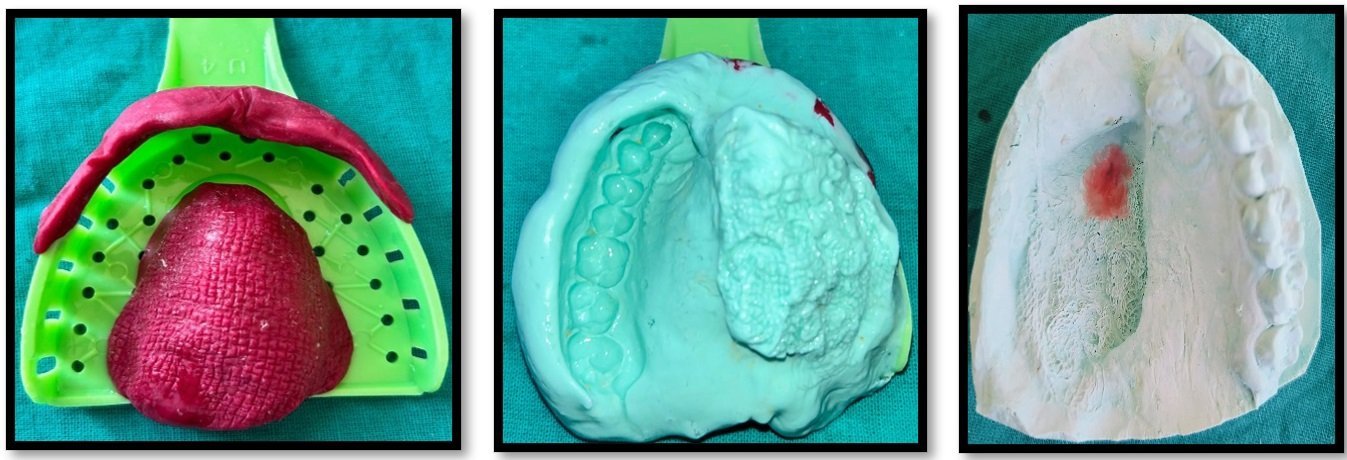
Figure 2: Modified stock tray followed by primary impression & Study Model Cast
Fabrication of custom tray was done on the primary cast then border modelling was done to record borders of the defects followed by secondary impression using Polyvinyl siloxane impression material (Zhermack) (Figure 3). Then cast was poured using Type IV gypsum material (Figure 4).

Figure 3: Border modelling followed by Final impression made
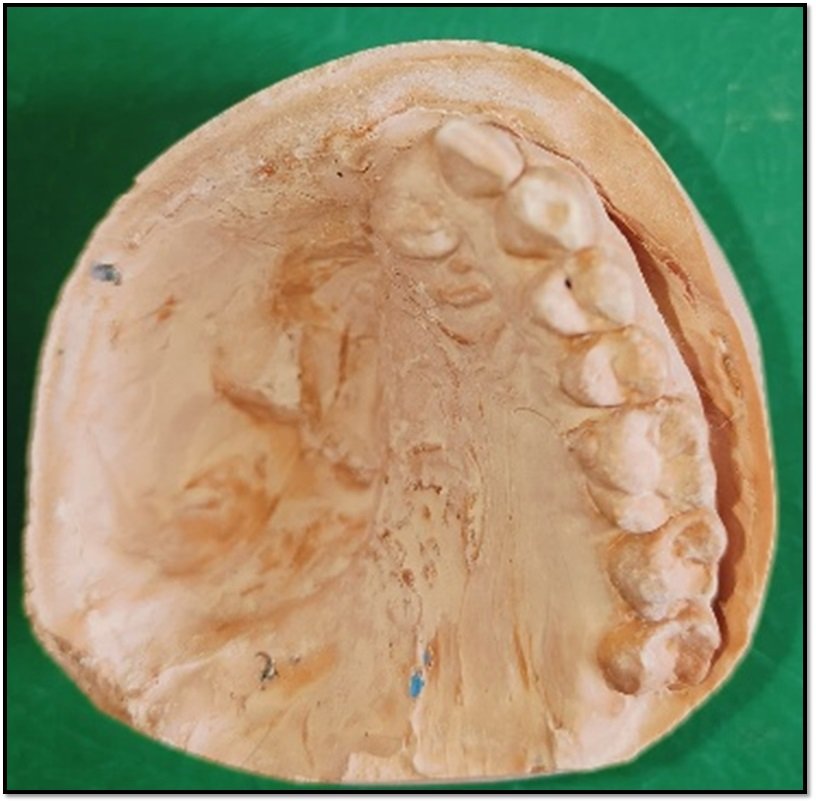
Figure 4: Final Cast made
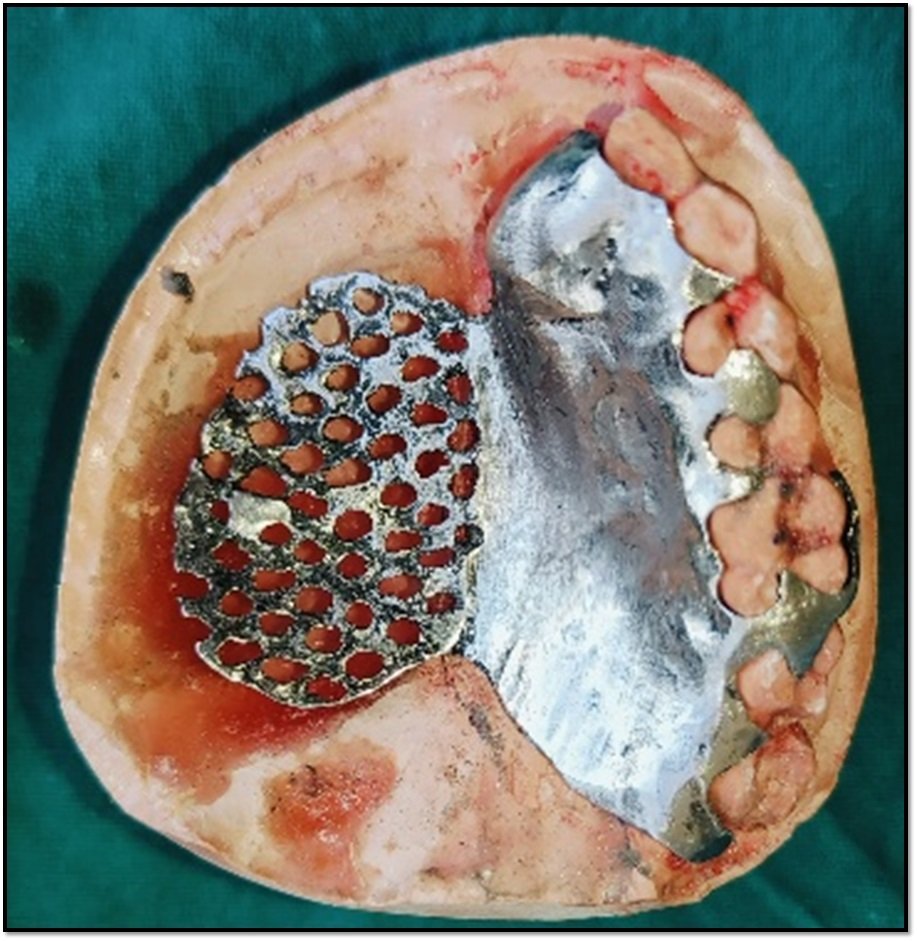
Figure 5: Metal framework design
The metal framework's design was established after surveying of the study casts. For the maxillary arch, a detachable cobalt-chrome partial obturator was designed in consideration of his functional and aesthetic needs. (Figure 5) Following the jaw relation record, the casts were put on a semi-adjustable articulator.
|
Right Side |
Left Side |
|
|
Guide Plane |
None |
None |
|
Rests |
None |
Cingulum rests on the lateral incisor, canine, mesial and distal occlusal rests on premolars and molars |
|
Clasps |
None |
Occlusally approaching clasps on second molar |
|
Reciprocal components |
None |
Part of major connector on the second molar |
|
Major Connectors |
Palatal plate major connector |
Table 1: Design for the removable cobalt-chrome partial obturator fabricated
Occlusion rims were fabricated on the framework, and the centric jaw relation was recorded. The casts were then mounted on a semi-adjustable articulator. Acrylic denture teeth were arranged, and then try-in was done to ensure proper occlusion with the mandibular teeth, aesthetic appearance, and support for the underlying tissues (Figure 6). Subsequently, the obturator was processed, finished, and polished following standard procedures (Figure 7). During the insertion, pressure indicator paste (PIP) was used to identify any areas of excessive pressure. The denture insertion was done (Figure 8), and instructions were provided on the care and usage of the obturator. The patient underwent monthly evaluations for the first three months.

Figure 6: Try-in

Figure 7: Final obturator
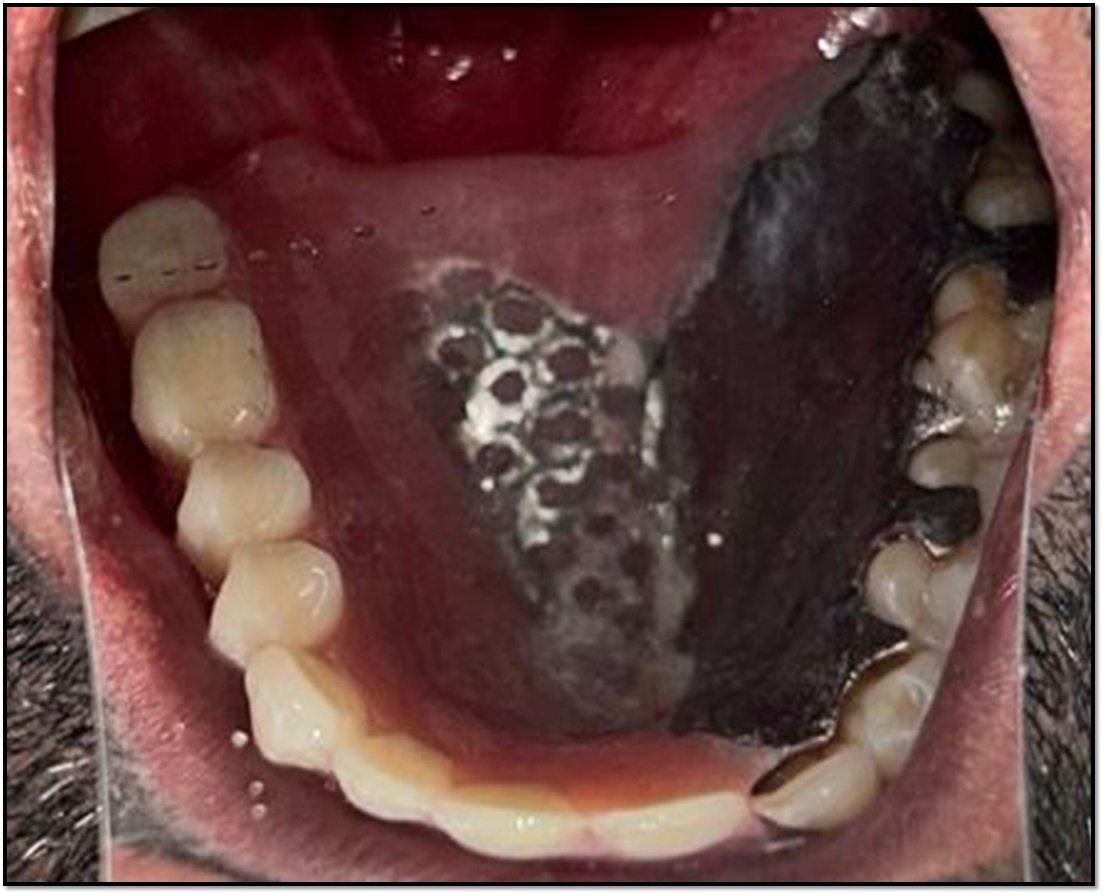
Figure Figure 8: Final insertion of obturator
DISCUSSION
Patients who have had a maxillectomy frequently experience persistent issues with prosthodontic treatment that are specifically linked to inadequate stability, retention, and support. The prognosis for prosthodontic treatment in these patients depends on a number of factors, including the extent of the defect, the number of remaining teeth, the amount of bone structure left, the state of the surrounding mucosa, the effects of radiation therapy, and the patient's capacity to adapt to the prosthetic device.4 For patients having a unilateral maxillectomy, preserving as many of their remaining teeth as possible may be essential for the best possible prosthesis design and functionality. The remaining components are subjected to persistent pressure from such a huge, weighty obturator, affecting tissue health, patient function, and comfort.5
A study by Ali et al. assessed the QoL of patients with maxillary defects using obturators and found that factors such as marital status, type of maxillectomy, and retention of the prosthesis significantly influenced QoL outcomes. Notably, better retention and stability of the obturator were associated with improved QoL scores.6
Further, research comparing implant-supported obturators to conventional ones demonstrated that implant support significantly enhances masticatory performance and oral function. Patients with implant-supported prostheses reported fewer chewing difficulties and greater comfort during food intake.7
Psychosocial adaptation is another critical aspect. Kornblith et al. found that satisfactory functioning of the obturator prosthesis was a significant predictor of psychological adjustment, impacting areas such as mental health and social integration. Difficulties in speech and mastication were linked to higher psychological distress.8
JM Reiger indicated that poorer speech outcomes are associated with social withdrawal and reduced overall satisfaction. Instrumental assessments of speech can provide valuable insights into patient experiences and guide prosthetic adjustments to enhance speech function.9
Nafij bin Jamayet et al described a prosthetic approach to the rehabilitation of acquired palatal defect with definitive obturator prosthesis and its outcome. They set the artificial teeth in unilateral group function occlusal scheme and finally process the denture10 as we did in our case report.
Viviane de Carvalho-Teles et al did a study that shown the majority of patients (82.6%) significantly improved their speech intelligibility, and 16 patients (69.9%) exhibited a significant hypernasality reduction with the obturator in place. The results of the study also indicated that maxillary obturator prosthesis was efficient to improve the speech intelligibility and resonance in patients who had undergone maxillectomy.11
Mukesh Singhal et al stated an obturator is a maxillofacial prosthesis used to close a congenital or acquired tissue defect, primarily of the hard palate and/or contiguous alveolar/soft-tissue structures. Subsequently, it restores the esthetics, speech, and function.12
AR Jain et al presents a case report of a Maxillary defect (Aramany class III-Central resection) patient, where rehabilitation is carried out with a Cast partial hollow bulb obturator, which is light in weight and aids in better retention and comfort of the patient.13
Ramasamy et al used a new technique of fabrication of obturator with silicone to close palatal defect was decided to establish an acceptable phonetics, comfort, speech, and function for the patient. The silicone obturator gets retention by “snug fit” from the defect site14 which a shortcoming of our case report. The functionality of obturator prostheses has a direct impact on patients' social interactions and reintegration. Studies have shown that improved speech intelligibility and comfort with the prosthesis encourage patients to engage more in social activities, thereby enhancing their quality of life and psychological well-being.15
For instance, Kornblith et al. found that satisfactory functioning of the obturator prosthesis was a significant predictor of psychological adjustment, impacting areas such as mental health and social integration.8
Despite these benefits, challenges such as discomfort during insertion, nasal leakage, and speech difficulties persist for some patients. The emotional impact varies greatly among individuals, with those experiencing the greatest long-term challenges often having larger defects and not returning to work. These findings underscore the importance of a multidisciplinary approach, combining prosthetic rehabilitation with psychological support and patient education, to optimize outcomes.
CONCLUSION
Maxillary obturator prostheses are instrumental in restoring essential oral functions and enhancing the overall quality of life for patients who have undergone maxillectomy. The present procedure discussed significant improvements in speech intelligibility, mastication, and swallowing following obturator rehabilitation. To conclude, maxillary obturators significantly contribute to improving the daily lives of individuals affected by maxillary defects. Ongoing research and clinical advancements are essential to further enhance the effectiveness of obturator prostheses and address the remaining challenges in-patient rehabilitation.
REFERENCES
- Alqutaibi AY, Borzangy S, Al-Maweri SA, Aboalrejal A: Early detection of oral cancer and potentially malignant disorders: Experiences, practices, and beliefs of prosthodontists practicing in Saudi Arabia. J Prosthet Dent. 2021, 126:569-74.
- Nagy J, Braunitzer G, Antal M, Berkovits C, Novák P, Nagy K. Quality of life in head and neck cancer patients after tumor therapy and subsequent rehabilitation: an exploratory study. Quality of Life Research. 2014 Feb;23:135-43.
- Morton RP, Izzard ME. Quality-of-life outcomes in head and neck cancer patients. World journal of surgery. 2003 Jul;27:884-9.
- Singh M, Limbu IK, Parajuli PK, Singh RK. Definitive obturator fabrication for partial maxillectomy patient. Case reports in dentistry. 2020;2020(1):6513210.
- Bhandari A. Maxillary obturator. J of Dent & Allied Sci. 2017 Jul 1;6(2):78-83.
- Ali MM, Khalifa N, Alhajj MN. Quality of life and problems associated with obturators of patients with maxillectomies. Head & Face Medicine. 2018 Dec;14:1-9.
- Buurman DJ, Speksnijder CM, Engelen BH, Kessler P. Masticatory performance and oral health?related quality of life in edentulous maxillectomy patients: A cross?sectional study to compare implant?supported obturators and conventional obturators. Clinical Oral Implants Research. 2020 May;31(5):405-16.
- Peker K. Health-Related Quality of Life in Maxillectomy Patients Rehabilitated with Obturator Prostheses: A Literature Review. IntechOpen; 2017 Sep;6(4):110
- Rieger JM, Wolfaardt JF, Jha N, Seikaly H. Maxillary obturators: the relationship between patient satisfaction and speech outcome. Head & Neck: Journal for the Sciences and Specialties of the Head and Neck. 2003 Nov;25(11):895-903.
- Jamayet NB, Pokpong A, Theerathavaj S, Alam MK. Management of a maxillectomy patient by definitive obturator. International Medical Journal. 2013 Aug 1;20(4):460-1.
- De Carvalho-Teles V, Pegoraro-Krook MI, Lauris JR. Speech evaluation with and without palatal obturator in patients submitted to maxillectomy. J Appl Oral Sci. 2006 Dec;14(6):421-6.
- Singhal MK, Ahmad F, Nair C, Bankoti P. A cast partial obturator with hollow occlusal shim and semi-precision attachment. Ind J of Dent Reserach. 2018 Jan 1;29(1):123-7.
- Jain AR, Philip JM, Pradeep R, Krishnan CV, Narasimman M. Cast retainer hollow bulb obturator for a maxillary defect-A case report. Int J Dent Sci Res. 2014;2:164-7.
- Ramasamy TV, Chandra J. An innovative sectional silicone obturator in a patient with partial maxillectomy: A Case report. The Journal of Indian Prosthodontic Society. 2020 Jan 1;20(1):115-9.
- Farghal AE, Farghal AE. Fabrication of a definitive obturator for a patient with a maxillary defect: a case report. Cureus. 2023 Dec 15;15(12).
Disclaimer from Guident
The views and opinions expressed in articles published in Guident are solely those of the authors and do not necessarily reflect the views of the editors, the editorial board or the publisher, Ivory India. Guident does not endorse any product, technique or treatment described. Clinical content is intended for qualified dental and medical professionals and is not a substitute for individual clinical judgement. Guident, its editors and the publisher accept no liability for any consequence arising from the use of information published in the journal.
How to cite this article
Dr. Varun Kumar, Dr. Shradha Chauhan. Improving Daily Living: The Impact of Maxillary Obturator on Patient Well-Being: A Case Report. Guident. 2025 Apr;18(5). Available from: https://guident.net/articles/prosthodontics/improving-daily-living-the-impact-of-maxillary-obturator-on-patient-well-being-a-case-report.html