The Time to Go Digital Is Now
Department of Prosthodontics, Crown, Bridge and Implantology, AME’s Dental College and Hospital, Raichur
ABSTRACT
The field of science and technology is ever changing and the scientific knowledge of Prosthodontics is no exception. As a result of continual advancements in technology, new methods of production and state of art may be expected. Digital dentistry is more over an embodiment of equipments and devices which are computer based to perform dental procedures in place of conventional methods.
Digitalization is one of the most important parts of modern dentistry and is implemented in clinical dentistry with proper knowledge. They should keep knowledge of all ongoing advancement in dentistry and use judicially in their practice to meet today’s patients needs and improve their own workflow.
Keywords: CAD/CAM Systems; Components; Fabrication Techniques; Scanner; teledentistry; imaging solutions.
INTRODUCTION
The digital transformation in dentistry isn't the future, but the present. This innovation in patient care, diagnosis and treatment brings comfort and safety to both patients and dental professionals. Like many others, the sector is becoming increasingly aware of the effectiveness of the latest generation of dental technology.1
Within dental care, several fundamental and mutually reinforcing trends drive deep structural changes, and embracing advanced digital solutions will become imperative to stay ahead of the competition. Consolidation into dental chains has picked up speed, while simultaneously, technological advancements, low-cost alternatives, a lack of qualified personnel, changing patient preferences and dental school curricula, as well as new treatment standards are further accelerating the adoption of digital solutions. These advanced solutions will eventually cover the entire dental workflow, delivering quantifiable benefits for dentists, technicians and – most importantly – patients. Ultimately, those clinics that are excelling at digitalization will gain considerable advantages in terms of outcome quality, as well as cost and time savings.3
Some of the technologies used in digital dentistry include:
- Intraoral cameras
- Intraoral Scanners (IOS)
- CAD/CAM
- Computer-aided implant dentistry — including design and fabrication of surgical guides
- Computer-aided crown manufacturing
- 3D Printing
- Digital radiography
- Cone beam computed tomography CBCT)
- Magnetic resonance imaging
- CT scans
- Electric and surgical/implant handpieces
- Computer-aided implant dentistry
- Photography (extraoral and intraoral)
- Practice and patient record management software — including digital patient education
- Shade matching
- Dental lasers
- The Wand — used to carry anesthesia
- Digital X-rays
- Dental loupes
- Virtual and augmented reality10
COMBINING ANALOGUE AND DIGITAL PROCESSES
Regardless of the conclusions drawn after evaluating their situation, laboratory owners and dentists should at least touch on the idea of including digital technologies and CAD/CAM in their procedures because these technologies are making ever more inroads into dentistry. By no means should this mean that an all-or-nothing decision should be taken. Sometimes, the best approach is to adopt a middle-road strategy, in which certain steps are digitized and others will remain analogue. Manual and digital methods can be easily combined with each other. In the dental laboratory, for instance, a restoration can be designed digitally and then manufactured conventionally using a press or casting method. Moreover, the change from manual or analogue to digital methods does not need to be implemented in one big swoop. Rather, the transition can be implemented gradually in small steps.
CAD/CAM
CAD/CAM systems have quickly been adopted by large dental labs, with penetration levels among labs in Europe and the US reaching 60% in 2019. Differences between different lab sizes are striking: In the US, and similarly in Europe, only 45% of small labs (<9 FTE) use a CAD/CAM system, whereas 98% of large labs (>25 FTE) either own or lease such a system.3
Recent developments in 3D printing have expanded the technology's use cases to include dental models, orthodontic appliances, mouth guards and appliances for guided implant surgery, as well as the production of removable and fixed prosthetics.3
Another major development is the gradual shift from laboratories to chairside CAD/CAM systems. The technology has matured rapidly, and larger dental practices have started to work frequently with their own chairside systems. Technological advancements and the availability of viable low-cost hardware/software alternatives are further accelerating the adoption of chairside CAD/CAM systems even among smaller dental clinics.3
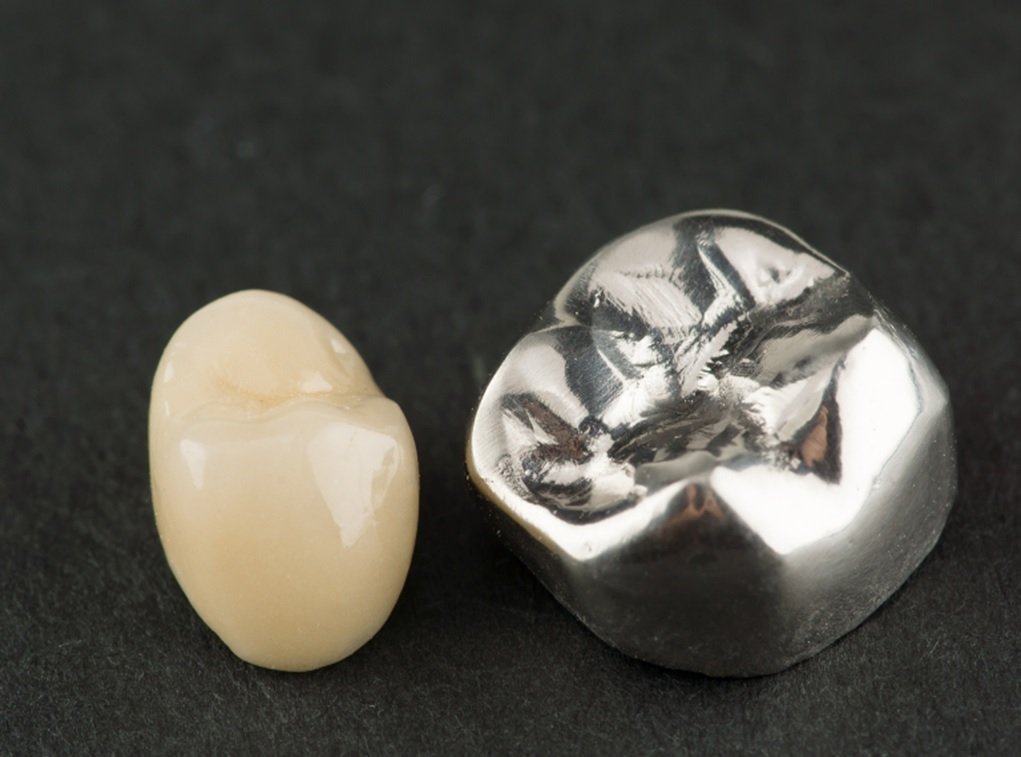
Not only does it minimise the chair time needed, but the virtual sending of scans eliminates the need to pour models, get them delivered by people, disinfect and start work. We can now offer a ‘Single Day Crown’, where patients only have to visit our doctors once and walk out with a new, natural, permanently fixed ceramic (porcelain) crown.2
IMAGING SOLUTIONS
Since the introduction of intra-oral scanners, the technology has improved remarkbly. The most recent versions, which are smaller in size, offer quick scanning and instant visualization and have the ability to navigate seamlessly in the oral cavity. For the patient, these benefits translate into higher comfort and better communication, while dentists benefit from time savings of up to 60% and a reduction in scanning errors. Given that adoption among dentists is still low, we foresee significant growth potential in the years to come, with 3D imaging devices overtaking sales of traditional 2D devices and adoption by a much wider group of dentists.3
LASER TOOLS
Dental lasers have been used on a small scale since the 1990s, proving excellent efficiency in procedures like crown lengthening and wisdom tooth extraction but also in treating dental cavities. In recent years, the adoption of dental lasers has increased significantly, driven by the development of lasers with smaller hand-pieces and more precise, ergonomic and effective cutting features.3

MANAGEMENT PROGRAMS
Digital management programs replace analog records in collecting, storing and sharing patients' medical journals with care providers. During the last decade, programs evolved from being closed, on-premise systems to cloud-based, open platform SaaS solutions. Numerous add-ons, modules and apps allow for API integration and open up possibilities such as data encryption and authorization barriers, data analysis, patient flow management and patient communication (including follow-up).3
ANALYSIS AND DIAGNOSTICS PROGRAMS
Due to the explosive progress in AI and machine learning applications, analysis programs can now be used to analyze large and complex data such as X-ray images to detect caries, osteoporosis and orthodontic deformities, among other things. Given that startups focused on these types of applications have received both attention from dentists and a steady flow of funding from venture capitalists and medical technology companies, we expect mass market adoption of intelligent applications to take off during the coming years.3
TELEDENTISTRY
COVID-19 has accelerated the adoption of teledentistry. Through mobile apps, video conferencing, telephone calls, and other information-sharing technologies, dentists can now connect with patients outside the four walls of their office. The big boon that teledentistry offers is that people can safely discuss their oral problems or concerns with their dentists from the comfort of their homes. In contrast, their dentist can diagnose, educate and exchange important health information in return. This technology has helped ensure greater access to quality care even during lockdowns. For the patient, this also means minimised chair time and fewer appointments. We believe we have made great strides in telehealth and teledentistry through the WhatsDoc app. The WhatsDoc platform is unique because it includes dental, medical, and allied healthcare. It offers text chat and video consultations, so the medical professional can see and talk to the patient, build rapport, help connect with them and bring them into the clinic if it’s an emergency.2

ONLINE PATIENT MANAGEMENT SYSTEM AND GOING PAPERLESS
As a dental practice, a significant shift in our patient management system (thanks to the pandemic) made it cloud-based to access our patient records from anywhere, simply by logging in. Thanks to digital tools, we can now access our patient schedules, revenues and projections online and even share them with some of our colleagues. We are also looking to improve our response times and customer service by adopting systems such as HubSpot. To sum up, when it comes to digitalisation in dentistry, there will always be new challenges ahead. Still, digital dentistry and using digital equipment such as intra-oral scanners, CAD software, milling machines and 3D printers offers myriad benefits such as safer procedures, alternative ways to diagnose, and improvement in workflows, communication and patient care. In our opinion, embracing advanced digital solutions is imperative. Those clinics that excel at digitalisation will gain considerable advantages in terms of outcome quality, cost and time savings, and staying ahead of the competition.2
LIMITATIONS OF DIGITAL PROCESSES
However, even the most robust proponents of digital processes agree that
- The complete digitization of all dental procedures will not be feasible, neither today nor in the future. Certain procedures will always be performed manually because there is no way around them. Not every restoration can be planned and accomplished from beginning to end using digital procedures.4
- The human factor will remain indispensable in the future. Experienced dentists and technicians with manual skills and the ability to customize and evaluate dental work from an esthetic point of view will remain central to the success of dentistry in the future.4
- Digital processes are not a substitute, but a tool for people. Their purpose is to serve dental professionals – not to make them superfluous.4
Consequently, the trick is to use conventional analogue steps in tandem with digital processes: the solution is to use both together rather than use only one or the other. In a nutshell, the strengths of both approaches can be harnessed by combining the advantages of digital processes – mainly reliability, reproducibility and consistency – with the advantages of analogue methods, such as esthetics and creativity.4
CONCLUSION
Digital dentistry is becoming more and more crucial. In the long run, it will be impossible to avoid, even for dentists and dental technicians who have not yet peered into the digital future of dentistry. Dental procedures and technology will undergo a considerable transformation, if not a revolution. This opens up a wide range of new possibilities and benefits for dentists and dental technicians who want to successfully shape their future.
Finding the strategies that are a good fit for you.Practice and laboratory owners should thereafter consider how they might make the most of these altered circumstances. Consider giving switching to digital dentistry some thought. As was just mentioned, making the switch to digital dentistry can be done gradually. It is simple to mix manual techniques with digital procedures. Utilizing a clever and well-balanced combination of both digital and analogue is frequently the key to success. Recommendations that apply to everyone cannot be made. Instead of adopting a blanket refusal attitude or adopting a one-sided enthusiasm, dentists and dental technicians should think about unique solutions that best suit their circumstances.
REFERENCES
- Digital transformation in dentistry: your dental practice's greatest asset https://www.dentaltix.com/en/blog/digital-transformation-dentistry-your-dental-practices-greatest-asset
- Why Digitalisation in Dentistry is More Important Today Than Ever https://www.dpdental.com/digitalisation-in-dentistry/
- How digital innovation is reshaping administrative and clinical processes https://www.rolandberger.com/en/Insights/Publications/The-Future-of-Dentistry-is-Digital.html#
- Digital dentistry and dental technology: The dental world in transition https://content.ivoclar.com/en/digital-dentistry-and-dental technology-the-dental-world-in-transition
- Big Data and Digitalization in Dentistry: A Systematic Review of the Ethical Issues. Favaretto M, Shaw D, De Clercq E, Joda T, Elger BS.Int J Environ Res Public Health. 2020 Apr 6;17(7):2495. doi: 10.3390/ijerph17072495.PMID: 32268509
- Digitalisation in Dentistry: Development and Practices: Exploring the Transformation from Manufacturing to a Digital Service Hub Jul 2018 ,DOI: 10.1007/978-3-319-79048-0_8, ISBN: 978-3-319-79047-3
- Dentistry, e-health and digitalisation: A critical narrative review of the dental literature on digital technologies with insights from health and technology studiesArticle Mar 2020 , DOI: 10.1922/CDH_4664Neville08 , ISBN: 0265-539X
- Digitalising Dentistry: A Review Article, Jul 2018, DOI: 10.26440/IHRJ/02_04/180, ISBN: 2456-8090
- Digitalisation – ‘The Invisible Hand’ of Digital economy Article, Nov 2022, DOI: 10.55654/JFS.2022.7.13.04, ISBN: 2537-3714
- https://en.wikipedia.org/wiki/Digital_dentistry
Disclaimer from Guident
The views and opinions expressed in articles published in Guident are solely those of the authors and do not necessarily reflect the views of the editors, the editorial board or the publisher, Ivory India. Guident does not endorse any product, technique or treatment described. Clinical content is intended for qualified dental and medical professionals and is not a substitute for individual clinical judgement. Guident, its editors and the publisher accept no liability for any consequence arising from the use of information published in the journal.
How to cite this article
Dr. P R Vinutna, Dr. Chandrashekar Sajjan, Dr. Amritha Chandran. The Time to Go Digital Is Now. Guident. 2023 Jan;16(2). Available from: https://guident.net/articles/prosthodontics/the-time-to-go-digital-is-now.html