COVID-19: Emerging and Future Challenges for Dental Surgeon
Department of Prosthodontics & Implantology, K.D. Dental College & Hospital, Mathura (U.P) India
ABSTRACT
Coronavirus disease 2019(COVID-19) an acute respiratory disease, caused by a novel coronavirus (SARS-CoV-2, previously known as 2019-nCoV), has spread throughout the world. The emergence of SARS-CoV-2, since the severe acute respiratory syndrome coronavirus (SARS-CoV) in 2002 and Middle East respiratory syndrome coronavirus (MERS-CoV) in 2012, marked the third introduction of a highly pathogenic and large-scale epidemic coronavirus into the human population in the twenty-first century. As aerosols are one of the contributing factors in the spread of the disease so it has posed a great challenge to the dental professionals.
INTRODUCTION
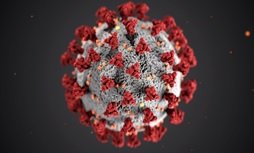
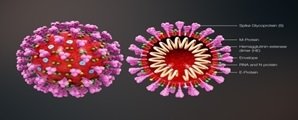
Coronaviruses are zoonotic in nature and cause symptoms ranging from those similar to the common cold to more severe respiratory, enteric, hepatic, and neurological symptoms.Coronaviruses cause a variety of diseases in mammals and birds ranging from enteritis in cows and pigs and upper respiratory disease in chickens to potentially lethal human respiratory infections. These are enveloped positive-sense RNA viruses, are characterized by club-like spikes that project from their surface, an unusually large RNA genome, and a unique replication strategy.
The novel coronavirus was initially named 2019-nCoV and officially as severe acute respiratory syndrome coronavirus 2 (SARSCoV-2). As of February 26, COVID-19 has been recognized in 34 countries.
The epidemics of coronavirus disease 2019 (COVID-19) started from Wuhan, China, last December and have become a major challenging public health problem for not only China but also countries around the world
On January 30, 2020, the World Health Organization (WHO) announced that this outbreak had constituted a public health emergency of international concern.
Coronaviruses have caused two large-scale pandemics in the last two decades: SARS and MERS.
STRUCTURE OF CORONAVIRUSES
ROUTES OF TRANSMISSION
The three most common transmission routes of novel Coronavirus include:a. Direct transmission (through cough, sneeze or droplet inhalation)
b. Contact transmission (through oro-nasal-ocular route)
c. Aerosol transmission Aerosol contain saliva, nasopharyngeal secretions, plaque, blood, viruses, bacteria and the particles size is less than 50 micron diameter and they can stay airborne up to 30 min before setting on surfaces or entering respiratory tract.
SOURCE OF TRANSMISSION AND WHY IT IS CHALLENGING?
Although patients with symptomatic COVID-19 have been the main source of transmission, recent observations suggest that asymptomatic patients and patients in their incubation period are also carriers of SARS-CoV-2 (Chan et al. 2020; Rothe et al. 2020).This epidemiologic feature of COVID-19 has made its control extremely challenging, as it is difficult to identify and quarantine these patients on time, which can result in the accumulation of SARS-CoV-2 in communities. In addition, it is still unknown whether patients in the recovering phase are a potential source of transmission.
INCUBATION PERIOD
The incubation period of COVID-19 has been estimated to be 5 to 6 days on average, but there is evidence that it could be as long as 14 days, which is now the commonly adopted duration for medical observation and quarantine of (potentially) exposed persons.PROVIDING DENTAL CARE DURING THE COVID 19 PANDEMIC: RECOMMENDATION
As health care professionals it is our duty to mitigate the community spread of this disease through responsible and informed actions. We need to fulfil our professional duty towards our patients, while keeping ourselves, our staff and environment safe.
TABLE 1. EMERGENCY SEVERITY ASSESSMENT- DECISION MAKING TOOL

Specific recommendations for dentists to triage patients to decide, what is a dental emergency and when and how to schedule such patients.
An objective triaging tool has been suggested to facilitate the scheduling of the patients based on the level of need.
The purpose of this triage is to limit incoming patients and to identify those who cannot wait to be seen. It also will help in prioritizing the scheduling of patients as and when we restore normal functioning in our dental set ups. This may be preferably done by trained staff or dentists themselves through audio or video communication channels. The following triages the patients into 3 categories (Table 1):
- Emergency Care
- Urgent Care
- Scheduled Care / Elective Care
TELEPHONIC PRESCREENING PROTOCOL
INSTRUCTIONS TO THE PATIENT BEFORE ENTERING THE CLINIC1. If you have any cough, cold, fever , please RESCHEDULE your appointment.
2. Once you reach the clinic, please call the doctor before you enter for screening protocols.
3. Please have Aarogya Setu App in your phone.
4. Kindly send soft copies of AADHAR CARD and previous treatment records on whatsapp.
5. All payments will accepted only through digital payment platforms.
RECOMMENDATIONS FOR INFECTION PREVENTION AND CONTROL
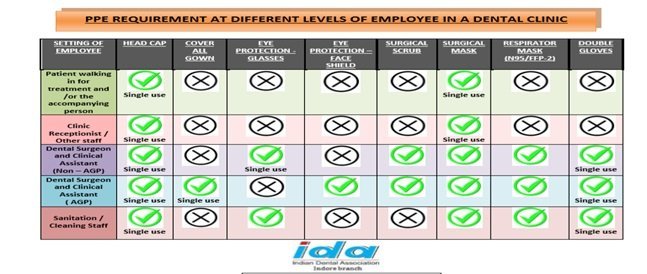
If aerosol generating procedures are undertaken, operators should wear appropriate personal protective equipment ideally comprised of a fluid-resistant mask, visor and apron.
Sequence of Donning PPE
- Shoe cover
- Gown
- Cap/hood
- Mask or respirator
- Goggles or face shield
- Gloves
- Gloves
- Face shield or goggles
- Gown
- Mask or respirator
- Cap/hood
- Shoe cover
The WHO guidelines on hand hygiene in healthcare (2009) suggest that hand hygiene is the single most important measure for prevention of infection.
Use alcohol-based hand rubs (ABHR), when hands are not visibly soiled or tap and running water is not available
Hand hygiene must be performed:
- Before patient examination
- Before dental procedures
- If gloves are torn or compromised during the procedure
- After removing gloves
- After touching the patient
- After touching surroundings or equipment that are not disinfected
- Dental professionals should avoid touching their own eyes, mouth and nose
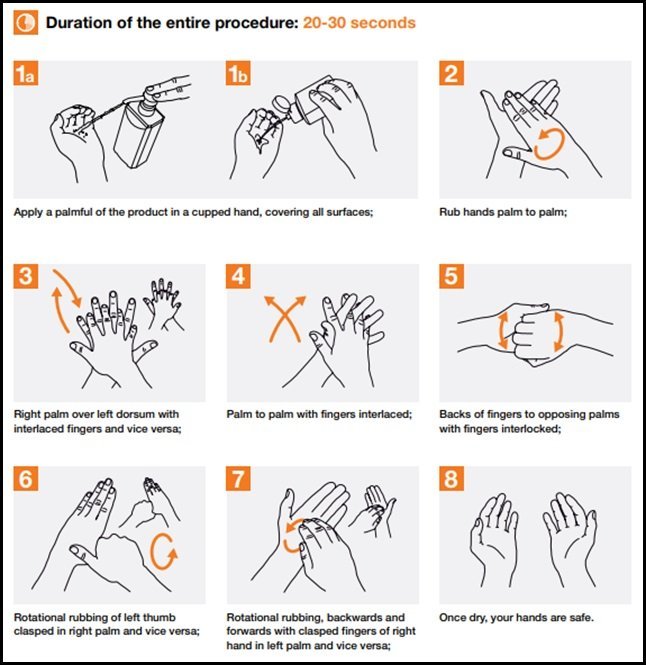

RECOMMENDED DISINFECTION AND STERLIZATION PROTOCOLS FOR DENTAL CLINICS
DISINFECTION OF DENTAL CLINIC
SURFACE DISINFECTION- Avoid sweeping with broom
- Wet moping using Freshly prepared basins, 1% Sodium hypochlorite (Contact Time: 10 minutes) (500 ml of 6% NaOCl + 2.5 L. of water = 3.0 L. of 1% NaOCl)
For Floors, Toilets, wash basins , sinks
- 70% alcohol based sanitizer
For highly sensitive area i.e. metallic surfaces (eg. Door knobs, Handles, Elevator buttons)
- Use 0.5-1% Sodium Hypochlorite or 3% hydrogen peroxide
For all non- critical non touch horizontal surfaces
- Routine cleaning with detergent Or soap and water
For Walls, Window- blinds, Frames
PATIENT TURN AROUND AND DISINFECTION PROTOCOL
- After the patient leaves the treatment room, the Assistant will collect all hand instruments immediately, rinse them in detergent water / ultrasonic cleaner to remove organic matter and sterilize them as per standard protocol in an autoclave .
- Wipe the Dental Chair along with all the auxiliary parts within 3 feet distance using 1% sodium hypochlorite
- Flush the Suction and Spittoon with 1% sodium hypochlorite
- Dental chair side bottle should contain 0.01% sodium hypochlorite ( It should be freshly prepared for each patient) ( 1ml of 5% NaOCl + 5 L. of water 1ml of 3% NaOCl + 3 L. of water )
- Freshly autoclaved Handpiece and Instruments should be used for every patient
- Impressions should be thoroughly disinfected before pouring. (0.5% NaOCl – for Additional silicone, Alginate 2% Glutaraldehyde – for Zinc Oxide Eugenol )
- Surgical scrub may be washed with detergent followed by autoclaving .
- Mop heads and cleaning cloths must be discarded in appropriate biomedical waste bins or decontaminated regularly by laundering with detergent
ENVIRONMENTAL DISINFECTION (Aerosol adjuncts procedure)
- Avoid use of air conditioner (A.C.), If A.C. is a must then it should run at a temp. of 26-27 o C or equipped with HEPA filters
- Preferably keep the windows open and use exhaust fan for a good circulation [minimum 6 ACH (Air Changes per Hour )]
- High Efficiency Particulate Air filter (HEPA14/ HEPA13) should be allowed to run continuously ,and between two patients , the doctor and assistant should move out from the operatory, allowing the HEPA filter to run for 30 mins.
- In between two patients , when no one is present in the operatory , in addition to the HEPA filter , Ultra Violet Germicidal Irradiation (UVGI) should be used with delayed timer setting. (UVGI radiation – 252 nm ,30-40 Watts/ 100 sq feet for30 mins)
- An alternative, 30% hydrogen peroxide may be used for fumigation of the clinical environment.
GUIDELINES FOR WAITING AREA
ARRANGEMENTS IN WAITING AREA- Make clinic clutter free (no toys and magazines)
- Posters on hygiene and social distancing
- Place a trash bin(Foot operated)
- Single receptionist / staff
- Seating arrangement should be done with minimum 2 meters social distancing.
PROTOCOLS FOR PATIENT IN WAITING AREA
- Ask the patient to remove footwear outside the clinic
- Only one accompanying person to be allowed if patient is geriatric , paediatric or medically compromised
- Patient and accompanying person should mandatorily wear surgical masks
DUTIES OF THE RECEPTIONIST
- Check and corroborate the soft copies of details provided by the patient over WhatsApp
- Record the patient‘s forehead temperature using a Digital Noncontact Infrared Thermometer
- Check oxygen saturation level of the patient by Pulse Oximetry (If it is less than 95%, we should immediately refer that patient to physician)
- Take the consent of the patient. (use disposable pen or it must be sanitized with 70% ethanol (spirit) .
- Assist patient to sanitize hand
- Ensure cough and sneeze etiquettes
- Provide disposable bag to the patient to keep all their belongings
BIOMEDICAL WASTE MANAGEMENT
Keep separate color coded bins/bags/containers in wards and maintain proper segregation of waste as per Bio Medical Waste Management (BMWM) Rules, 2016As precaution double layered bags (using 2 bags) should be used for collection of waste so as to ensure adequate strength and no-leaks.
Collect and store biomedical waste separately prior to handing over the same Common Bio-medical Waste Treatment and Disposal Facility (CBWTF).
Biomedical waste should be collected by CBWTF collection van daily or if not possible then it can be temporarily stored in the isolation area
CONCLUSION
Unprecedented challenges necessitate unprecedented solutions. As dental health care providers our primary goal is to serve our patients during their times of need. However, the current pandemic makes dentistry a potent channel of community transmission of disease.So we as a health care professionals we need to be aware, well informed and updated and will have to take care of our patients as well as of ourselves so that together we shall overcome of this pandemic.
Just remember that WE ARE CONFINED BUT NOT BROKEN.
REFERENCES
- IDA guidelines Indore branch
- WHO guidelines
- Krithika Dutta J et al. Endodontic and Dental Practice during COVID-19 Pandemic: Position Statement from Indian Endodontic Society
- Guo et al. The origin, transmission and clinical therapies on coronavirus disease 2019 (COVID-19) outbreak – an update on the status Military Medical Research (2020) 7:11
Disclaimer from Guident
The views and opinions expressed in articles published in Guident are solely those of the authors and do not necessarily reflect the views of the editors, the editorial board or the publisher, Ivory India. Guident does not endorse any product, technique or treatment described. Clinical content is intended for qualified dental and medical professionals and is not a substitute for individual clinical judgement. Guident, its editors and the publisher accept no liability for any consequence arising from the use of information published in the journal.
How to cite this article
Dr. Shaivy Ambuj, Dr. Yashi Garg, Dr. Manesh Lahori. COVID-19: Emerging and Future Challenges for Dental Surgeon. Guident. 2020 Jul;13(8). Available from: https://guident.net/articles/general/covid-19-emerging-and-future-challenges-for-dental-surgeon.html