COVID 19: Implications for Dental Care
Department of Prosthodontics & Implantology, K.D. Dental College & Hospital, Mathura (U.P) India
ABSTRACT
The recent spread of severe acute respiratory syndrome coronavirus 2 (SARS-CoV-2) and its associated coronavirus disease has gripped the entire international community and caused widespread public health concerns. Despite global efforts to contain the disease spread, the outbreak is still on a rise because of the community spread pattern of this infection. The dental professionals have always been exposed to various pathogens like HIV, Hepatitis B, Tuberculosis etc. and we have been trained on basic infection control protocols to prevent these cross-infection. The Covid-19 virus varies from all the above by having a very high Human to Human transmission rate and relatively long incubation period which ranges from 2 to 14 days with median duration being 5 days. Transmission from asymptomatic COVID-19 carriers is also possible. Thus, the aim of this article is to provide a brief overview of basic guidelines and protocols that should be maintained in our practices for our own safety as well as the safety of our patients, family and society .
“You’re braver than you believe , stronger than you
seem, and smarter than you think “- so follow guidelines and
Stay Home to Stay Safe.
INTRODUCTION
The outbreak of coronavirus disease 2019 (COVID-19) in the area of Wuhan, China, has evolved rapidly into a public health crisis1 and has spread exponentially to other parts of the world (Fig. 1)2. The novel coronavirus belongs to a family of single-stranded RNA viruses known as Coronaviridae3. This family of viruses are known to be zoonotic or transmitted from animals to humans. These include severe acute respiratory syndrome coronavirus (SARS-CoV), first identified in 2002, and the Middle East respiratory syndrome coronavirus (MERS-CoV), first identified in 2012.4
Worldwide as millions of people stay at home to minimise transmission of severe acute respiratory syndrome coronavirus , health-care workers prepare to do the exact opposite. They will go to clinics and hospitals, putting themselves at high risk from COVID-2019.5
As the pandemic accelerates, access to personal protective equipment (PPE) for health workers is a key concern to combat this deadly virus. For dental practices ,health workers & hospitals all over the world, strict and effective infection control protocols are urgently needed5.

FIGURE 1 – A screenshot of an interactive map of the global cases of COVID-19 by the Center for Systems Science and Engineering at Johns Hopkins University2. This dashboard is continually updated and can be accessed at https://coronavirus.jhu.edu/map.html. Site accessed April 9, 2020.
BASIC SAFETY PROTOCOLS AGAINST COVID 7
The basic safety protocols to be addressed against covid are:
A. Personal care
B. Patient care
C. Clinic and operatory care
A. PERSONAL CARE PROTOCOLS
whenever possible do not carry out any aerosol generating procedures (air rotor /ultrasonic scaler) untill there is containment of the spread
1. Patients with active febrile and respiratory illness will most likely not present to dental practices.
2. All emergency treatment should be carried out after detailed dental and medical history. In order to have a clarity on what constitutes an emergency condition, dentists can refer to recent American Dental Association recommendations
3. Dentists should follow standard, contact, and airborne precautions including the appropriate use of personal protective equipment and hand hygiene practices .
4. Hand hygiene is already well emphasised and stated for all concerned by alcohol based hand rub or use of soap and water for washing with standard steps recommended by WHO and should range from 20 to 30 seconds(Fig 2)8.Place hand rubs in multiple locations to encourage hand hygiene.

Fig 2: WHO handwashing recommendation
Hand Sanitizer Issues and Options for COVID-199
- WASHING WITH SOAP AND WATER
The CDC still recommends washing your hands with soap and water as the best way to keep your hands clean and prevent the spread of COVID-19.
- OPTIONS TO CREATE YOUR OWN SANITIZER
It may be possible to create your own sanitizer that can be used on hands and surfaces, but there is no standard federal guidance for this process. In order to be effective against COVID-19, any cleaning substance must contain at least 60%+ ethanol or 70%+ isopropyl. These percentages must be considered when you are using any additives, such as aloe gel or essential oils, that will dilute the alcohol below the threshold for effectiveness. These products can be put into clean spray bottles and used as hand sanitizer or surface sanitizer.
5. Personal protective equipment (PPE) is mandatory now and would comprise of the following(Fig 3)7 :
A. Shoe covers
B. Cap/hood
C. Gloves
D. Gowns/ aprons
E. Masks and respirators
F. Goggles
G. Face shields
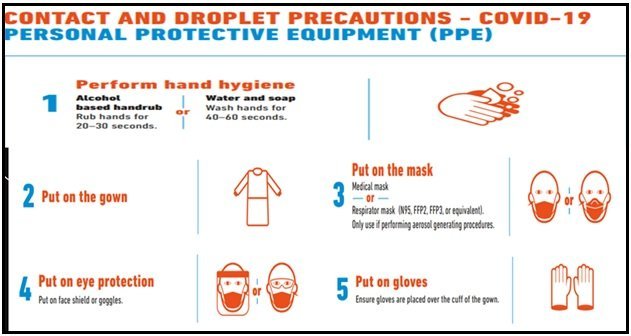
Fig 3: List of Personal Protective Equipment
PPE: Gown (fig : 4)
Purpose
- Used in activities when contact of clothing/exposed skin with blood/body fluids, secretions, and excretions is anticipated.

Fig 4: Gown
PPE: Gloves( figure : 5)
- Purpose
- When coming in contact with blood, body fluids, secretions, excretions, contaminated items, mucous membranes and non –intact skin.
- May be sterile or non sterile

Fig 5: Gloves
PPE: Face shield (figure: 6)
Purpose
- Used during activities which are likely to generate splashes or sprays of blood, body fluids, secretions, especially during suctioning and endotracheal intubation.
- Face shields are generally not used alone, but in conjunction with a PPE
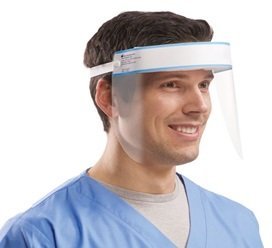

Fig 6: Face Shield
FACEMASKS OR RESPIRATORS10 (figure :7)
Mask
- Protects the nose and mouth
The mask should fully cover the nose and mouth and prevent fluid penetration.
Respirators
- Protection from inhalation of infectious aerosols (e.g. Mycobacterium tuberculosis).
It is important to differentiate between a mask and a respirator which is based upon the airborne concentration of the substance that the wearer is exposed to, fit of the respirator and the hazard exposure limit of that substance.
Therefore, a surgical mask will be typically worn by a person with a respiratory illness to reduce the droplets released into the air when they cough or sneeze, while an N-95 respirator provide efficient filtration of airborne particles

OPTIMIZING THE SUPPLY OF N95 RESPIRATORS 11 :
A. Extended use
B. Re-use
Extended use:
Same respirator for 8-12 hours of continuous use, no touching, no removing, change if visiting washroom or taking lunch break
Re-use:
Keep aside for minimum 72 hours, preferably 1 week, in a brown paper bag, then reuse, wear gloves when re-wearing.
CDC ON HOMEMADE CLOTH FACE COVERINGS12( figure :8):
CDC also advises the use of simple cloth face coverings to slow the spread of the virus. Cloth face coverings fashioned from household items or made at home from common materials at low cost can be used as an additional, voluntary public health measure. Cloth face coverings should not be placed on young children under age 2, anyone who has trouble breathing, or is unconscious, incapacitated or otherwise unable to remove the mask without assistance.
The cloth face coverings recommended are not surgical masks or N-95 respirators. Those are critical supplies that must continue to be reserved for healthcare workers and other medical first responders, as recommended by current CDC guidance. They should be routinely washed depending on the frequency of use.
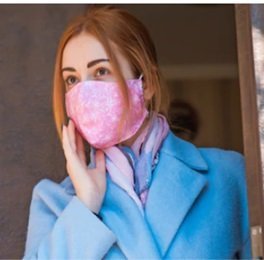
Fig 8: Home made Cloth face Covering.
GOGGLES7( Figure 9)
- Protects the eyes
- Should fit snuggly over and around the eyes
- Personal glasses NOT a substitute for goggles
- Reusable –clean and disinfect
- Disposable –discard
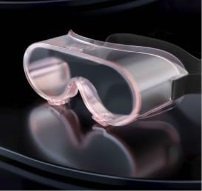

Fig 9: Protective eye wear
6. Due to the uncertainity of this outbreak, there might be a shortage of personal protective equipment. Therefore, it is advisable to use them judiciously and follow the Centers for Disease Control (CDC) and Prevention guidelines for N95 respirator use and reuse.
7. Preprocedural mouth rinse: previous studies have shown that SARS-CoV and MERS-CoV were highly susceptible to povidone mouth rinse25. Therefore, preprocedural mouth rinse with 0.2%povidone-iodine might reduce the load of corona viruses in saliva. Another alternative would be to use 0.5-1% hydrogen peroxide mouth rinse, as it has non specific virucidal activity against corona viruses.
- SEQUENCE FOR PUTTING ON OF PERSONAL PROTECTIVE EQUIPMENT (PPE)13
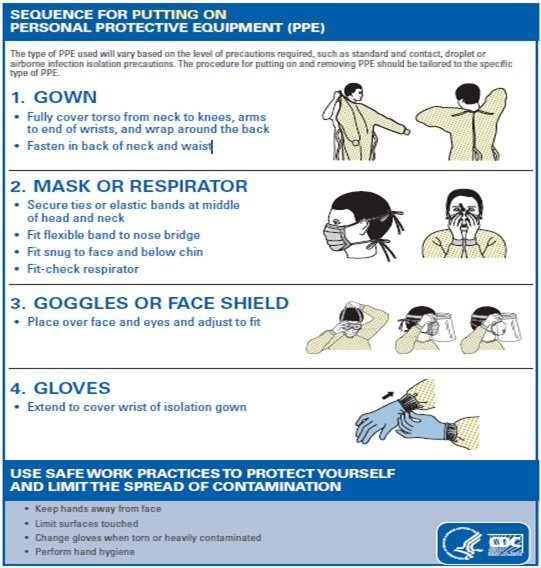
source: centre for disease control and prevention
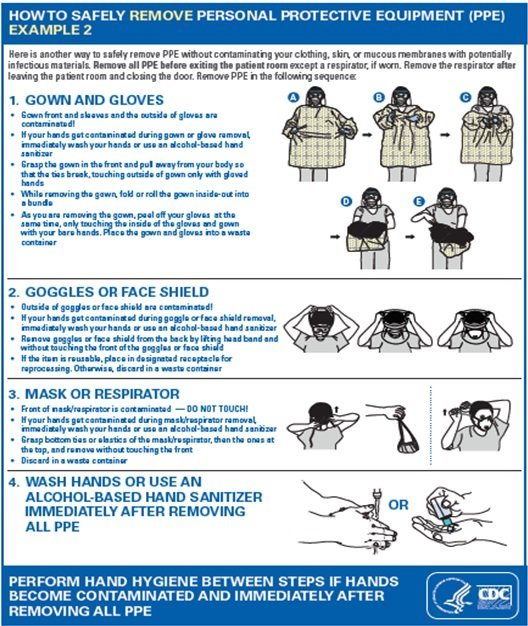
- SEQUENCE FOR REMOVAL OF PERSONAL PROTECTIVE EQUIPMENT (PPE)13

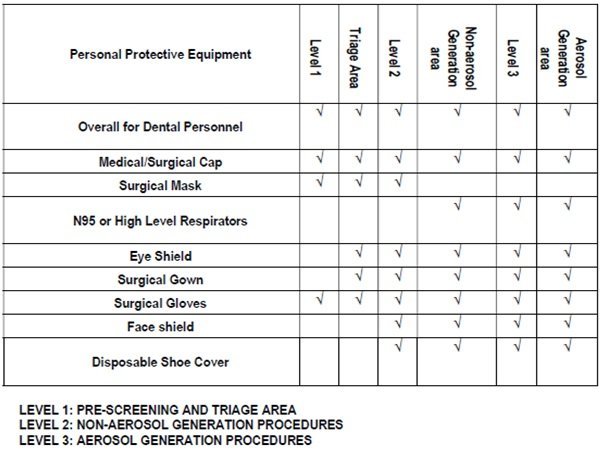
DETAILED PLAN FOR USE OF PERSONAL PROTECTIVE EQUIPMENT14 IN DENTAL COLLEGES
B. PATIENT CARE PROTOCOL
- Confirmed & Suspected cases,
- Recovered cases
COVID-19 SUSPECTED OR POSITIVE 15
- Give the patient a mask
- Send the patient home if not an emergency
- Refer the patient to a medical facility if acutely sick
- Thorough cleaning and disinfection
- If urgent dental treatment is necessary, dental personnel and medical providers should work together to determine
- The appropriate precautions to take on a case-by-case basis &
- Decide whether the dental facility is an appropriate setting to provide the necessary services
PATIENTS WITH A RESOLVED COVID-19 INFECTION
can be seen in a dental setting:
- At least 3 days since COVID-19 infection symptoms resolved and
- At least 7 days since their symptoms first appeared (defined as resolution of fever without the use of fever-reducing medications and improvement in respiratory symptoms e.g., cough, shortness of breath).
C. DENTAL CLINIC AND OPERATORY PROTOCOL 16

We, as dentists should make sure that every visit to the dental clinic is a safe one and should educate our patients to follow necessary protocol as healthcare providers.
- Surface Disinfection, therefore becomes a mandatory precaution after every procedure.
- UV radiation with 260nm has shown to inactivate at least two other coronaviruses SARS-CoV-1& MERS-CoV.
- UVC disinfection is often used as a multibarrier approach to ensure that whatever pathogen is not “killed” by one method (say filtering or cleaning) is inactivated by another (UVC). (source International UV association).
- Hypochlorous Acid (HOCl) with a near neutral pH of 6.3 can be used for surface disinfection of countertops and floors.
- There is also literature, available to support the use of sodium hypochloride for the same purpose however, this is more corrosive and can potentially harm electronic dental equipment.
RECENT ADVANCES 17 :
AKROSEPT DISINFECTANT TABLETS (figure: 10)
Take hard surface disinfection beyond the confines of hypochlorites.
Are effervescent disinfectant tablets which, when added to water, release disinfectant solutions at known and reliable in-use strengths. The tablet utilise the ingredient SodiumDichloroisocyanurate (NaDCC), which is an organic chlorine donor that releases the active compound Hypochlorous Acid. NaDCC Sodium Dichloroisocyanurate is not a hypochlorite. NaDCC Sodium Dichloroisocyanurate dissolves in water to release Hypochlorous Acid (HOCL) and Monosodiumcyanurate.
Its chemistry and mode of action in solution is significantly different than hypochlorite, giving an activity that is substantially more effective than hypochlorite, particularly where there may be organic contamination.They are Proven, Practical & Convenient Approach to Hard-Surface Disinfection
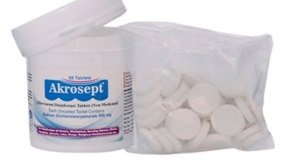
Fig 10: Akrosept tablets
PRECAUTIONS TO BE TAKEN IN THE DENTAL CLINIC 6
- Cleaning and disinfecting doorknobs, light switches, cabinet handles and front desk areas
- Throwing away the waiting room magazines
- Removing excess furniture, paintings etc.
- Patients should be screened prior to the appointment, preferably over the phone.
- Ask for the patients complete medical history and travel history (if any)
- The patients should be given clear instructions while making sure not to bring down their morale and attitude towards dental visits.
- They should be told not to bring any accompanying person unless he/she is a minor or it is completely unavoidable
- They should be told to wait outside or in the car as minimal number of people should be present in the clinic.
- Minimize time in waiting areas and inform the patient beforehand of the unavailability of public spaces like restrooms.
- A distance of at least 6 feet between chairs should be maintained in theNwaiting area.
- The patient should be tested for fever preferably with thermal scanner
- Patient instructions and screening plays a pivotal role in the safety ofthe dentist, patient and staff at the dental clinic.
URGENT DENTAL CARE INCLUDES 6 :
- Severe dental pain from pulpal inflammation
- Pericoronitis or third-molar pain
- Surgical post-operative osteitis, dry socket dressing changes
- Abscess, or localized bacterial infection resulting in localized pain and swelling(fig11)
- Tooth fracture resulting in pain or causing soft tissue trauma
- Dental trauma with avulsion/luxation(fig 12)
- Dental treatment required prior to critical medical procedures
- Final crown/bridge cementation if the temporary restoration is lost, broken or causing gingival irritation
- Biopsy of abnormal tissue
- Extensive dental caries or defective restorations causing pain
- Suture removal(FIG 13)
- Denture adjustment on radiation/ oncology patients
- Denture adjustments or repairs when function impeded
- Replacing temporary filling on endo access openings in patients experiencing pain
- Snipping or adjustment of an orthodontic wire or appliances piercing or ulcerating the oral mucosa(fig 14)
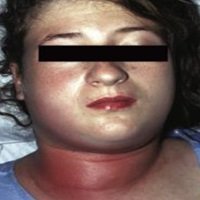
Fig 11: swelling
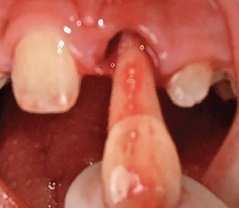
Fig 12: Avulsion by trauma
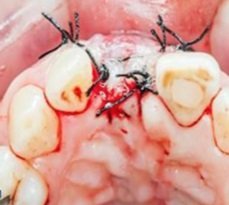
Fig 13: suture removal

Fig 14: ortho wire adjustment
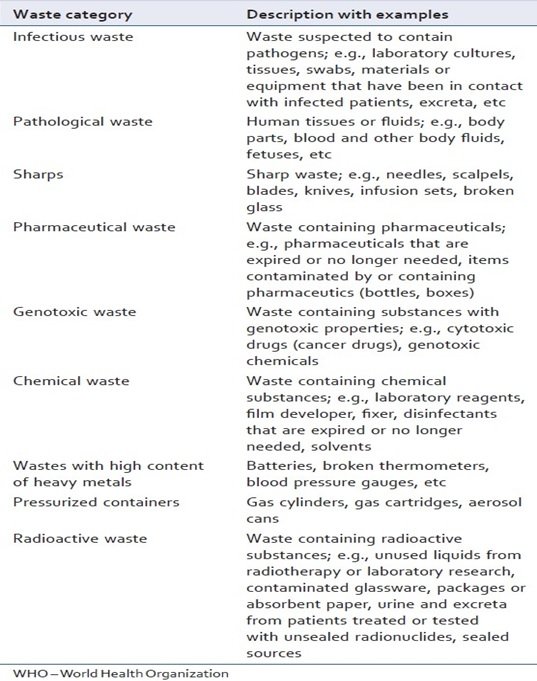
BIOMEDICAL WASTE DISPOSAL INSTRUCTIONS 18

COVID-19 CLINICAL GUIDELINES FOR DENTAL STUDENTS AND INTERNS 7
- Understand the basics of infection control and apply them at all times of clinical care.
- Take proper patient history with regard to fever, cough and travel prior to initiation of all dental procedures.
- Report any patient with positive history for further medical attention
- Disinfect your dental chair, use sterile instruments and maintain hand hygiene at all times as per Institutional protocol.
- Wash your hand with soap or use hand sanitizers frequently as per WHO guidelines.
- If one has signs of fever, cough and difficulty in breathing, inform your concerned faculty and seek medical attention and well in advance.
- In case you, yourself are having a history of Fever, Cough and difficulty in breathing visit your doctor and report the same to your faculty.
- Maintain proper records and update regularly.
- Don't Panic rather spread awareness among communities.
- Interns should complement all dental services in the Institute and assist in all activities after adequate training.
a. Recording detailed Case history and Identification of vulnerable age groups
b. Participate in capacity building and training for basic COVID-19.
COVID-19 CLINICAL GUIDELINES FOR DENTAL PROFESSIONALS 7
Dentists should take strict personal protection measures and avoid or minimize operations that can produce droplets or aerosols. Four-handed technique is beneficial for controlling infection. The use of saliva ejectors can reduce the production of droplets and aerosols.
1. After the outbreak/lockdown of COVID-19, dental clinics are recommended to establish pre-check triages to measure and record the temperature of every staff and patient as routine procedures and elicit relevant medical history.2. Classify patients into emergency and non-emergency dental care and plan well before initiating any dental procedures.
3. Primary care dental triage should focus on the provision of the three As:
a. Advice;
b. Analgesia;
c. Antimicrobials (where appropriate).
4. Patients should be advised that elective treatment options are severely restricted and to call back in 48-72 hours if their dental symptoms have not resolved.
5. All dentists and support staff should wash their hand thoroughly with soap and water and follow up with alcohol based hand sanitizers before and after every patient screening or interaction. Surgical scrubbing of hands is recommended. Disposal of gloves to be done routinely as per protocol.
6. Staff and doctors should avoid touching their face specially the ear, nose and mouth.
7. Every patient who enters and exits the clinic should be provided hand sanitizers.
8. The waiting room/clinic including the handles and doors as well as dental chairs and other surfaces should be wiped several times in a day with alcohol based disinfectant.
9. Thorough Medical, travel and contact history of each Patient should be recorded before any clinical procedures.
10. Patients should be scrubbed with Iso Propyl alcohol extra orally prior to any dental procedure.
11. Wearing of least 3 ply masks, suitable head caps and shoe covers at all times when in clinical are. Protective eye wear and face shield are also recommended.
12. Wearing of N95, suitable head caps, protective eye wear, face shield, disposable gowns and shoe cover are recommended during all aerosol and non-aerosol based dental procedures, if carried out.
13. Preoperative antimicrobial mouth rinse could reduce the number of microbes in the oral cavity.
14. Pre-operative and Post operative Infection Control protocols should be followed.
15. Rubber dams and high-volume saliva ejectors can help minimize aerosol or spatter in dental procedures.
16. Scheduling of patients is very essential; hence avoid interaction of vulnerable patients (medically compromised or elderly patients) with general patients.
17. Fumigation of clinics periodically is advised.
18. Clean and disinfect public areas frequently, including door handles, chairs and bathrooms.
19. All dental clinics should display health awareness posters regarding COVID19, Hand and Respiratory hygiene at prominent locations of the clinical area.
20. Alcohol based Hand Rubs should be made accessible in common clinical areas.
21. Avoid crowding of patients and schedule them based on treatment types (emergency or nonemergency)
22. Dental Clinics should have adequate ventilation, as it can reduce the risk of infection through dilution and removal of infectious particles through air exchange. Improved ventilation in Clinics is essential in preventing transmission of airborne infections.
23. Dental Team members should change from personal clothing to scrubs and vice versa before entering and returning home. Upon arriving home, dentists and dental
staff should take off shoes, remove and wash clothing separately and immediately shower prior to any contact with family members.
24. All patient details and records should be maintained properly and if need arises should be shared with local health authorities or administration.
25. Be aware of the local health authority protocol or testing laboratories and report any patient with relevant history for further necessary medical care
TAKE HOME MESSAGE
Although in-clinic testing kits exist, they are extremely difficult to obtain. Unless readily available, no one can be assured that they are treating a non-infected individual. If basic PPE, including surgical facemasks are not available, do not proceed with any dental procedure, regardless of emergency/urgent patients.
If a patient with a confirmed diagnosis for COVID-19 within the last 14 days, who presents with respiratory symptoms, is treated in the dental office, or if any patient is treated without the appropriate PPE, these are considered high-risk scenarios. Dentist and members of the dental team should proceed to 14-day quarantine Use respirators like N-95 or N-100.
Surface disinfection of all tabletops, floors and equipment with Hypochlorous Acid or sodium hypochloride HEPA air filtration systems and UV lights use should be practiced in the operator. Personal protective gear (Certified PPE: surgical gowns, face shields, head caps, shoe covers etc.should be used by the operator and assistant to protect from Splatter and aerosols. High evacuation surgical suctions should be used in the dental clinic.
THIS TOO SHALL PASS
REFERENCES
- Centers for Disease Control and Prevention. Transmission of coronavirus disease 2019 (COVID-19). Available at: https://www.cdc.gov/coronavirus/2019-ncov/about/transmission.html. Accessed 18 March, 2020.
- Dong E, Du H, Gardner L. An interactive web-based dashboard to track COVID-19 in real time. Lancet Infect Dis 2020. https://doi.org/10.1016/S1473-3099(20)30120-1.
- Gorbalenya AE, Baker SC, Baric RS, et al. The species Severe acute respiratory syndromerelated coronavirus: classifying 2019-nCoV and naming it SARS-CoV-2. Nat Microbiol 2020. https://doi.org/10.1038/s41564-020-0695-z.
- Wax RS, Christian MD. Practical recommendations for critical care and anesthesiology teams caring for novel coronavirus (2019-nCoV) patients. Can J Anaesth 2020. https://doi.org/10. 1007/s12630-020-01591-x. Accessed 18 March, 2020.
- The Lancet journals, Vol 395 March 21, 2020
- DR. ASHISH KAKAR, PROF KRISHNA NAYAK AND ERA KAKAR, DENTAL PRACTICE DURING AND AFTER THE COVID 19 PANDEMIC, March-April 2020 // Vol 17 No 2
- COVID-19 GUIDELINES BY DENTAL COUNCIL OF INDIA, april 2020.
- Indian Dental Association’s Preventive Guidelines for Dental Professionals on the Coronavirus Threat journal,2020
- https://elections.wi.gov/sites/elections.wi.gov/files/2020-03/COVID%2019%20Sanitizer%20Issues%20and%20Options%20FAQ.pdf">https://elections.wi.gov/sites/elections.wi.gov/files/2020-03/COVID 19
- https://www.cdc.gov/hai/pdfs/ppe/ppeslides6-29-04.pdf">https://www.cdc.gov/hai/pdfs/ppe/ppeslides6-29-04.pdf
- https://www.cdc.gov/coronavirus/2019-ncov/hcp/respirators-strategy/index.html">https://www.cdc.gov/coronavirus/2019-ncov/hcp/respirators strategy
- https://www.cdc.gov/coronavirus/2019-ncov/prevent-getting-sick/diy-cloth-face-coverings.html%20%0d13">https://www.cdc.gov/coronavirus/2019-ncov/prevent-getting-sick/diy-cloth-face-coverings.html
- https://www.cdc.gov/hai/pdfs/ppe/PPE-Sequence.pdf">https://www.cdc.gov/hai/pdfs/ppe/PPE-Sequence.pdf
- Source: Zhang. W, Jiang. X. Front Oral Maxillofac Med 2020;2:4 | http://dx.doi.org/10.21037
- https://www.ada.org/en/publications/ada>https://www.ada.org/en/publications/ada
- Dr. Rupesh PL, Indian Prosthodontic Society COVID-19 protocol,april 2020
- http://www.akronhealthcare.in
- Source: Biomedical Waste Segregation, BMW Rules.
- Gorbalenya AE, Baker SC, Baric RS, et al. The species Severe acute respiratory syndromerelated coronavirus: classifying 2019-nCoV and naming it SARS-CoV-2. Nat Microbiol 2020. https://doi.org/10.1038/s41564-020-0695-z.
- https://icmr.nic.in/sites/default/files/upload_documents/HCQ_Recommendation 22March final MM V2.pdf
Disclaimer from Guident
The views and opinions expressed in articles published in Guident are solely those of the authors and do not necessarily reflect the views of the editors, the editorial board or the publisher, Ivory India. Guident does not endorse any product, technique or treatment described. Clinical content is intended for qualified dental and medical professionals and is not a substitute for individual clinical judgement. Guident, its editors and the publisher accept no liability for any consequence arising from the use of information published in the journal.
How to cite this article
Dr. Preeti Sagar, Dr. Sumver Jain, Dr. Abhinav Agarwal. COVID 19: Implications for Dental Care. Guident. 2020 Jul;13(8). Available from: https://guident.net/articles/general/covid-19-implications-for-dental-care.html